"Keep the Cat Free"

23.02.2012

FELIX

The student voice of Imperial College London since 1949

Let’s talk about Ron Paul

Why Liberty and Democracy don’t mix
Samuel Horti
Sharing
Ron-Paul-2012-Campaign.jpg
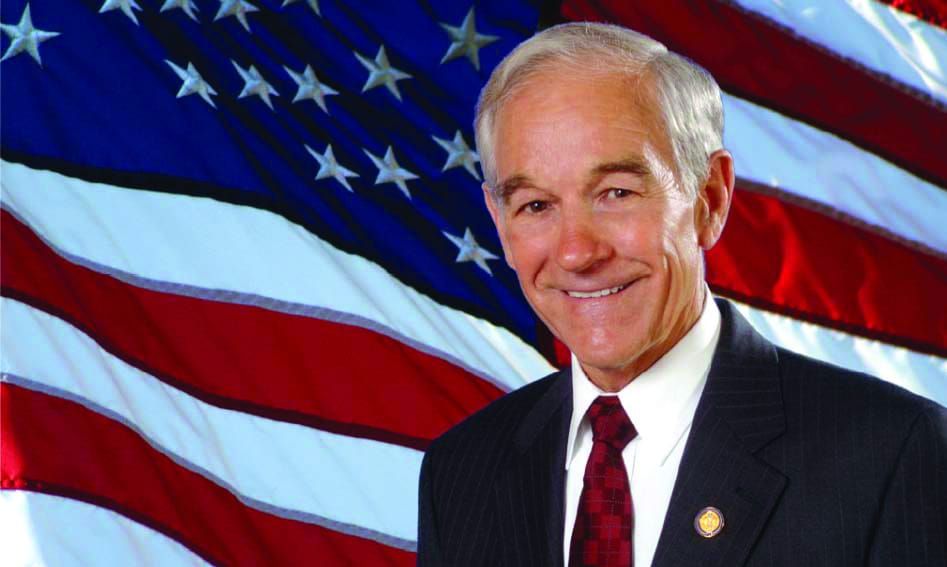
Would you have known if we had just put a picture of a random guy that wasn’t Ron Paul?

If you’ve been paying attention to the goings on in America in the lead up to next year’s presidential elections, you will no doubt have heard many political commentators expressing the view that Ron Paul is the man that everyone has been waiting for. The hero that America needs. What is especially impressive is that this type of praise is happening across the board, regardless of political loyalties or emotional ties.

Now, I’m not going to tell you Ron Paul is a bad presidential candidate. He, in contrast with many in the American political system, is very honest, consistent and forthright with his views. I would whole-heartedly agree with him on many of his political positions, such as his desire to abolish the income tax (and lower taxes in general), and to end the “War on Drugs”.

Best of all, he is a Libertarian who wants to reduce the size of the government and decentralise power, something that seems to me, at least in principle, a very good thing. Although not much of an achievement, he is by far and away the best Republican candidate, and seems to be the most viable alternative to another 4 years of Mr Obama. However, as you can probably tell from the title of this article, I find that Ron Paul’s ideas are fraught with practical problems to their very core. Some of his more ludicrous views, such as his non-belief in both evolution and the separation in Church and State, are regrettable for a man of his intelligence, but their importance is negated by the fact that Mr Paul won’t impose his beliefs on the American people. This, somewhat ironically, is where the main problem lies.

Anyone who advocates individual liberty... must immediately sense a problem when confronted with a democratic system

Essentially, Ron Paul wants decisions to be increasingly made at a state level. Whilst this means, thankfully, that his more ridiculous opinions will not translate themselves into law, it worryingly puts power in the hands of the American people. “But surely,” I hear you cry, “more power to the people is a good thing, right?” This is the point at which the problems of democracy rear their ugly heads.

Anyone who advocates individual liberty (as Ron Paul does) must immediately sense a problem when confronted with a democratic system. Democracy and Libertarianism, in my mind, are complete polar opposites, which are incompatible with one another. Libertarianism, admirably, wants power to be given to the individual, whereas democracy wants power to be given to the majority. The latter establishes a mob-rule mentality, where 51% of the people can completely abolish the rights of the other 49%.

This is the reason that Ron Paul’s America is doomed to fail. In an attempt to liberate individual Americans, Ron Paul will no doubt suppress the freedom of minorities in many parts the United States. In more reasonable areas, where the voters are well educated and have developed a good understanding of the purpose of society, there will not be many major problems. I cannot imagine, for example, there being any problem with the issue gay rights in the state of Massachusetts. However, it is when you examine some of the more bigoted states, particularly those inhabited by swathes of evangelical Christians, that you recognise the social problems that Ron Paul’s policies (or, to be more precise, his non-policies) may cause.

What hope, for example, is there for the individual liberty of a Texan woman wishing to have an abortion, living in a state where the governor, Rick Perry, is allowed to use tax payers money to fund mass prayer events, like one he organised to pray for a halt America’s national decline (whatever happened to the First Amendment?). What hope is there for the liberty of a homosexual couple living in the state of Tennessee, where a recent bill, which has passed Senate clearance, will “prohibit teachers from discussing homosexuality in kindergarten through eighth-grade classrooms?” These instances of asinine stupidity are by no means isolated, as those of you who keep up with American politics will no doubt know. The emergence of discriminatory pieces of legislature seems to happen all too regularly.

When Democracy and stupidity come together, nothing positive ever gets done. It is an unfortunate fact that Ron Paul wishes to divulge powers to people that are far more bigoted than he is. As a man who has garnered respect from all corners of his country, Ron Paul could do so much for the freedom of individual Americans. As it is, his ideas are trapped inside a democratic system which, when combined with inevitably self-centred voters, gives us a situation in which the majority are encouraged to do as they please, no matter what the effects on others might be. Libertarianism can never prevail in a Democratic system. 
Comments (42 comments)

Post a comment

Anonymous

Friday December 02 2011 19:36

ALL voters are "self centered". That is why you vote, to represent your interest.
You can label people bigoted. That only means they disagree with you, You think that by labeling them, their opinion is worth less than yours. They are as entitled to their opinion as you are to yours. They think the way they do for a reason, as do you.
I am glad to see Ron Paul gets ANY coverage in the UK. The US media are ignoring him to the best of their ability.

Samuel Horti (Author)

Saturday December 03 2011 01:14

I don't think there opinions are worth less than mine, I just think their opinions are downright idiotic. And yes, they think the way they do for a reason, as do I. Determinism and all that. It still doesn't mean that they have intelligent opinions.

Your first point is exactly what I was saying in the article- people vote to help themselves, but only the majority can actually get what they want. Bigotry in the way it is used nowadays doesn't mean simply someone who disagrees with you. I am using it to describe a group of people who have archaic, old fashioned and downright stupid opinions on minorities and would, if it were up to then, make the lives of these minorities a complete misery.

I said in my article Ron Paul looks like the best candidate at the moment. I hope he gets voted in (although it doesn't look all that likely). But I just don't like the way that people seem to be glossing over the problems a Ron Paul led America will face (as outlined in the article).

Anonymous

Saturday December 03 2011 05:40

There is a "push-back" to positions like yours, where the god of "tolerance" has ruled our society, with less than spectacular results. In a less tolerant society, "unintelligent, old fashioned, and stupid", there was no sex ed in kindergarten-8th. Unwed teenage pregnancy was not considered acceptable.Is it" stupid" to thwart those who have been, little by little, undermining the nuclear family via the attempted removal of individual judgement? Why? Witness rising rates of single parenthood, child neglect, poverty, pornography, and abuse. All this state sponsored"enlightened" education hasn't made life more stable-happy for it's youngest members, by foisting upon them the sexual preferences and consequent agonies of an adult world. Once, children were protected members of society. I see a world of confused children. A free society depends on the freedom of the individual parents, not government imposed political correctness to direct it's children.The Nanny State is not the boss.

Samuel Horti (Author)

Saturday December 03 2011 15:48

@Anonymous: I'm not sure exactly the point you are making, I don't think I advocated a "nanny state" anywhere in my piece, in fact I personally would like to see as little government as possible. I was pointing out the fact that individual liberty isn't compatible with a system where the majority rules, that's all.

I'm not sure how exactly you're linking state funding to pornography, abuse and child neglect. The only point I made that is remotely linked to this in my article is where I said that in Tennessee a recent bill which has passed Senate clearance will “prohibit teachers from discussing homosexuality in kindergarten through eighth-grade classrooms? Is this what you were referring to?

Chen Xie

Tuesday January 17 2012 18:08

Surely if the majority votes for individual liberty, the concepts do not antagonize one another? If everyone agrees that everyone else should be allowed to do their own thing (to a reasonable extent) then libertarianism has prevailed?

Although realistically I guess most people would just press to have their own views imposed upon others, including Ron Paul ironically. Good night sweet America.

Samuel Horti (Author)

Wednesday January 18 2012 11:18

@Chen Xie: Indeed, if only everyone voted like this. The world would be a better place.

Alavari Jeevathol

Tuesday January 24 2012 20:08

Don't think your article goes deep enough and I think it's slightly misguided about 'democracy' in America, whatever that means.

Let's go back to the constitution, it's just a plain fact that America was never meant to be a democracy. Madison, the main framer at the time of founding, saw what democracy was doing in England (the "mob rule" you describe) and how fickle it could be, he didn't like it. So he specifically said that a "responsible class of men", "the wealth of the nation", should rule and be protected against the majority of mindless people who have some nominal part in electing which of the "opulent minority" would run their lives. This was the beginning of the polyarchical republic, since then we've had many small but significant gains in terms of civil rights, universal suffrage and so on. Ok, so Ron Paul (and every other politician I know) at his very best still wants this, despite being a 'libertarian', a word which in the US has been purged of its original meaning.

Alavari Jeevathol

Tuesday January 24 2012 20:16

To continue, I do agree with you that total libertarianism cannot prevail in a democracy (despite America now being one as I claim above). To live together, pooling efforts and resources to achieve something greater than the sum of its parts, we have to all sacrifice liberty, whether it means taxes, security to an extent or stopping at traffic lights.

I find Paul's views on small government in the long term rather admirable, I doubt corporate America would permit it, if it was forced through anyway, the system would just implode. State intervention to subsidise the private sector's research and development is what seprartes us from the 3rd world. There, 'free market capitalism' is being rammed down people's throats and ripping their economy to pieces, while we remain protectionist, safe and rich. Secondly I just don't think we can rapidly shift from the world/the US as it is to Paul's vision, it will just end up favouring corporate/private, rather than state, tyranny.

Alavari Jeevathol

Tuesday January 24 2012 20:28

@Alavari Jeevathol: * (despite America NOT being one.....)

Samuel Horti (Author)

Friday January 27 2012 23:11

@Alavari Jeevathol: I don't understand, how was my view on American democracy wrong? I mean, America is a democracy, and you can't really say that it isn't. It's just a fact. I agree with your points though. And it's what Ron Paul wants. He's not advocating a change in system. He wants a democratic system too.

Alavari Jeevathol

Saturday January 28 2012 14:59

Do you accept/understand my claim regarding the founding of America and Madison's views on pure democracy and its 'flaws'? I'm not saying your view on America being a democracy was completely wrong and off this planet, just that it was misguided and an easy assumption to make, considering people can vote, but real issues are kept off the table. Polls of American public opinion vs. actual government policy show that even if it was meant to be a democracy (which it wasn't - it was founded as a polyarchy) it is not functioning as one today. The government (Democrats and Republicans alike) are well to the right of the population, despite promises and pandering made while trying to get elected, the most recent example being Obama. An example of a real democracy (not just in name as America is trying to be) would be Bolivia, where the people congregate in organic communities, decide on issues and chose a representative from among their own ranks, that is not what happens in America.

Alavari Jeevathol

Saturday January 28 2012 15:08

Further, it is useful to point out the differences between a polyarchy and a democracy, it's not just an academic difference. If you look at the definition as articulated by the political scientist Robert A. Dahl, a polyarchy is "nation-state that has certain procedures that are necessary conditions for following the democratic principle". So you still have voting, but not Bolivia-style, not anyone can run for President in the US, think about it. The fact that you have to be rich, educated in a certain way, have certain views (on Israel, on the 'free market' - another vacuous term) to be eligible.

Anyway, my initial point, which I've just expanded in the two paragraphs above was, concerning Ron Paul, that just because he wants to go back to the constitution, doesn't make him a saint. The constitution, and Paul, at the very best, still want what Madison wanted - smaller government, more power in the hands of private corporations, less accountability, less public control of the state.

Jakov

Tuesday January 31 2012 00:48

Ah, right-libertarians. They forget that freedom is not genuine if some people are too weak or too poor to enjoy it.
Freedom without equality means the poor and the weak are less free than the right and the strong. Similarly, equality without freedom means we're all slaves together.

It seems to me the only freedom right-libertarians recognise is soverign property rights.

Jakov

Tuesday January 31 2012 00:50

His ludicrous views on creationism and secularism barely scratch the surface.
Apparently you forgot or didn't know Paul is also anti-abortion, and he certainly wants to force that view on every single woman in America. He also voted for a bill which banned same-sex marriage.

Ron Paul also has a long record of racism. He says he would've voted against the 1964 Civil Rights Act (which in case you need reminding, banned all forms of racial discrimination, a major victory by Martin Luther King.) He voted against affirmative action. In 2004 the House of Representatives took up a resolution "recognizing and honoring the 40th anniversary of congressional passage of the Civil Rights Act of 1964." Paul was the only member who voted "no."

Jakov

Tuesday January 31 2012 00:50

Ron Paul reckons global warming is a hoax invented by scientists. He'd get rid of the EPA, one of the few guardians Americans have to protect their environment, the air they breath, the water they drink, and the myriad ecosystems that provide valuable services to society and economy.

It's the same old same old. Freedom for all, except women's uterus's, and except euthanasia (freedom to end your own life when you want to ), and except for homosexuals, and except for black people, and except for the environment, etc etc etc

http://www.leftycartoons.com/wp-content/uploads/libertarian_freedom.png

(would be nice if more characters were allowed in each comment)

Jakov

Tuesday January 31 2012 00:51

Let's talk about this
"The latter establishes a mob-rule mentality, where 51% of the people can completely abolish the rights of the other 49%."

Viewing democracy as a "majority" and a "minority" is a bit of false dichotomy. Democracies have two inherent safeguards: first, everyone has the vote, which means that everyone exerts influence. Second, everyone belongs to minorities based on age, race, sex, special interests, religion, etc. Democracies need coalitions of minorities to form majorities, and the horse-trading that goes on is one of the best defenses against the tyranny of the majority. We can see the relative success of this system in the vastly different treatments that democracies and non-democracies reserve for their minorities. Non-democracies have a long and bloody history of minority genocide, like Nazi Germany slaughtering the Jews, or Turkey slaughtering Armenians. By comparison, democracies treat their minorities significantly better.

Jakov

Tuesday January 31 2012 00:52

Critics then point out that democracies do not have perfect histories, either. The U.S. had slavery, for example. But here it’s crucial to note that America has evolved from a weak to strong democracy. The U.S. inherited slavery from a completely non-democratic institution, the British monarchy. And, as noted above, the U.S. began not as a true democracy, but as an aristocracy of land-owning white males. As various minorities won the right to vote, their greater influence considerably reduced their oppression. This gave rise to the common observation that "the problems of democracy are solved by greater democracy." In a strong democracy, any pro-slavery movement that swept through the white male population would be crushed at the polls, not only by the votes of blacks, but by every other minority who saw their rights threatened next. For this reason, strong democracies have greatly reduced the oppression of minorities.

Samuel Horti (Author)

Tuesday January 31 2012 14:34

@Alavari Jeevathol: It doesn't matter what America was founded as, it matters what it is today. Strictly speaking, it is a constitutional republic. But the constitution really means f all nowadays, and nor should it. A country shouldn't be governed by archaic laws unless it is agreed that these laws are still applicable at the present time. America has a democratic voting system in which people vote for representatives. The reason you have to be highly educated and have certain views to run for president is that these things make you POPULAR. This is precisely what democracy is: a popularity contest.

I said I agree with a lot of Ron Paul's views, not all of them. I didn't call him a saint. I said he's the best Republican candidate (not hard) and can rival Obama. My argument was about how liberty in incompatible with democracy, because people with minority views always get there liberty taken away by the results from the polling booth.

Samuel Horti (Author)

Tuesday January 31 2012 14:41

@Jakov: Congratulations for building such an impressive straw man. I'm not really a right Libertarian. In fact, I'm starting to take a liking to anarchy and the lack of private property that comes with it. Just because I would favor lower taxes in the current system doesn't necessarily make me right wing. I think capitalism is a little broke, hence calling me a right-libertarian is very wrong.

You seem to right as if my article as lauded Ron Paul, when, as explained in my last comment, I said that he was I said he's the best Republican candidate (not hard) and can rival Obama. I did not comment on ALL of his policies. I can, if you wish. His views on religion and abortion are troublesome. But he has said on a number of occasions, that no federal legislation would be passed on these matters: "the federal government has no authority whatsoever to involve itself in the abortion issue. (Ron Paul in reference to the 9th and 10th ammendments).

Samuel Horti (Author)

Tuesday January 31 2012 14:47

@Jakov: His views on the environment are a bit of a non issue to me. He did not write those racist newsletters. In any case, he is for less government intervention, more democracy on a state-by-state level (which should be appealing to you). In any case, I don't have to defend Ron Paul, I have only said he's a good candidate. If you want to argue that Romney or Gingrich are in fact better candidates, then go ahead. I believe, however, that someone sensible like you would know better. But you'll be hard pressed to find a pro-choice, pro-euthanasia, pro-gay rights Republican candidate. At least Ron Paul would let people decide this issues for themselves (although this causes a problem, hence the whole point of my article).

Samuel Horti (Author)

Tuesday January 31 2012 14:53

@Jakov: If you're speaking hypothetically about 'critics' then fair enough, although not once did I criticize democracy based on it's history. I enjoy how you lump everything else into "Non-democracy" including Nazism and genocide. Nice. And the point is, democracy is JUST majority rule. By definition, if you're not in the majority, you're in the minority. If, in a state, 65% vote FOR anti-abortion laws, and 35% against, the minority loses (if you don't think that this could ever happen, then you should see some of the bills that make it pass state level). Social change has helped increase the power of minorities, not democracy. You don't get 100 people, 99 of them bigots, to come up with sensible laws by sending them to the polling station. You get them to do it via social change, until eventually the majority of these people aren't bigots. Only then will sending them to the polling stations bear any fruit.

Jakov

Thursday February 02 2012 22:29

@Samuel Horti It's not a strawman for I never accused you of being a right-libertarian, I claimed Ron Paul is a right-libertarian he is, he's described himself as such.
Attacking Ron Paul doesn't mean I'd prefer Gingrich or even Obama. The entire american political centre is so much further right than anything in Europe. Even many of the democrats don't support something like the NHS.

Social change, as you call it, and democracy are intimately linked. It's a common misconception that democracy is 'just voting', it also involves open and public debate that necessarily happens before elections.
I was actually thinking of writing an article about this because loads of people get it wrong in my view.

Alavari Jeevathol

Friday February 03 2012 02:29

@Samuel Horti: Since you've not attempted any rebuttal at the following points, I assume you accept my claims regarding how and why America was founded, Madison's intentions for how it should be ruled, as well as his thoughts about the 'weaknesses' of pure democracy/mob rule as he saw it in England at the time. Next, I think it's pretty obvious that America is not a functioning democracy and that Madison was cleverer than many give him credit for, his framework is still going strong today. If you look at the differences between the case study I offered, namely Bolivia (they elected a peasant farmer Evo Morales as President, he's been increasing his voting majority ever since), and the US, you will see that your apologies for the US electoral system don't stand up, and it's not just because the US is a bigger/more developed country or similar excuses.

Alavari Jeevathol

Friday February 03 2012 02:39

@Samuel Horti: In addition, note that Madison's ideas for narrowing and limiting democracies aren't enshrined in law that can be repealed. There's a lot more to this than I can address in small chunks in this thread, but there are a few things to point out about how Madison's intentions are carried out in this world of propaganda and misinformation. Gallup polls of American public opinion consistently show for the past decade that ~80% think the country is going in the wrong direction generally - regarding real wages and living standards mostly - also the drug war is overwhelmingly opposed, as is Guantanamo. In a functioning democracy, these would be instantly resolved, relatively speaking. The current 'constitutional republic' is not allowing them to be resolved because government policy is dictated by corporate investment during candidate campaigns and lobbying. Obama outspet McCain and beat usual winner Apple Inc. for Public Relations Industry prize for best advertising campaign in 2008.

Alavari Jeevathol

Friday February 03 2012 02:49

You claim democracy is simply a 'popularity contest', how right you are, it's about how popular the candidate can make himself, then he imposes his views on the nation (and that has always meant kicking the public in the face and bowing to big business, regardless of who is President). It doesn't work the other way though, popular ideas amongst the public (see my polling comment above) aren't represented in the candidate's actions. At the time of the contentious Gore-Bush Florida primary result in 2004, Gallup polling again showed the majority of the population were indifferent, they were more concerned about the fact that healthcare was not an issue at all, before or after Florida, in any of the candidates' campaigns. Marginalised and excluded, they feel issues that matter are kept off the table. An imaginary mini-political spectrum is created between essentially identical candidates as far as (not) improving public life is concerned. How's your constitutional republic looking so far?

Alavari Jeevathol

Friday February 03 2012 03:01

Again, to put this all into context, my above 3 comments highlight things that will not change under Paul or any other foreseable candidate. In short, if I was writing the article above, I would have said the spirit of the constitution is alive and well and that is bad for the people and that's the main reason why Paul's pro-constitutional views are worrying. The NDAA ignored the constitution and I suppose you thought that's why "the constitution means f all these days", but you forget corporate America's interests weren't offended that time (not the case with SOPA/PIPA, but we managed to stall them somehow), so NDAA passed, after all it's only the people that'll get stamped on. If you start moving towards Bolivian democracy then you'd start to see just how powerfully corporate elites can cling to the constitution when it matters to them (i.e. in its most fundamental part - ensuring the rule of the 'opulent minority'). Paul's views on race, evolution, religion and race are secondary.

Alavari Jeevathol

Friday February 03 2012 03:07

@Alavari Jeevathol: Gore-Bush was in 2000, typo. Apologies.

Alavari Jeevathol

Friday February 03 2012 03:24

@Alavari Jeevathol: ** Obama outspent McCain.

Samuel Horti (Author)

Saturday February 04 2012 17:16

@Jakov: Apologies on the Right Libertarian thing, I thought that was directed about me. My core point was about democracy. In a perfect democracy, where people vote on every societal decision, the liberty of those with minority views is compromised. Take the examples in my article - in Southern US, I highly doubt that democracy would decide that gay marriage should be allowed. And with Ron Paul, we have someone who wants democratic decisions to be made on a state by state level. The freedom of minorities would be severely damaged in some states. Do you agree?

Samuel Horti (Author)

Saturday February 04 2012 17:20

@Alavari Jeevathol: Ron Paul wants decisions to be made at the state level, not by the central government. This means each state deciding laws such as gay rights, abortion, drug laws etc. My point was simply that, if this were to occur, minorities would never get what they wanted. Central government intervention is needed, and Ron Paul wouldn't do it.

On your points regarding Guantanamo and the drug war then, well, that's politicians for you. By having politicians you can only vote for those whose views best match your own. In a country where democratic VOTING decides those who make decisions for the whole country, it's hard to complain when politicians do things we don't want. We put them in power, knowing that they are irrational and infallible human beings whose views are not the same as ours. Agreed?

Samuel Horti (Author)

Saturday February 04 2012 20:03

@Samuel Horti: their

Alavari Jeevathol

Monday February 06 2012 18:50

Nope, sorry. What you've done is regressed your initial argument to accepting my points about malfunctioning democracy and are now starting to make excuses for the system. I'd really urge you to rethink your claim that essentially, politicians are fickle, life goes on etc. If you re-read my previous comments, you'll see that what you claim to be irrational fickle behaviour is highly controlled, rational and pre-planned around money and corporate interests, the game is rigged. You expressed the problem perfectly yourself when you said we vote in politicians knowing their views aren't (or may not be) the same as ours, that begs the question - why do we keep voting for them? We have no other choice, that's why. No real choice means no real democracy. I can't believe you said that it's "hard to complain when politicians do things we don't want"! How can you say that and "democratic voting" in the same breath? Demand better! We're all entitled to real choices, at the very least!

Samuel Horti (Author)

Monday February 06 2012 21:07

@Alavari Jeevathol: You don't seem to address my point. My main argument was about the problem of the freedom of minorities being negated in a democracy. And your point about the corporatism (and I'm not doubting that it's true) in America isn't really relevant to the article, as Ron Paul wants decisions made on a state level - far away from the big government. Decisions made by the people, in which, as I have mentioned and mention countless times in my article, the freedom of minorities will be subjugated *as occurs by definition in a democratic system.

You seem to have it all wrong- I'm not defending democracy; in fact, I wrote an article about the problems of it with regards to liberty. the reason I said "it's hard to complain" is because I agree with your final point. We should demand better. We don't (en mass), so we get what's coming to us. People are willing to stay at home, and let politicians make decisions for them. It's not very nice to see.

Samuel Horti (Author)

Monday February 06 2012 21:08

@Alavari Jeevathol: And I suppose technically we do have a choice. We could form our own political party. Fancy it?

Alavari Jeevathol

Monday February 06 2012 22:40

I initially started my comments by saying that if you want to be grandiose (Libertarianism vs. Democracy as you put it), then you have to go deep, and question whether we do really have a democracy. I didn't have a chance to get to your points on populism and the 51% vs. 49% argument because you started defending the claim that America was a democracy. Hopefully we can agree now that America is not a functioning democratic republic, but a polyarchy. Now, I think your article was misguided because it conflates several issues, oddly enough you gave the wikipedia link to 'Libertarianism', but not 'Democracy', which you assumed meant majority rule. Not completely wrong but quite problematic. Democracy means all adult citizens have an equal say in the way central institutions operate. You assume power will actually go to the people under Paul, then proceed to criticise it, but since some people are more powerful than others in society today, power actually goes to private tyrannies.

Alavari Jeevathol

Monday February 06 2012 22:53

To continue, it's capitalist private power that is incompatible with democracy, because corporations are undemocratic, with tight control at the top and little or no say for the workers. That's the real threat, much more urgent imo than 51% vs. 49% - a hypothetical problem. I would criticse Paul first and foremost in the way I criticise all politicians/people who don't support workplace democracy. I'm an anarcho-syndicalist, but that doesn't mean I'm against centres of power, again, democracy means you do have some institutions (e.g. rights and a constitution to protect minorities), with more power than any one person. This is ok if you challenge those institutions regularly and ensure they justify their position of power by being truly under popular control. My problem with your article is that you accept without argument certain illusions and then criticse Paul within that narrow world view. That hides much bigger, less 'visible' dangers that hit you under Paul or anyone else.

Samuel Horti (Author)

Monday February 06 2012 23:03

@Alavari Jeevathol: You're talking about a pure democracy. Something that doesn't exist. In no country does every individual have an equal say in everything that affects their lives. This is because of governments. Even in Bolivia, you elect people to make the decisions for you: decisions are not made by the public, they're made by people elected by the public.

Also, I didn't state in my article that America was a democracy. In the pure sense of the word it is not. But the people who make the decisions are decided by a democratic voting system. This is irrelevant, however, as my article never talked about America's government as a whole, rather the decisions that Ron Paul wants to make on a state level. He wants decisions to be made the population of a state, not by central government. If this is done at the polling booth (on issues such as gay rights, abortion, etc), then we will have a perfect democracy. I repeat, this will be a Democracy, regardless of whether or not the US as a whole is a democracy.

Alavari Jeevathol

Monday February 06 2012 23:07

@Samuel Horti: As for forming a party, don't really think that will help at all. As I said, the game is rigged, even if Paul was all the things you and I want him to be, he'd still be ridiculed and Romney will still be rich and be the nominee. I think discussions like this, on personal and community levels to teach people about the importance of worker control are useful. However, just talking about anarcho-syndicalism won't make it happen, the game has to be confronted at every opportunity in the meantime. So we make the best of the bad institutions we have available. That means using the vote, the UN, treaties, international law (or what's left of it), lobbying and civil disobedience to save lives and improve lives (always a priority, e.g. ending the drug war as you say) en masse. This is important because poor, desperate, hungry people are easily distracted and easier to indoctrinate into blaming symptoms of the system like bankers, politicians, the government, Iran etc, and not the system.

Samuel Horti (Author)

Monday February 06 2012 23:08

@Samuel Horti: So, in a sense, my article pointed out the disadvantages of a PURE democracy, where minorities automatically become oppressed, if the majority is so inclined. I did not intend a critique of the American political system, although what you have said will certainly help if I attempt one in the future. Corporatism in America is an ugly thing to see. However, my points about liberty and Democracy stand. It doesn't matter about the central governance of America, what matters is that decisions will be made by the public on a state level in a democratic system. What would you say about this? This is a problem I find with certain types of Anarchy (although I would consider myself an anarchist).

Samuel Horti (Author)

Monday February 06 2012 23:12

My last two comments were posted before your last one, so I didn't address anything you said in it. I agree with you. Sadly, I think the wholesale changes we need are very unlikely to occur. I think this is the thing that attracts me most to Anarchism as an idea: the whole 'burn-it-down-and-start-again' frame of mind. No actual burning required. We need a close examination of our political organisations, I agree. However, this has to come as a rebuilding process, from the bottom up. Unfortunately, top-down action is all that we're going to ever see, I fear.

Alavari Jeevathol

Monday February 06 2012 23:44

The first paragraph of your most recent comment above is just repeating what I said in my previous comment before it, please re-read both and you will see that I do support democratic institutions, as long as they are legitimate and under popular control. Please stop confusing your article with comments you made in the discussion. I'm sorry you simply did state in the article that Paul is being contronted with a "democratic system", and then in various comments since have continued that line, you're backpedalling. I've had very little chance to rebutt comments in your article outside of the last few posts, where I have shown how my analyses of American 'democracy' and special interests comes into play. I never said Bolivia was perfect, but it is a functioning democracy. In your second paragraph you go back to assuming that democracies and polyarchies are distinct, let's not keep going in circles please. The means may involve voting, that does not mean the ends will be democratic.

Alavari Jeevathol

Monday February 06 2012 23:56

Argh, this was easier when we both posted several hours apart. Yes, I do agree that your article pointed out the flaws of a very real Ron Paul but in the context of a not very real American democracy. The flaws still apply in practice (Rick Perry, school teachers etc), but are dwarfed by the elephant in the room. The 51%-49% problem belongs in the coffee rooms of academic seminars, in the real world there are much more urgent problems to face with obvious yet difficult-to-enact solutions. Even if we take your 'mob rule' point prima facie, does that mean we should have no democracy at all? I do agree minorities are ignored in many societies, but the solution is not parliamentary/representative democracy. Those minority leaders will become the special interests and start serving corporate power. As regards state level decisions, I think the same problems will apply. If you have watched The Wire, then you'll see that tyrannies come in all sizes, as do the governments sucking up to them.

Comment anonymously or log in

Anonymous comments are moderated before appearing on the website. Comments posted while logged in appear immediately and are moderated later. Read our commenting policy for more information.

Commenting Policy

Felix is fully supportive of fierce and frank discussions. We will generally allow comments that are on-topic and avoid personal attacks; criticising someone's decision is allowed, criticising their weight, for example, is not.

Comments may be deleted/rejected if they:

  • are off-topic
  • contain ad-hominem attacks
  • are potentially libellous
  • use excessively foul language
  • are obviously spam

Email article

Let’s talk about Ron Paul
(Seperate multiple address with a comma)