Privatisation: the dangers of too much sponsorship
In the second of a series of articles on the privatisation of our universities, Stephen Smith asks why many students seem disappointed with heavily sponsored Careers Services
It’s a searingly hot day in central London. The sun beats down on the Queen’s Lawn as an acquaintance and I pass by a monstrous, awkward marquee. Inside, emissaries from various companies appeal for students’ attention with all the enthusiasm of sleepy clams. The students scurry from table to table hoarding pens and slightly disappointing key-rings.
It’s Careers Fair season at Imperial.
We look through the door. Consultancy...Marketing...Solutions... The words melt into a bland soup of meaninglessness and ooze towards us like ominous death-sludge.
Boldly, we step over the threshold, and an all-pervasive tiredness greets us. For a while we float around the sweaty marquee, acknowledging but ignoring the frequent, empty cries of bored men in suits: “Excuse me, are you interested in consulting?” There isn’t much for the likes of us here.
My acquaintance and I sit bemusedly on the steps outside the giant tent, contemplating our futures. “I don’t want to work in finance,” he announces, exhausted by the punishing sun, “but it doesn’t feel like there’s anything else.”
My acquaintance is not the only one disappointed by the apparent variety of choice we have. When I wrote last term about Imperial’s Careers Service, a lot of people responded. Some thought the service was doing a good job, others thought the opposite. But everyone agreed on one thing: the service could and should do more to promote careers other than the usual banking/consulting options.
This article asks why the service doesn’t do this already, and indeed, why the careers services at other universities behave in very similar ways.
A case study: Imperial
Imagine, for a few minutes, that you are a company. A consultancy firm, say, that offers integrated management and workplace solutions. You follow? Me neither. But never mind, let’s soldier on. You want to recruit some Imperial students: here’s a list of things you can do.
Patron’s Club
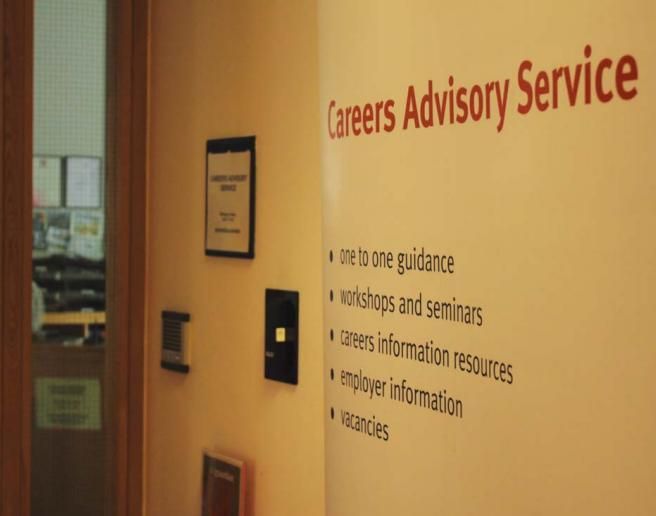
For an undisclosed sum, you could join the Patron’s Club! What is it? “An opportunity for you to invest in the future development of the Careers Advisory Service.” You’ll receive a newsletter, and your company logo will be displayed in the Careers office.
Doesn’t sound worth it? I understand. But if you donate more than £1,000 you get some special benefits! An annual dinner with Careers Advisers (yes, that’s right, an annual dinner with Careers Advisers), a link to your company on the College website, priority booking at Careers events, discounts on targeted emails and adverts in Career Choice magazine.
You’ll be in good company, too: with nine other Consultancy firms in the Club you’ll never be lonely.
Careers Fairs
You could go to one of Imperial’s five sector-specific careers fairs in Banking, Technology, Engineering, Science or Internships. You’ll have to pay to go to any of these, except the Internships fair, which is free.
You could even sponsor a careers fair! How, you ask? Here’s how! If you pay extra you’ll get to put your stand at the front of the marquee, you’ll get your logo on the front and back of the fair brochure, you’ll get your name and website on careers emails to students, so they’ll never forget you.
Advertising
You can send an email to students! £100 will buy you a “Targeted Email” to 300 of them.
You can have your name and logo on the Services leaflet, a booklet that tells students what the Careers Advisory Service does.
Or perhaps you’d prefer to advertise in the Imperial Guide to Career Planning, or the magazine Career Choice?
These are the services which our Careers Service offers to businesses to “raise their profile”, services which seem to shift the balance of power away from students and towards companies.
But according to Elspeth Farrar, the Director of the Careers Service, “student preferences are what inform the Service’s operations, rather than approaches from employers.”
“The Careers Advisory Service aims to ensure it caters for all student needs, not just the majority,” she said.
Indeed, the Careers Service does a lot more than is at first apparent. When last term I complained about the lack of help for students interested in charities, Farrar directed me to “Charity Insights”, a brand new scheme which gives 20 students £880 each to work in a charity over the summer.
The responses I received to my previous article back this up.Though most were negative about the service, nearly everyone who had used it directly (for example, talked to careers advisers) had thought it was excellent. “They’re very good, if you go in with the right mentality,” one person told me, “something that I had to learn.”
Another student said, “the only experience I’ve had is getting them to look over my CV for a UROP placement. Very helpful.”
The problem, then, is not the Careers Service itself, but rather how it is perceived by students who experience sponsored aspects (careers fairs, targeted emails) instead of non-sponsored ones (the careers library, direct advice).And, of course, how this perception affects their own lives.
The Problem
It is so easy to get caught up in the “banking is the only option” frame of mind, especially when repeated emails, adverts and careers fair stalls all push this perspective.
As one student told me, “The life that is most pushed down Imperial students’ throats is banking and banking-related jobs.” Students are largely unaware of the subtle and unintentional facts that lead them to this conclusion.
They are unaware, for instance, that the stalls in careers fairs are not positioned by random, but according to how much money each company has to spare.
It’s important to be aware that the companies advertised on the careers service leaflets are not those recommended by advisers, nor those with the best reputations, or the best employment rights, but rather the wealthiest ones, who can afford to donate.
It’s important to know that we receive so many emails from Ernst and Young not because they are excellent, but because they are rich.
It’s important to know that a lot of the information we receive is driven by wealth rather than quality.
For those of us interested in, for example, journalism (and there are a lot of us, just look at the award-winning Felix) the system can be quite unhelpful. I very nearly convinced myself to work for a bank (something I certainly would have hated) because it seemed to be the only job. My acquaintance, with whom I visited the careers fair, was exactly the same.
As another student said, “Unless you’re already clued up about what you want to do, it can seem like banking (or a PhD I guess) is the only option.”
Last term, I complained about the lack of information for people who want to work for a charity. The director of the Careers Service informed me that, in May, the Internships Careers Fair would be “specifically targeting the charity sector.”
When I went to the fair, I found that only six of the 44 stalls were held by charities, compared with 8 consulting firms and 15 technology companies. One of the charities, in fact, isn’t actually a registered charity in the UK.
Although it is not the case, it looks as though non-corporate job opportunities are marginalised (to the nervous newcomer, it looks as though these job opportunities don’t exist at all). Which, when you consider the wealth disparity between Oxfam and Goldman Sachs, is not surprising.
An inevitable consequence, perhaps, of the fact that the amount of disposable income a company has determines how much we hear about them.
What it’s like elsewhere
Cambridge is much the same as Imperial, with a “Supporters Club” consisting of representatives of Banking, Finance, Technology, Law and Consulting, as well as slightly larger variety of career events, including Journalism and Charity fairs.
Instead of Targeted Emailing, though, Cambridge has an opt-in system called CLICK. Students can select which careers they are interested in, and they’ll receive emails only about these.
UCL Careers is quite open about its funding. Its “[self-generated] income currently supports staff salaries, student IT facilities, careers publications and the development of services and events.” One wonders whether the service is funded by the University at all.
UCL has no sponsorship club of any kind, though it does have individual sponsors with even less variety than Imperial’s: Citi, Deloitte, Ernst & Young, KPMG, the usual culprits.
But none of these Universities can get anywhere near Oxford in terms of over-sponsorship. For a mere £3,500 per year, you could be a Recruiters’ Group Partner, giving you access to a database of Oxford students. The database contains personal information, including contact details, languages spoken and academic ability. Members of this group are permitted to contact the students using the details provided.
On the upside, membership of this Recruiters’ Group is free to all charities, and heavily discounted to small businesses; but whether this mitigates the creepiness of the student database is hard to say.
It seems, then, that Imperial’s Careers Service is fairly typical of the services at similar universities, though (thankfully) not quite like Oxford’s.
How to fix it
Back at Imperial: the Careers Service, of course, is not to blame for this situation: they genuinely do the best they can for students with what they are given. The problem is, I think, a lack of funding from the University.
“We have organised public sector career forums in the past,” Farrar told me, “however low student attendance rates have meant we have had to prioritise other types of fair.” That this should be a problem says a lot about the Careers Service’s funding.
I have attempted several times to find details of the Careers Service’s budget, to no avail. In response to a Freedom of Information request earlier this year, the College claimed that releasing the information would “prejudice the commercial interests” of the University.
But given that the Careers Service charges money for attending careers fairs, sponsoring careers fairs, advertising in Careers magazines, sending emails, and joining the Patron’s Club, and all without making a profit, I would guess that the central funding isn’t enough to run the service. Indeed, it seems that most of what the Careers Service does is a sponsorship opportunity for companies.
And this is what I mean by privatisation. Instead of funding the Careers Service directly, the College prefers to save money by letting companies pay for it, to the apparent detriment of students: when so many students see advertising as endorsement, this is a very dangerous position.
“The Careers Advisory Service aims to ensure it caters for all student needs,” according to Farrar. But can it do this under the current funding system?
The situation will get worse before it gets better. The Government’s Higher Education White Paper insists that universities must do more to promote “employer sponsorship” in order to “make the UK the best place in the world for university-industry collaboration.” Perhaps Imperial will start awarding corporate-sponsored degrees, as the same piece of legislation recommends.
So what can we do? Not much I’m afraid, though some small victories have already been won. Last term, I complained that there was no way of opting out of Targeted Emails, as none of the emails up to that point had offered me the choice.
Elspeth Farrar told me that “ Students can opt out of receiving these,” and from that point on, all Targeted Emails asked whether I wished to unsubscribe. A small thing, yes, but public pressure can make a difference.
The real question is whether we can convince the University to give more money to the Careers Service, and I suspect the answer is no (why would they, when other universities don’t?). Still, it’s worth a try!
A fully referenced version of this article is available at rustylight.blogspot.com