Humans are still evolving
Douglas Heaven investigates how selection continues regardless of social status
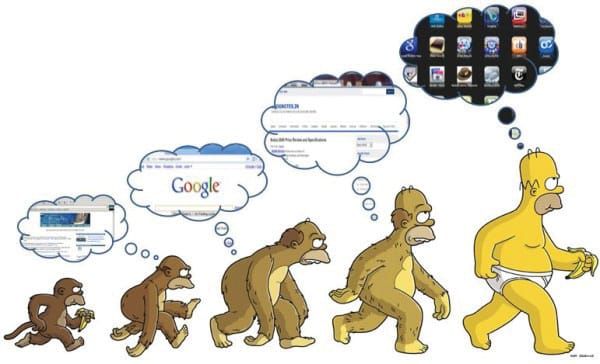
A study of the reproductive success of 6,000 Finnish people born between 1760-1849 suggests that the technological and social advances of the agricultural revolution did not put a stop to human evolution.
“It is a common misunderstanding that evolution took place a long time ago, and that to understand ourselves we must look back to the hunter-gatherer days of humans,” says project leader Virpi Lummaa, of the Department of Animal and Plant Sciences at the University of Sheffield.
But in a collaborative study, involving teams from Germany and Finland as well as the UK, Lummaa and colleagues looked at the life cycles of a large set of individuals using church records going back 250 years. They concluded that “significant selection has been taking place in very recent populations, and likely still occurs.”
By tracking variables such as survival to adulthood, mate access, mating success, and fertility per mate, the researchers found that the intensity of Darwinian selection in the population they analysed was in line with that measured for species ‘in the wild’. The findings also appear to suggest that sexual selection can still be at work in a society where the marriage system is strictly monogamous.
This is in stark contrast to the traditional view, held by many evolutionary psychologists and social scientists, that selective pressures in human evolution have been significantly weakened – if not put on hold entirely – by the flexibility our species gained through social and cultural adaptations.
The researchers also found that evolutionary rates varied between men and women. Though individuals in the population were assumed to maintain monogamous relationships, men were more likely to remarry after the death of a spouse, exposing them to slightly greater sexual competition on average over their lifetimes.
However, selection seems to have been indifferent to social status. “Surprisingly,” says Lummaa, “selection affected wealthy and poor people in the society to the same extent.” Yet another thing that money can’t buy?