Imperial are looking at your memes
College posts on Imperial Memes to warn people not to be damaging to their reputation

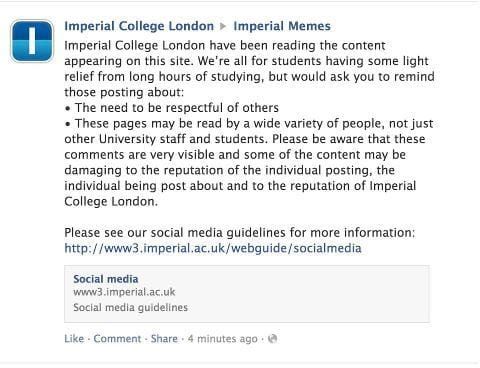
Imperial College London posted on the Imperial Memes Facebook Page to warn students about the content of some of the Memes. College posted reminding people not to damage the reputation of Imperial of themselves. The post was deleted soon after being posted.
The message said that College have been looking at the posts. “We’re all for students having some light relief from long hours of studying, but would ask you to remind those posting about:
The need to be respectful of others
These pages may be read by a wide variety of people, not just other University staff and students. Please be aware that these comments are very visible and some of the content may be damaging to the reputation of the individual posting, the individual being post about [sic] and to the reputation of Imperial College London.” A link to the College’s social media guidelines was included.
The social media guidelines is for those who are “ thinking about representing the College on social media platforms” and explicitly say what is not allowed. This includes abuse of privacy, spam, rude or defamatory behaviour, offensive or libellous comments.
Felix contacted College and provided the evidence of the post. At time of going to print, there has been no response.
Imperial Memes was set up last year by a student at Imperial, although there hasn’t been much activity recently. It does raise questions about what other pages are known by students. Felix were once contacted about the cover photo of one such page.