Imperial Citizen Science Project Expands
Kunal Wagle on what's next for the Open Air Laboratories

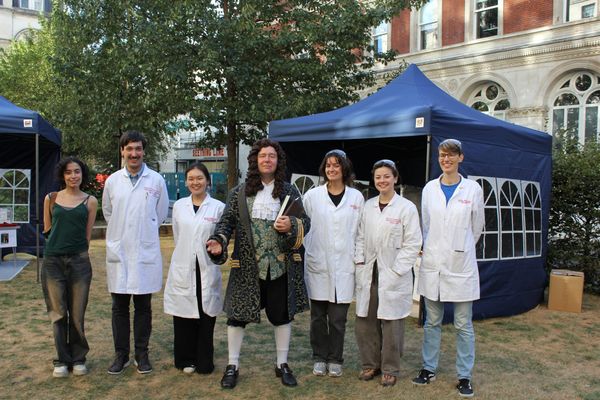
Open Air Laboratories (OPAL), a citizen science project run by Imperial College London, has expanded to cover the entirety of the United Kingdom.
The project, which was initially launched in 2007, is being rolled out across Wales, Northern Ireland and Scotland courtesy of a grant from the Big Lottery Fund.
The project’s aims are to allow people to engage with nature and environmental issues, provide the health and wellbeing benefits of being outside, and provide a learning experience. It also intends to provide valuable data that helps professional scientists understand the current state of the environment. The expansion will allow OPAL to launch a new activity on the New Zealand Flat Worm, a species that feeds on the earthworm, which is crucial for soil health.
Of the worm, Dr David Slawson, director of OPAL, said, “It is more prevalent in Northern Ireland and Scotland than it is in England and Wales. “Generally, most of the pests and diseases tend to come into South-East England and spread northwards. Here’s one that might be moving in the opposite direction.”
Alys Fowler, who is a gardening columnist for the Guardian, said of the project “OPAL is a great way to find out about the nature right on your doorstep – wherever you live in the UK.
“It’s really easy to get started; you don’t need any previous knowledge or experience and it doesn’t matter if you live in the countryside or a city. Best of all, OPAL resources are free and available to download from www.opalexplorenature.org right now, so you don’t have any excuses not to get involved!”
Over the last eight years OPAL has conducted surveys on topics ranging from earthworms to air pollution. They also have completed surveys on water and biodiversity (in 2010), and climate and bug counts in 2011.
Dr Slawson said, “This really does increase the number of observations that experts alone would not be able to make.
“We designed the surveys very carefully, and we did not ask people to do anything that was too complicated. “For example, when it came to the tree health survey, we asked people to identify insect pests (not fungal infections) which are easy to identify.
“This offers reassurance about data accuracy.”