Meeting of the minds
What went down at this year's IC Neuroscience Society conference.
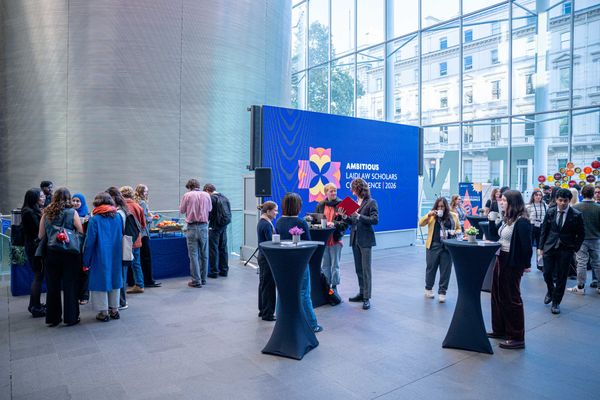
This year, Imperial College Neuroscience Society held its fourth annual conference – ‘Meeting of the Minds’ – hosting prestigious clinicians and neuroscientists from across the UK. This was indeed an apt title for the event, as research findings were shared, creating stimulating discussions and a buzzing atmosphere of intellectual curiosity!
The conference brought together speakers from many world-class institutions, including Imperial, UCL, Oxford, and Cambridge – to name a few. Having commenced a BSc in Neuroscience at UCL in 2014, I have been following this conference since its inception. On every occasion it explores current themes, with many students having the opportunity to watch a live brain dissection by the exceptionally experienced Professor Steve Gentleman. This year’s themes included neurodegeneration, neuroadaptation, paediatric neurology, and many more.
The day started with a warm welcome at registration from the committee of Imperial College Neuroscience Society, and a keynote speech on primary progressive aphasia from Professor Peter Garrard. Later in the day, Imperial’s own Dr Amin Hajitou discussed delivery of genes to the CNS to help treatment of neurodegenerative diseases and cancers such as glioblastoma. To date, methods employing retroviruses, adenoviruses, adeno-associated viruses, and herpes-simplex virus have had significant limitations. However, Dr Hajitou described why the use of bacteriophages may be a more favourable approach. Bacteriophages are viruses which only infect bacteria and are found in water and food offering us protection. They can naturally cross the blood-brain barrier, and once they have cleared their target they are removed by microglia. They work by targeting a ligand, and can be manipulated for selectivity to various molecules. The talk finished with a poignant quote: ‘the enemy of my enemy is my friend’.
The second part of the day hosted a choice of several speakers, including Dr Patrick Grover from the National Hospital for Neurology and Neurosurgery, and Dr Bianca Jupp from Cambridge University. Dr Grover discussed his research investigating functional and structural connectivity (tractography) with implications in neurodegenerative disease. His work has investigated the roles of the brain’s default mode network (introspective) and the salience network (outside world). Dr Jupp spoke next about her research on the implication of impulsivity in addiction, elucidating which neurobiological factors may influence this. Dr Jupp’s findings have implicated D2 receptors, neuronal spine density, and myo-inositol as factors, and have brought us one step closer to understanding the neurobiology beneath addiction.
These were a few of the many talks on offer throughout the day, ending on a keynote speech from Professor Sven Bestmann from the UCL Sobell Department of Motor Neuroscience and Movement Disorders. Professor Bestmann spoke about potential for precision in non-invasive brain stimulation, and the lack of disease specific models of stimulation.
This year’s inspiring conference finished with a relaxed networking session. With so much to offer, this is an annual event that is not to be missed. We eagerly await to see which speakers will be on the jam-packed programme next year. Until 2019!