Fear is in the Air
How old should one be to watch Harry Potter? What about The Hunger Games? Or Transformers? So far, age ratings for movies depended on subjective opinions.
However, researchers at the Max Planck Institute for Chemistry in Mainz suggested that we could base the age classification on the isoprene concentration in the air inside cinemas.
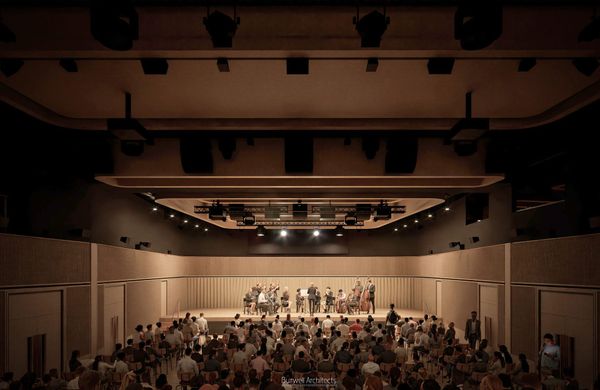
Scientists used ventilation systems in cinemas to measure the air composition during 135 screenings of 11 movies. They analysed relations between the current age rating of a given film and concentrations of 60 compounds. One pheromone stood out: the level of isoprene highly correlated with the age classification determined by the Voluntary Self Regulation of the Movie Industry. This means that the higher the suggested minimal age for a given movie, the more isoprene the audience releases.
Scary movie scenes provoke involuntary movements. As we tense our muscles or wriggle nervously, we release isoprene, an organic compound found in the muscle tissue. “Isoprene appears to be a good indicator of emotional tension within a group,” suggests Jonathan Williams, the leader of the research team. We can use this knowledge to predict how stressful a given movie might be for different age groups.
Now the scientists from the Max Planck Institute plan to study if we can use air composition to determine the level of emotions other than nervousness. To achieve this, they need to move their research to laboratories, because movies tend to provoke a variety of emotions in a short amount of time, so released chemical compounds probably mix in the air.
“Our approach could therefore provide an objective criterion for deciding how movies should be classified,” adds Williams. Next time you watch a horror movie, sniff around: it’s not popcorn, it’s literally a smell of fear.