Environmental policy seminars are back!
Insight into policy seminars at Imperial College's Environmental Technology MSci.
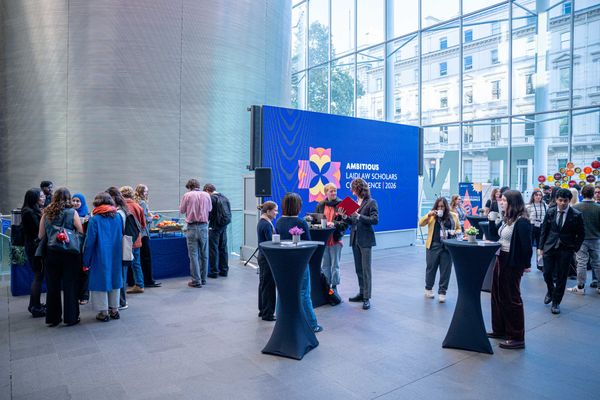
For the first time in over a year, the Policy Seminars of the Centre for Environmental Policy (CEP) and the Environmental Technology MSci at Imperial College are back to in-person sessions. The excitement of a classroom with students is coupled with the anticipation of the intense topics that are to be debated in the seminars. By the time this issue has been published, there will have been two seminars, both regarding one of the most urgent and discussed topics at present: climate change. This is especially relevant as the whole world prepares to tune in to the results of the upcoming United Nations Climate Change Conference (COP26) at Glasgow.
During the first session, Dr Joeri Rogelj, the Director of Research at the Grantham Institute and Reader in Climate Science and Policy at the Centre for Environmental Policy at Imperial College London, presents the key insights of the latest physical science assessment produced by the Intergovernmental Panel on Climate Change (IPCC).
These insights show how elaborate the physical science assessment reports are, and how multiple groups of experts across the world are summoned to accomplish this task. The report also emphasizes the rapid and unprecedent effects of climate change, evident in the planet’s rising temperatures, the magnitude of extreme climate events, and perturbations of biogeochemical cycles. In this sense, this report allows policymakers to understand the urgency and impacts of climate change, the necessity of reducing emissions, and the need to adapt to the already irreversible impacts of emissions.
However, despite this mounting evidence and unprecedented media communication, action is still lacking at the velocity and efficiency we would expect. This is the topic that is introduced in the second session, by Dan Hamza-Goodacre, a current advisor to the COP Unit and the Energy Transition Council. Hamza-Goodacre also leads the cooling sector work at UN High level Champions (amongst many other things).
His lecture shows that countries and their governments have various practices, products, technologies, and strategies at their disposition to reduce emissions and to partly solve the climate crisis, but that they are not being adopted as fast as we would expect. For more rapid action to be taken, we need to understand and work in influencing human behaviour so that these already existing practices and technologies can be implemented and used effectively to tackle climate change.
The Policy Seminars organized by the CEP at Imperial are valuable spaces to revise and educate ourselves on current policy issues, which is of the highest importance for our planet’s future. Personally, I have left the seminars with more questions and a critical thinking of the current events, media, and information that I am exposed to everyday. These are the insights that are necessary to navigate our rapidly changing world.