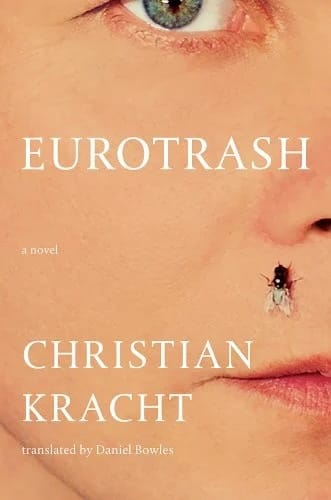
Eurotrash
Eurotrash is a demeaning portmanteau, combining “European” and “white trash”, used to describe pretentious European elites. Provocative from the start, Christian Kracht’s autofictional International Booker Prize Winner foreshadows the unsettling aristocratic class themes explored within the novel.
A Swiss-German middle-aged man trying to break free from his family’s past; a terminally, mentally ill mother, muddled with vodka and pills; and a road trip in the Swiss Alps, beginning from Zurich, where Christian finds his mother at a psychiatric clinic.
Eurotrash’s uniqueness conveys itself through the narrator’s voice, as he battles with his own consciousness and analyses what happens behind the scenes of such wealth filled with insecurity and scrutiny. Kracht’s autofiction is heft with themes of guilt, privilege, and our responsibilites to history; yet despite all this grim, Kracht still manages to add some lightheartedness through dark humour.
heft with themes of guilt, privilege, and our responsibilites to history
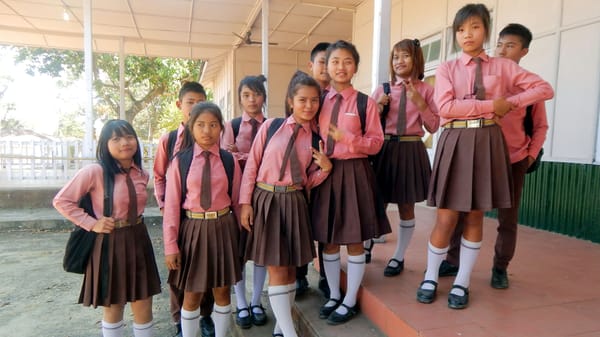
This is evident throughout the trip taken in a taxi with the same driver. Christian and his mother carry with them an absurd amount of money in a bin bag that they try to get rid of by offering it to people they meet along the way, likening money to garbage. This fashion in which money is treated can seem shocking and provocative to some readers, such as when Christian takes out CHF 60-80,000 to give to three Indian women they notice atop the glacier – all of which is blown away by the wind whilst the women politely refuse to accept it.
Christian’s maternal grandfather’s passionate involvement in the SS – to the point where his de-Nazification was unsuccessful – overshadows their lives and is repeatedly referenced. Christian at once resents his mother for her compliance but is also paradoxically saddened by her entrapment. From this, it seems only he has the tools to break free from this invisible chain.
With philosophical quotes that make you stop for a second and reflect deeply, such as “For everything that does not rise into consciousness will return as fate” and references to music, art, and pop culture ranging from classical to modern, Eurotrash takes you through many stories in one. Although it may seem like the whole novel is just a bunch of back-and-forth banter between mother and son, you can’t help but engage in trying to understand Christian. While sometimes repetitive with the mother’s requests to change her colostomy bag, this act comically brings them closer together. They argue, Christian tells stories to lighten his mother’s mood, and they make up.
Eurotrash takes you through many stories in one.
Recalling the final years of war when his grandfather fought as a soldier, and his mother was only a small child, Christian questions, “What had she been forced to see with her own eyes in the mangled wasteland of her childhood?” Further, we learn more about her life when Kracht mentions “she had, after all, been forced to assert herself not only against the collective SS horror of her father all her life, but also against my father, her very wealthy husband.”
Despite all of this, there is a noticeable emotional distance between them, as if a wall between past and present has been drawn. After his mother discloses the sexual abuse she endured, and Kracht details his own memory of a similar event that he was a victim to aged 11, he writes, “should one ever succeed in interrupting the cycle of history, one could influence not only the future but the past as well.”
This draws back to the idea of fate and the extent of our control in occurring events, especially when it comes to our boomerang-like nature of family history. It begs several questions. How can one influence the past, let alone interrupt history? To what extent is our past linked to and influences our future? Is the past merely a memory, sometimes written on paper, that can only now be interpreted and learnt from?
Fearlessly, Kracht sheds light on the unsaid of some Swiss and German family history that has weighed heavily on their shoulders. Thus, Eurotrash reaches one of literature’s most important purposes: to provoke and reveal what lies beyond the surface.