Frankenstein
BFI LFF 2025 Gala: Romanticism or not?

Mary Shelley’s original Frankenstein; or, The Modern Prometheus (1818), is a classic Romanticist novel after the end of the Enlightenment period (1685-1815). Romanticism was an artistic, literary, and intellectual movement in Europe started in the late 18th century that prioritised nature, emotion, and individualism over the logic and reason of the Enlightenment era. Knowing this, it is easier to understand how Guillermo del Toro tries to adapt this acclaimed piece of literature to our modern cinematic world.
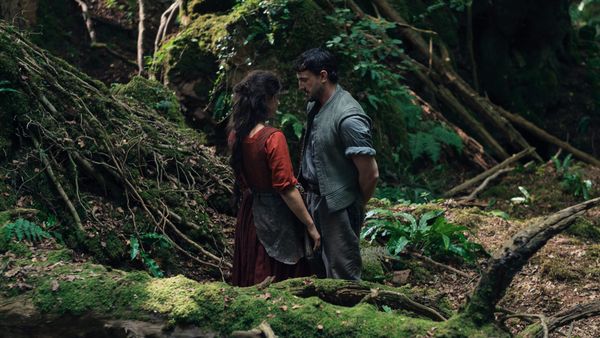
In terms of visuals, the film illustrates del Toro’s signature ornate style suffused with decay. The colour tones and tangible realism grasps onto the audience, and the creature (Jacob Elordi) is convincingly portrayed to be disturbingly human. Every shot feels like a moving oil painting, steeped in 19th century Romanticism yet threaded with a modern Gothic flair. Nevertheless, del Toro’s adaptation of the characters, themes, and storyline seem to be slightly less compelling.
Frankenstein (2025), similar to the novel, is structured as a frame narrative; it opens with Captain Anderson (Lars Mikkelsen) and his Danish crew stranded in the Arctic. Here, they rescue a fatally injured Victor Frankenstein, portrayed by Oscar Isaac, who starts off his tale beginning with his childhood and loss. Victor, as the protagonist, is initially presented as the axis of logic and rigorous pursuit of scientific knowledge. He is a deeply conflicted idealist: a visionary scientist driven by the Enlightenment dream of surpassing death. However, his ambition is tainted by pride; when he finally brings life to a lifeless body, his horror is less about the creature’s deformity than about his loss of mastery over it, and he cannot face the moral weight of his own success.
On the other hand, Romanticist ideals are embodied mostly by the character Elizabeth, stunningly played by Mia Goth, who is given more depth and serves as the emotional bridge between Victor and the world he has forsaken. As a Catholic, she represents the domestic, emotional, and moral realm that Victor’s scientific obsession has abandoned. Her condemning attitude towards Victor signifies a central theme: reason without empathy leads to destruction. Elizabeth’s character is significantly re-imagined by del Toro compared to that of Shelley’s novel, in which she is Victor’s bride-to-be instead of his younger brother William’s fiancée as she is in the film.
A concerning aspect of the film was the choice to reduce Victor’s character to an irredeemable one, while the creature is kept as the one the audience should feel empathy for. By the creature becoming the moral and emotional anchor, the story is simplified: a human who loses his soul and a monster who gains one. This deviates from the original novel’s underlying themes of creator and creation, guilt and suffering, as well as isolation and revenge. The ambiguity of who truly is the monster is swiftly disregarded, as in del Toro’s version of the story there is a clear answer: Victor.
A human who loses his soul and a monster who gains one.
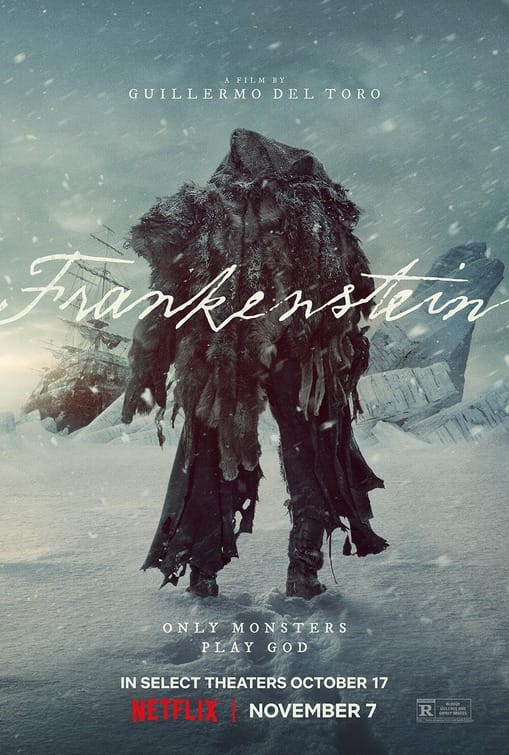
Ultimately, Frankenstein (2025) is a visually captivating adaptation and a powerful story about ambition, empathy, and the consequences of playing God. While not entirely faithful to the original, del Toro’s creative interpretation is filled with powerful moral resonance.
Science Fiction/Horror
Director: Guillermo del Toro
Screenwriter: Guillermo del Toro
Starring: Oscar Isaac, Jacob Elordi, Christoph Waltz, Mia Goth, Felix Kammerer
Run time: 149 min
Release date: 17/10/2025