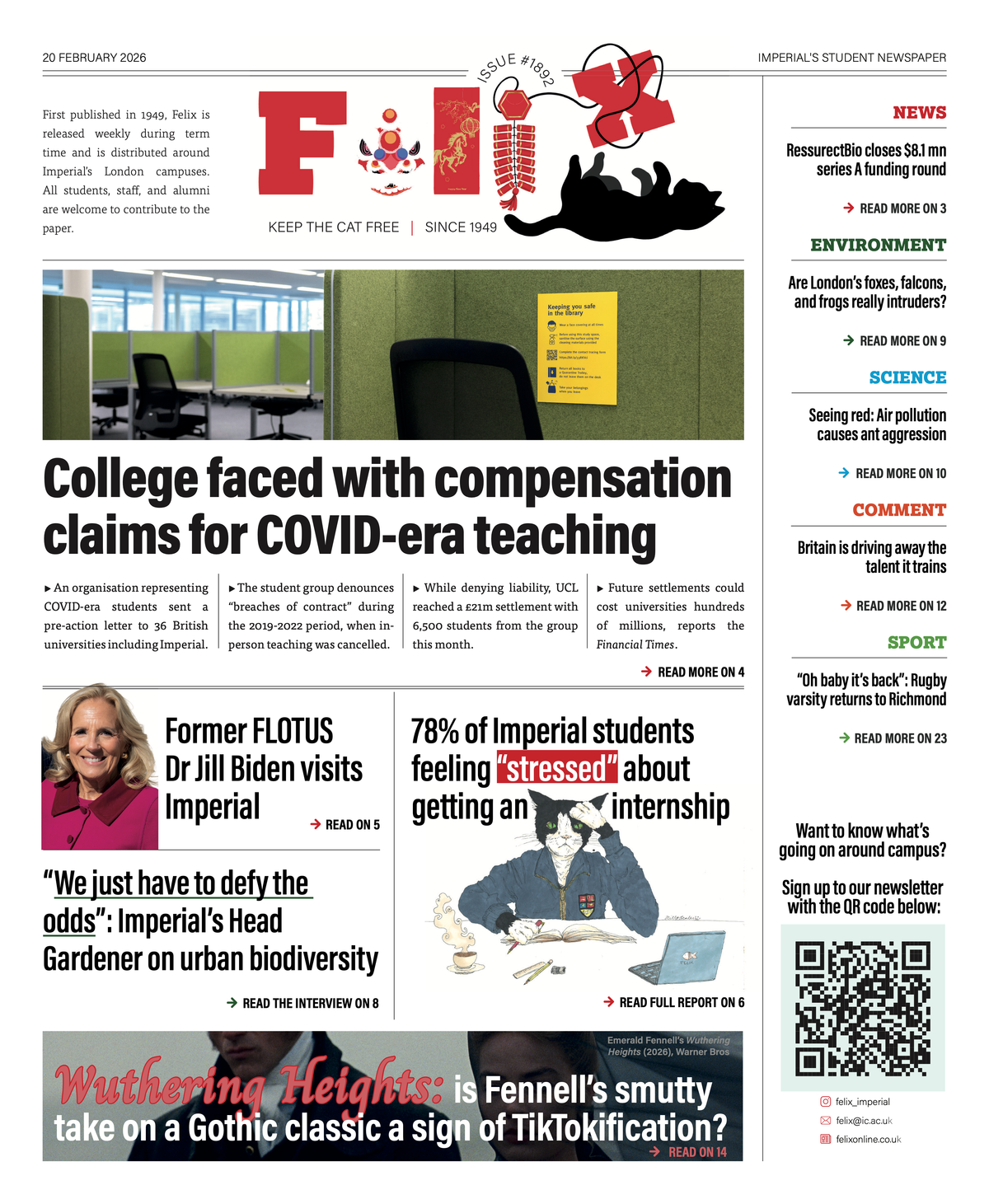
Imperial faced with compensation claims for COVID-era teaching
A settlement between UCL and former students is setting the stage for similar pandemic-related compensation demands from UK universities.

Former Imperial students might be eligible for financial compensation for “breaches of contract” by the university during the 2019 university staff strikes and subsequent COVID-19 pandemic, according to an organisation representing students and graduates under a Group Litigation Order.
The entity, called Student Group Claim, sent pre-action letters on behalf of 170,000 students to 36 UK universities, including Imperial, demanding compensation for tuition fees charged to students between 2019 and 2022. It alleges that the universities failed to deliver on promises of in-person teaching during the pandemic.
Floodgates for additional pandemic-related claims against UK universities were opened this month when UCL reached a £21 million settlement with 6,500 students backed by the same organisation.
The UCL case was due to be heard in March. Although the university denied liability and aimed for the settlement to remain confidential, the total payout was leaked to the Financial Times.
The FT reported that further settlements could cost UK universities “hundreds of millions.” The Guardian reported that lawyers involved in the case stated individual undergraduates could each claim around £5,000 in compensation.
Student Group Claim, supported by law firms Asserson and Harcus Parker, is offering affected students a “no win, no fee” deal – claimants will only pay 35% of awarded damages to the organisation if their case is successful.
The group’s website states: “There is a contract between every student and their university. The student pays course fees and the university agrees to provide in-person tuition, access to facilities and other services set out in its contractual documents, prospectuses, and promotional materials.”
It continues, “Universities breached their contracts with students from 2018 onwards, in response to strikes and then COVID-19. During those years they cancelled in-person classes or moved them online, as well as restricted access to facilities such as libraries.”
This, Student Group Claim asserts, is sufficient basis for a demand for compensation based on UK consumer law. “COVID-19 and to some degree the strikes were not universities’ fault, but the question is who should bear the risk of the damage they caused to students. In our opinion, universities are better able to bear that risk,” the group wrote online.
Imperial launched its “multi-mode” teaching model in response to the pandemic in October 2020, intended to involve a combination of in-person and remote learning. It notably sent “lab in a box” kits to students’ homes when labs closed.
That same month, Felix reported on an online petition that reached nearly 150,000 signatures demanding reduced tuition fees to reflect the new teaching arrangements. Imperial’s then-interim Vice Provost of Education, Emma McCoy, rejected these calls at the time, telling Felix that the new hybrid model delivered a higher standard of teaching than previous, in-person years.
Imperial was named University of the Year by The Times and The Sunday Times Good University Guide in September 2021, in recognition of the quality of its teaching during the COVID-19 pandemic. The university also saw its results for student satisfaction in the National Student Survey 2021 rise to 84%.