"More books, less bombs": Queens Lawn walkout for International Youth Strike

Students gathered at Queen’s Lawn at 11am on Friday 20 November as part of UK-wide walkouts and protests for the International Youth Strike. Around 22 people attended, including students and staff members part of the University College Union (UCU), one of the three worker Unions at Imperial together with Unite and Unison.
The initiative was organised by five Imperial student societies: Climate Action, Feminists, Socialist Workers, Action for Palestine, and the Revolutionary Communists society, who did not appear in the promotional flyer due to “bad timings”, according to a society member, but they confirmed to be organisers.
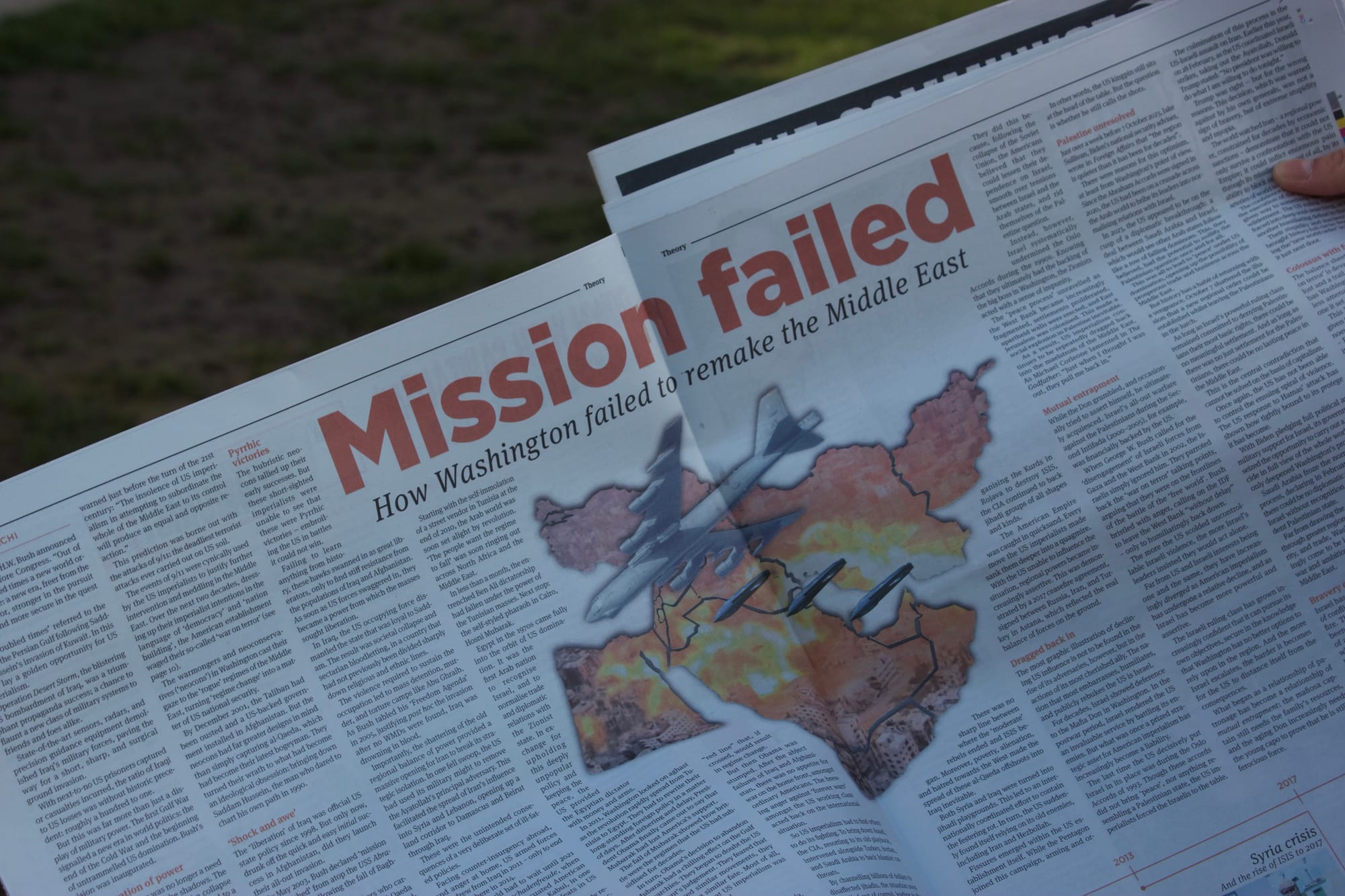
Society members and attendees gathered around banners that displayed motives such as “Fight for our future, not their wars” and “Imperialist college London complicit in genocide”. The Revolutionary Communist society displayed a banner that included a picture of Vladimir Lenin. The society was also selling a newspaper with articles on topics like the geopolitical conflicts between the United States and the Middle East. They charge £2 per issue, which they say is destined to commission writers; they have previously had this arrangement in place. Members of the Revolutionary Communist society in Bristol were interviewed by ITV.
Some of the chants amongst attendees included “Labour government you can’t hide, we charge you with genocide”.
Members of ICL action for Palestine told Felix their main ask toward Imperial echoed that of the International Youth Strike: to fight for a future free from military interests, stopping militarisation funding and instead increasing investments toward public education and healthcare.
Revolutionary communist society members at Imperial also carried out a speech scrutinising Burnham’s Labour government: “They are paying lip-service to the Palestine movement in order to clean up the image of the Labour Party.”
They also criticized UK government plans such as Burnham’s objective to lift military spending from 2.6% of GDP to 3.5% by 2035, as he announced in his first speech as Prime Minister in July. London saw its main protest in Trafalgar Square, where hundreds rallied as part of the mass movement, including Imperial students. More than 300 people gathered from 1pm to around 5:30pm according to The Standard’s live coverage.
A far-right counter protest also took place in Whitehall, a wall of around Met 50 police officers reportedly forming to separate the two rallies. The Standard reports the Met Police arrested ten people; there is no information as to what protest they were rallying for.
Some university walkouts around the UK reached a much larger scale than Imperial’s. The University of Bristol gathered hundreds of students to protest war, unemployment, and cost of living: “We think that a lot of the university's aims are centred on profit-making rather than our actual needs and concerns.” The BBC reports the University of Bristol stated they “support the right to freedom of expression and to engage in lawful, peaceful protest on issues that are important to our community."
A member of ICL Action for Palestine told Felix it felt more difficult to mobilise people at Imperial than other universities where humanity degrees have a much stronger focus, where they felt there is more of a tendency to actively convene and rally for political causes.