AI to Z: The paradigmatic shift facing the world as we know it
Examining the impacts of AI from industry to intelligence.

Throughout history, certain events have fundamentally transformed our world. The Industrial Revolution moved people from farms to cities as industrialisation expanded. The internet granted us access to all human knowledge within devices we carry everywhere. And finally, the pandemic changed how and where we work, accelerating virtual workspaces. Now, we stand at the cusp of perhaps the biggest change since the Industrial Revolution: the societal integration of AI.
AI’s rapid growth and influence are undeniable. Already, AI-driven recommendations account for 80% of content viewed on Netflix and 35% of Amazon’s revenue. Tools like ChatGPT have seen unprecedented usage, reaching 1 million users in just five days after its launch in November 2022.
Companies like Nvidia are soaring in value, and Large Language Models (LLMs), which enable AI to comprehend language and context, are expanding at rates surpassing Moore’s law. For instance, GPT-3’s LLM contains 175 billion parameters – over 100 times the 1.5 billion parameters of its predecessor, GPT-2. Clearly, AI’s societal impact will only continue to grow. While the benefits are significant, many are also concerned with 54% of Europeans worrying about job losses due to automation, and 61% about privacy implications, according to the European Commission.
These concerns are understandable. AI has taken a foothold in technical fields like science, with two out of three of the 2024 Nobel Prizes involving AI. Furthermore, it excels in areas once thought uniquely human, such as language recognition and replication, mimicking human voices nearly perfectly. Simply put, AI processes information orders of magnitude faster than people, has access to all human knowledge, requires no breaks, and is rapidly becoming proficient in complex problem-solving and creativity. Its ability to ‘brute force’ processes also offsets many drawbacks compared to humans in novel, data-starved contexts. You don’t need an innovative solution if you can try every single one and see which is best.
AI is the very definition of a double-edged sword; it has the potential to revolutionise the world for better or worse.
Economic data further justifies concern: studies suggest unemployment rates of 15-20% can trigger major crises, with the Great Depression peaking at 25%. Others suggest if 30% of jobs are replaced within 5-10 years, job markets could be overwhelmed, and our ability to create new jobs will be hindered. AI’s rapid
development predominantly threatens industries like transportation, retail,
finance, and manufacturing due to the ease of automation and the superiority of AI in terms of data handling. These industries account for around 40% of global employment – 1.3 billion jobs.
However, AI also promises tremendous positive impact: faster, more effective medical diagnostics, uncovering hidden data patterns, automating repetitive tasks and, in general, massively improving efficiency across various sectors – its potential is staggering. In fact, PwC predicts that by 2030 AI will boost GDP by 14%, adding $15.7 trillion to the global economy – assuming we adapt adequately to its integration.
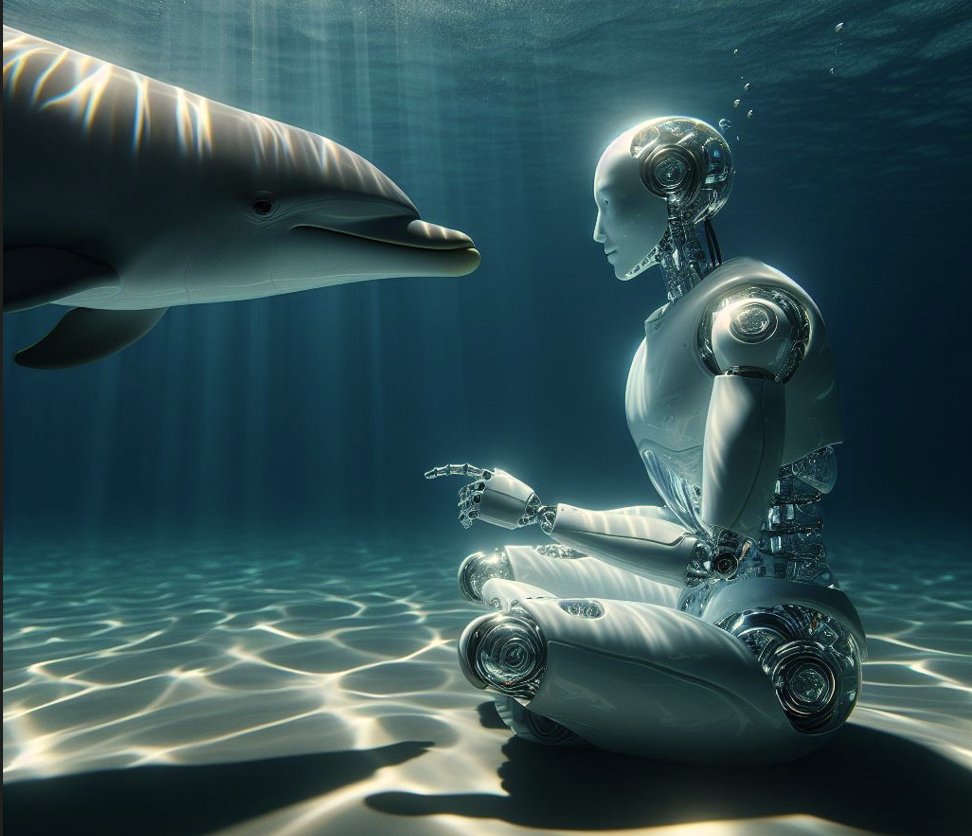
AI is the very definition of a double-edged sword; it has the potential to revolutionise the world for better or worse. Without adequate regulation and control of its integration, it poses a major threat to the working class’ livelihood and, therefore, to the global economy. However, if a symbiotic relationship between man and machine can be fostered, it has the potential to shatter barriers and birth a new age, just as the internet did a few decades ago.
Whether humanity has opened Pandora’s box once too often or has now opened the door to a prosperous new age is yet to be seen; as individuals, we are simply just along for the ride...