The $1.95 billion soda is now in the UK: meet Poppi
From kitchen recipe to Shark Tank pitch, Poppi’s case stands out in the beverages industry.
As someone with a soft spot for sparkling beverages, I find myself pairing most of my meals with one. Whenever I get the chance to try a new brand or flavour, I take it. However, one brand has been waiting at the top of my wish list – until now. With its arrival in the UK finally official, it’s time to give it a taste. I’m talking about Poppi.
In this article, I explore Poppi’s origins, its rapid rise in the beverage industry, its headline-making acquisition by PepsiCo, and what the brand’s expansion into the UK could signal for its next chapter.
Let’s start with the fact that Poppi wasn’t always the vibrant, youthful brand we know today. To understand its beginnings, we need to go back to a TV show that holds a special place in many business school students’ hearts: Shark Tank.
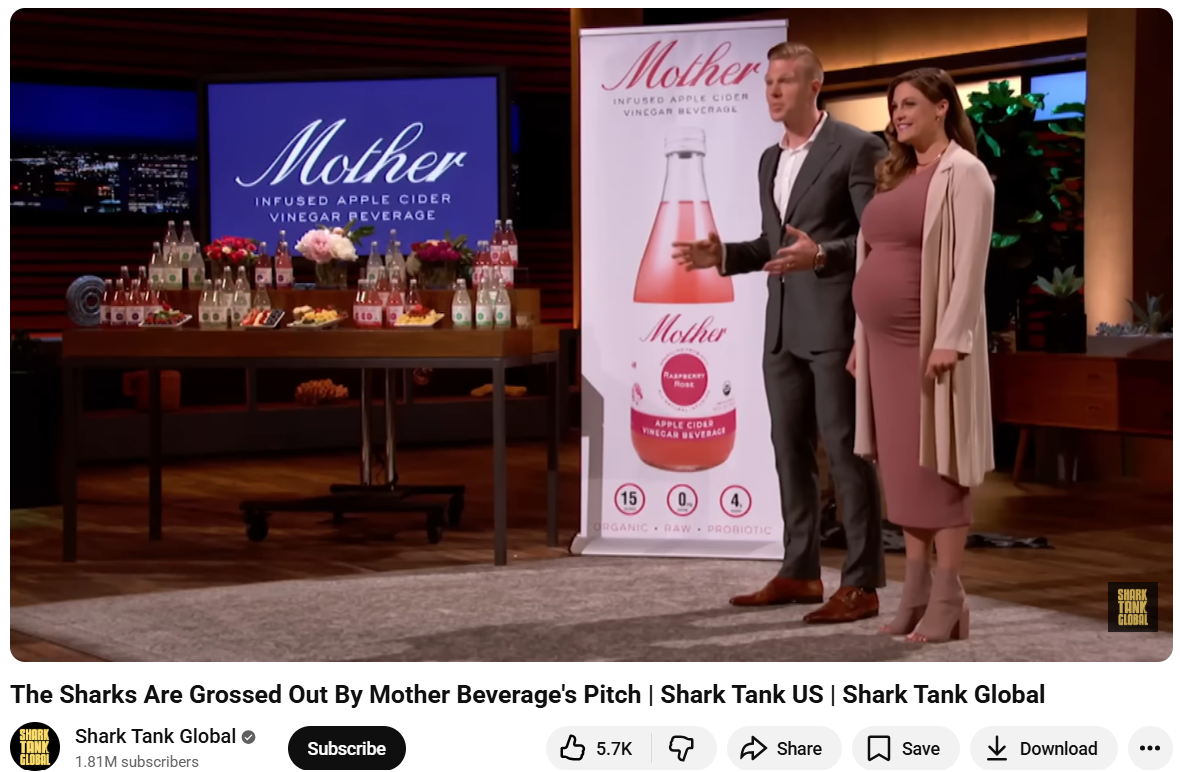
When Allison and Stephen Ellsworth appeared on the show in 2018, they were pitching a very different brand called Mother: an all-natural sparkling probiotic drink infused with apple cider vinegar and low in sugar. The drink had originally been created by Allison in her own kitchen as a way to support her personal health journey.
When investor Kevin O’Leary reflected on the risk of investing in Mother, he seemed to predict the company’s future, saying, “The only way I get out of this thing alive is if somebody buys you at some point”. He then turned to who he considered an expert on the matter, Rohan Oza, who ultimately became the first investor to believe in the brand’s potential, acquiring a 25% stake for $400,000.
With Oza joining as a shareholder, a series of changes followed. Mother was rebranded as Poppi and launched in 2020, now in cans rather than glass bottles. The brand flourished during the pandemic, appealing strongly to Gen Z through a playful, bold, pop culture driven identity. Founder Allison Ellsworth became the first face of the brand, sharing her journey building Poppi through TikTok. One viral video reportedly drove a 200% increase in sales the following day, proving the power of authentic, personal stories of hard work and vision.
Poppi’s momentum has been driven by its ability to redefine the role of soda in contemporary culture, while aligning with consumers’ growing interest in healthier drink options. Rather than limiting itself to supermarket shelves, the brand expanded into merchandise, collaborations, and experiences, building a lifestyle around the drink.
By 2023, Poppi had become the number one soda on Amazon in the United States, going beyond the traditional battle for physical shelf space and rapidly gaining traction in the channel favoured by younger generations. In 2024, the brand reached another milestone with its first Super Bowl commercial debut.
These achievements were accompanied by strong commercial performance, with Poppi reportedly surpassing $500 million in sales in 2024. Yet perhaps the brand’s most defining moment came the following year, when PepsiCo announced its acquisition for $1.95 billion, including $300 million in anticipated cash tax benefits, resulting in a net purchase price of approximately $1.65 billion.
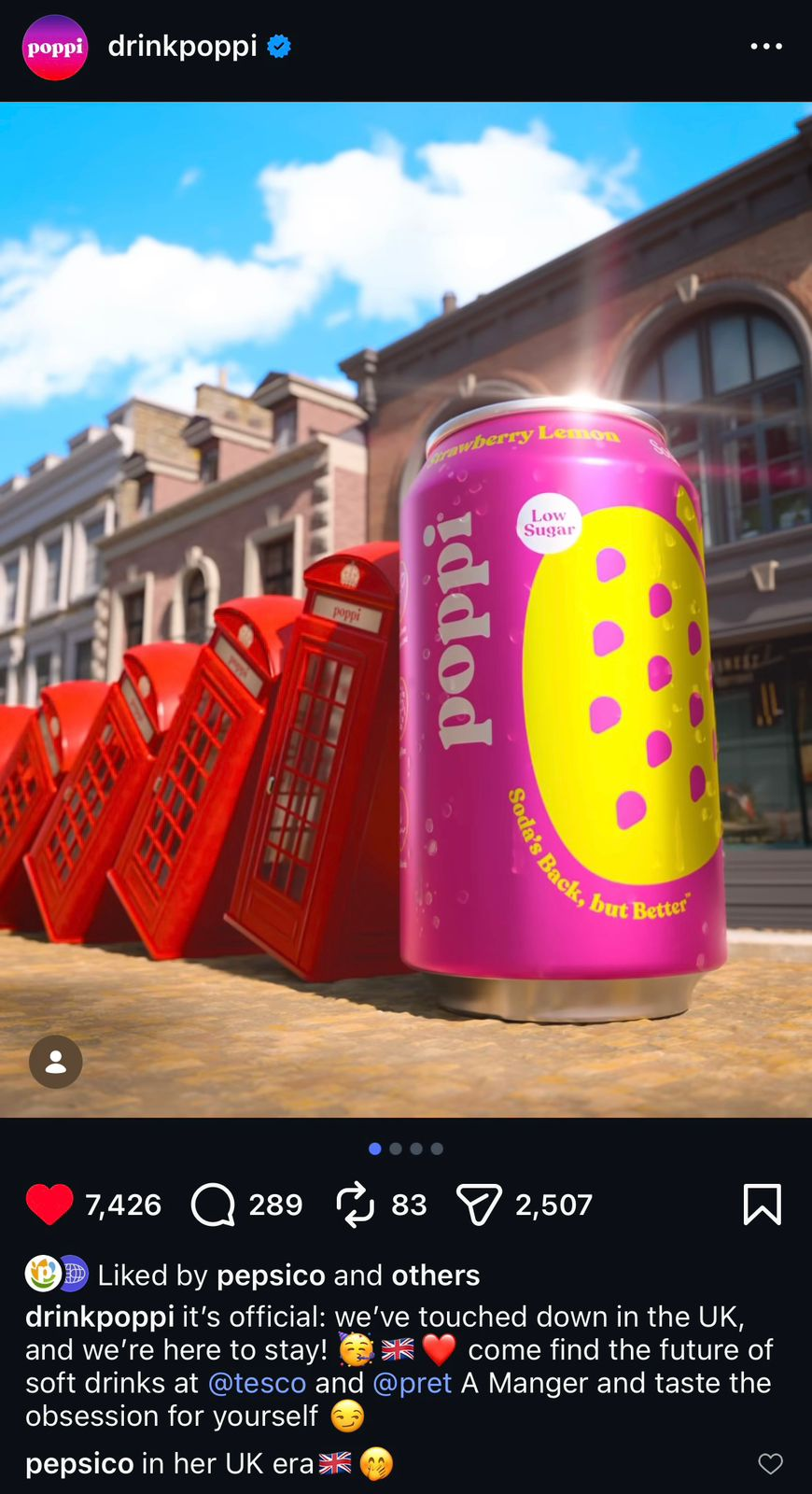
PepsiCo’s distribution power is already beginning to show results. By March 5th, 2026, Poppi had entered the British market through two major UK retailers: Tesco and Pret a Manger. At Tesco, the drink is sold at £5.75 for a four-pack of 330ml cans, placing the unit price at around £1.44 per can.
In relative terms, Poppi’s pricing strategy places the brand at an accessible level within the functional beverages category, allowing it to compete with products such as Living Things (£1.37 per 330ml can) and, at the higher end of the segment, Xoxo (£1.96 per can).
This entry reinforces PepsiCo’s strategy to strengthen organic growth by accelerating product innovation and expanding its functional beverage portfolio. While it is still too early to assess how UK consumers will adopt the brand, Poppi’s launch offers an interesting case to observe as the functional soda category continues to develop in the UK.