Trump is no saviour, but who are we to tell Iranians how to feel?
Exploring what diasporic Iranians feel about the war in Iran.
When a news anchor confirmed that Ayatollah Khamenei had “drank the sweet, pure draught of martyrdom,” the Iranian diaspora around the world erupted in celebration. Many inside Iran likely rejoiced in silence. But comments chastising celebrating Iranians have become common, as have claims that such celebrations never happened at all.
For example, when the Iranian women’s national football team remained silent during the national anthem, there were claims that they did so out of mourning rather than in protest against the regime. These claims persisted despite the state-controlled Islamic Republic of Iran Broadcasting labelling the team’s refusal to sing as “the height of shamelessness and betrayal.” Meanwhile, patronising comments scolded Iranians for celebrating, comparing them to Iraqis who cheered after the fall of Saddam Hussein.
It is clear that the United States and Israel do not have the best interests of the Iranian people at heart. Schools, health centres, and desalination plants have reportedly been struck, and on Friday the Iranian Red Crescent estimated that over 1,200 Iranians had been killed. Nations often rally around unpopular governments when they perceive an external threat. In the four months preceding the Falklands War, Margaret Thatcher was the least popular prime minister in British polling history, but the next month her approval ratings soared to 56%. Then again, the Iron Lady had not massacred tens of thousands of Britons.
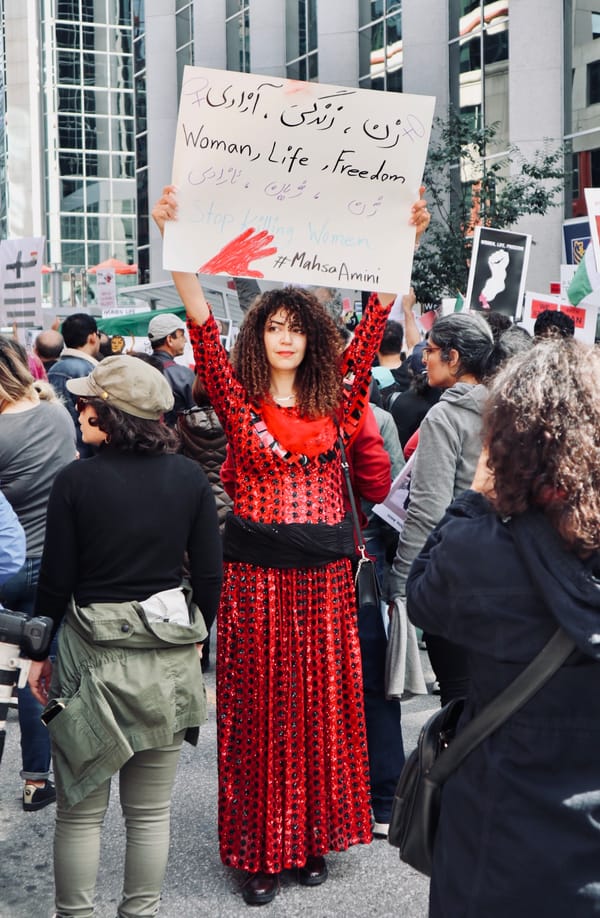
To better understand how some Iranians feel, I spoke with demonstrators outside the Iranian embassy, a short walk from Imperial. While the pavement outside the embassy had been closed off by a massive police presence, the road opposite was filled with chanting protestors, with their pre-1979 Lion and Sun flags spilling over into Hyde Park.
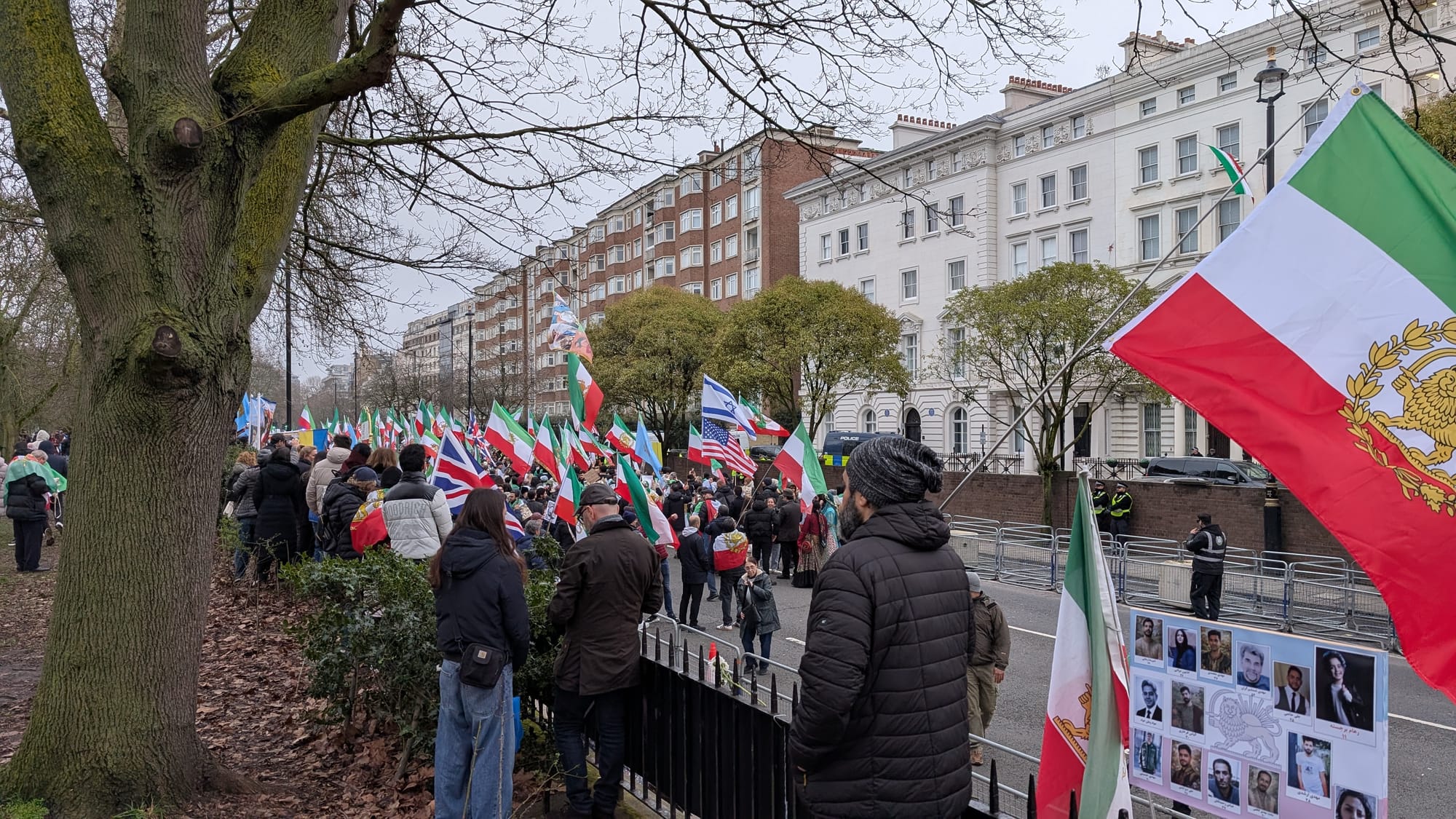
Most of the people I spoke to were jubilant that the US and Israel were, as one man put it, “helping us.” One protestor, a doctor in the NHS, told me that he did not see the conflict as a war but a “rescue mission, a humanitarian military intervention”; he acknowledged that “there is a benefit for the US and Israel as well.”
When asked about civilian casualties, he replied: “Of course, we are worried. My parents are in Isfahan, and [due to the internet blackout] I am barely able to contact them. But I trust that [the US and Israel] are only targeting the security apparatus.” Another demonstrator responded that he was more afraid of the Islamic Revolutionary Guard Corps. His brother was shot by government forces, and tens of thousands of protestors have been killed by the state in recent waves of protests.
The doctor added that injured protestors were being hunted down in hospitals and executed, “that is worse than a missile landing in my neighbourhood. In Iran, you can hear cheering over the explosions. Nobody loves war, but the regime must end.”
Others told me that “freedom is close,” predicting that the regime could collapse as soon as next week. “They are finished once Reza Pahlavi [the son of the last Shah] returns.” Demonstrators called on the British government to proscribe the Islamic Revolutionary Guard Corps a terrorist organisation, and to expel the Iranian embassy from London.
What happens then is less clear. Washington would have you believe that liberal democracy blossoms in bomb craters, but history suggests otherwise. I asked some demonstrators why they were so sure that Iran would not suffer the fate of Iraq or Libya, where the toppling of a dictator was followed by more civil war. They responded that Iran had been a nation-state for millennia, whereas those countries hadn’t existed a century ago, and were created when the British “drew lines on maps” of the former Ottoman Empire. Iran is united as a country against the mullahs, they claim, and they are hopeful that “we will build a free, secular democracy.” The doctor believes there will be a referendum for the people to choose between a parliamentary monarchy under Reza Pahlavi, or a presidential republic. He affirmed that “there is no reason for me to stay in the UK if I can contribute to my country.”
Of course, there is an inherent sampling bias in interviewing protestors chanting for the downfall of the regime, and it is hard to know whether the diaspora’s reaction to the war reflects that of the average Iranian. Some videos depict crowds on the streets mourning the late Khamenei, while others show celebrants toppling his statue.
While there is little reason to believe that a decapitated regime will soften domestically, the protestors hope that weakening the military will pave the way for an organic revolution. Who are we to dismiss their hope?