We should all be more pretentious
“If you only read the books that everyone else is reading, you can only think what everyone else is thinking.” - Haruki Murakami
In an age obsessed with so-called authenticity, the word “pretentious” is often thrown around pejoratively – particularly towards those who enjoy film and literature. Why has this word become such a put down?
The definition of “pretentious”, “trying to appear or sound more important or clever than you are, especially in matters of art and literature”, to me, is the same sentiment as fake it till you make it, a philosophy many people live by day-to-day. So why, in a different form, does it incite such hostility?

Why do we resent pretentiousness?
There is something rather contradictory about our relationship with authenticity. We are constantly encouraged to reinvent ourselves, become more ambitious, knowledgeable, interesting versions of who we already are. Yet when someone consciously attempts to cultivate their cultural tastes, this same aspiration is suddenly regarded with suspicion. For some reason, we regard intellectual self-improvement as less authentic than any other form. We seem to have developed a reverence for the idea of the “natural” self, as though our tastes and interests ought to emerge fully formed, untouched by aspiration or outside influence. There is nothing admirable about remaining exactly as we are.
In my opinion, when people say pretentious, a lot of the time they really mean phony. If they took a leaf out of Holden Caulfield’s book (little “pretentious”’ reference for you) and abused the word phony instead, they might be able to communicate what they mean better. There is a distinction between pretending to appreciate something to impress others and aspiring to appreciate something because you genuinely want to. Even then, I don’t think the two are necessarily mutually exclusive. Someone might initially pick up a difficult novel or watch an obscure foreign film because they think it makes them look intelligent, but who’s to say they won’t discover a genuine appreciation for it along the way? To me, the motivation in this scenario matters less than what it can grow to become.
The word has become an easy way to tear down poseurs and announce you’re not one of them. There is something self-congratulatory about accusing someone else of pretentiousness, as though recognising it makes you somehow more authentic. Surely this is a self-report of the user’s own insecurity – an inherent level of judgemental projection. By dismissing someone else’s aspirations as pretentious, we reassure ourselves that our own tastes are more genuine. In doing so, we’re asserting our authority to decide what constitutes legitimate cultural expression. There is a certain irony in that.
The cause of the hostility incited by pretentiousness, in my opinion, is that it allows mobility. Our disapproval, as Dan Fox argues in Pretentiousness: Why It Matters, is a tool of “class surveillance” used to ensure people stay where society has placed them. There is an implicit assumption that certain cultural interests belong to certain social classes, and that aspiring to participate in them amounts to getting ideas above one’s station. Fox questions why an interest in arthouse cinema should be interpreted as evidence of social climbing rather than simple curiosity. Why should appreciating a particular kind of art require the appropriate upbringing, education or cultural credentials? The whole point of art is that it offers us access to experiences and perspectives beyond our own. Yet we seem determined to treat cultural taste as something inherited rather than acquired, as though an interest is only legitimate if it comes naturally to us. The accusation of pretentiousness becomes a convenient means of policing these boundaries, discouraging people from venturing beyond the identities society has assigned them.
This hostility is especially apparent in cinema. In 2011, New York Times writer Dan Kois wrote about abandoning “aspirational viewing”: watching difficult, critically acclaimed films in the hope of becoming someone who appreciates them. Rather than persevere, he decided to embrace only his existing tastes. There is something depressing about this: why should our tastes be fixed, rather than something we consciously cultivate? What Kois dismisses as an obligation could equally be understood as an ambition to become a more intellectually curious version of oneself.
Besides, how much of what we consider our authentic taste is genuinely our own? Our preferences are shaped by the people we surround ourselves with, the things we happen to encounter, and the cultural environments in which we grow up. Someone who develops an appreciation for arthouse cinema because their parents introduced them to it is rarely accused of pretentiousness. Yet someone who deliberately seeks out the same films, perhaps precisely because they were never exposed to them, risks being dismissed as a poseur. Why is the former’s appreciation considered more legitimate than the latter’s? A consciously cultivated taste is no less genuine than an inherited one.
Have they engaged with the film on its own terms, rather than simply using it as an excuse to demonstrate their own intelligence?
This desire to become someone other than who we presently are is hardly confined to our cultural tastes. In Noah Baumbach’s Frances Ha (2012), Frances is perpetually attempting to reconcile the person she imagines herself to be with the rather less glamorous reality of her circumstances. Her aspirations are frequently unrealistic, her attempts at self-reinvention usually ridiculous, yet the film never suggests that she should be ashamed of wanting more from herself. There is something endearing about her refusal to abandon an imagined version of her future simply because she hasn’t yet managed to inhabit it. We must extend the same generosity to those whose intellectual ambitions exceed their present understanding.
Historically, society was a hierarchically arranged consortium of identities, whereas now it’s a rush of individuals struggling towards earnest self-improvement. No-one can enjoy these liberties if we deny them to others. Even if someone’s cultural interests begin as an affectation, they may well develop into something genuine. There is more value in aspiring to understand something than dismissing it simply because it doesn’t come naturally to us.
What does this mean for film criticism?
The value of criticism lies not simply in explaining a film, but in expanding the possibilities of our own engagement with it. A thoughtful review draws our attention to something overlooked, challenges an interpretation taken for granted, or persuades us to reconsider a film we initially dismissed. There is something wonderful about the possibility that another person’s understanding of a work might fundamentally alter our own. In this sense, criticism is itself a form of aspirational viewing: an admission that our immediate response to a film need not be our final one. We shouldn’t regard that openness to influence as intellectual weakness rather than curiosity.
What is film criticism if not an exercise in intellectual curiosity? An attempt to impose some intellectual order on an inherently subjective experience, to articulate what might otherwise remain an incommunicable feeling? We look beyond just whether we enjoyed something and consider why we did, what the filmmaker was trying to achieve, and whether they succeeded. There is something admirable about attempting to articulate a complicated idea, even if we don’t quite have the vocabulary or understanding to do it justice yet. That’s how we learn.
Of course, this doesn’t mean that every long, intellectually ambitious film review is a good one. There is a difference between having something to say and wanting to be seen saying something clever. To me, good criticism comes down to intellectual engagement, necessity, length, and writing style. Does the writer have something genuinely interesting to contribute? Have they engaged with the film on its own terms, rather than simply using it as an excuse to demonstrate their own intelligence? Is it actually enjoyable to read?
The question of necessity is particularly overlooked. Not every film needs to be written about. As an editor, I sometimes see submissions where the writer clearly decided that they wanted to write a review before even seeing the film. Here, the film itself is almost incidental, an excuse to put pen to paper rather than the inspiration for any thought. There are observations about the cinematography or performance, but no real throughline connecting them. They aren’t trying to communicate something new. Some of the greatest intellectual discipline a critic can exercise is recognising when they have nothing particularly interesting to say. Not every encounter with art demands an accompanying declaration of insight: criticism should begin with a thought worth exploring, not the determination to produce a piece of criticism.
Intellectual ambition should not be confused with intellectual exhibitionism.
I admit there is a danger in celebrating intellectual ambition too indiscriminately. Pretentiousness can become a convenient disguise for intellectual laziness, particularly when the appearance of sophistication is mistaken for sophistication itself. It is entirely possible to invoke an obscure filmmaker, deploy an elaborate theoretical framework, and emerge having said nothing. But the problem here is not the ambition to appear intelligent; it is the failure to pursue that ambition with any genuine curiosity. We must distinguish between someone reaching beyond their present understanding and someone who has no interest in understanding anything at all. The former deserves encouragement; the latter, a more ruthless editor.
A review doesn’t need a groundbreaking interpretation to justify its existence. A simple observation, thoughtfully developed, can be far more interesting than an elaborate argument that goes nowhere. A review doesn’t become more (or less) insightful simply because it references an obscure philosopher. A film can warrant a thousand words of analysis; sometimes a hundred will suffice. A critic who writes about a film they don’t fully understand, but genuinely wants to, is doing something worthwhile. One who deliberately obscures a straightforward observation behind elaborate language is doing something different.
Intellectual ambition should not be confused with intellectual exhibitionism. Complexity is only worthwhile insofar as it serves an argument; otherwise, it becomes little more than an elaborate exercise in self-congratulation. I would much rather read an imperfect, overambitious attempt to understand a film than an inoffensive review with nothing to say beyond whether it was worth the price of admission.
We should be less concerned with whether criticism supposedly sounds pretentious and more concerned with whether it has anything interesting to offer. The desire to sound clever might, with enough curiosity and effort, eventually lead to something genuinely clever. And that’s the point.
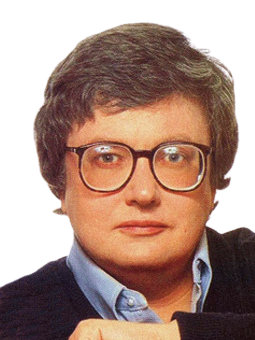
Why we should all be more pretentious
Of course, there is something quite self-indulgent about writing an entire article defending pretentiousness, sprinkled with literary references, philosophical digressions and a grandiose declaration about the nature of intellectual ambition. But, once again, that’s the point. I’d rather risk appearing pretentious in the pursuit of something interesting than confine myself to saying only what I already know how to say.
Fundamentally, pretentiousness is the motor of intellectual process and innovation. It is the oxygen of individuality. It supplies us with the ambition to think deeply. Discontent and displacement give us our energy: we are all pretenders pining to be or live somewhere else, and this restlessness is what keeps the word circulating. As Rousseau declared in Discourse on the Arts and Sciences, “It is a great and beautiful spectacle to see man raising himself from nothingness.”