What should we focus on?

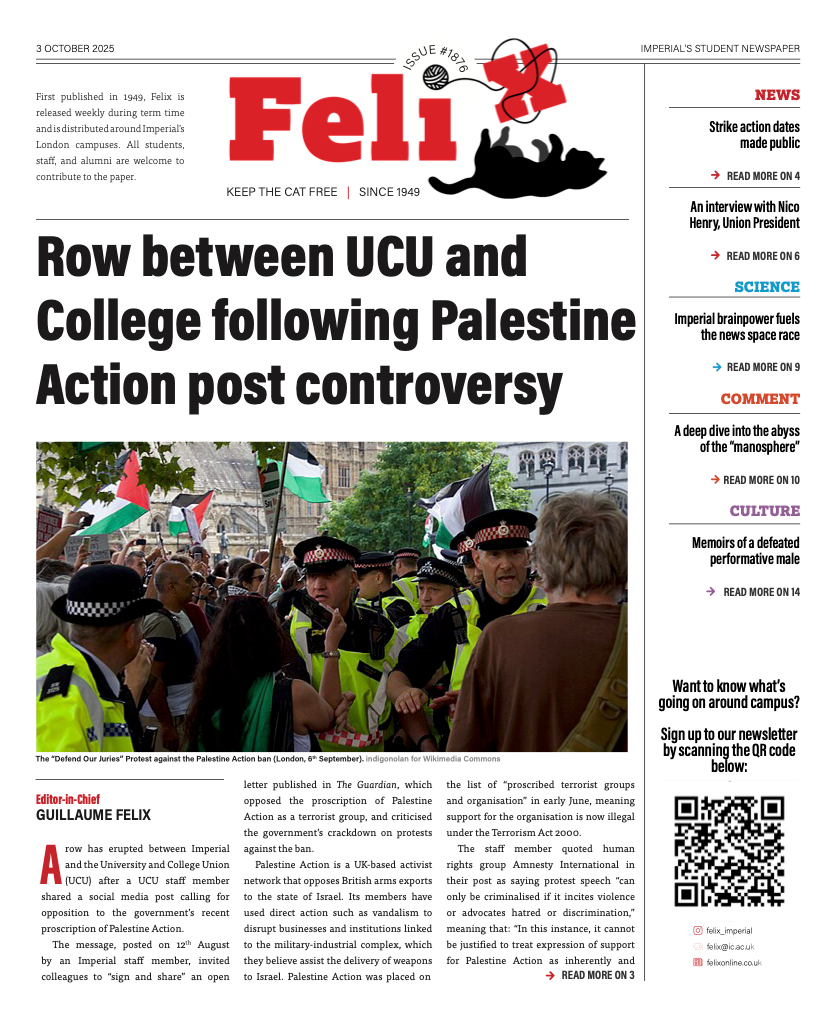
Did you know that the entirety of the Felix archive, dating back to 1949, can be found on our website?
Browsing through issues from past decades is a funny experience, but one that allows social, economic and political changes to be traced over decades.
A long, long time ago, in a job market far, far away, the likes of McKinsey and Morgan Stanley paid top dollar to advertise their graduate roles in Felix. On the other end of the spectrum, the ICU used once advertised end-of-term Easter parties for “Bunnies, Buff Boys and their Escorts” above images of women in Playboy Bunny outfits.
As we enter Black History Month, celebrated in October in the UK, I also recommend browsing old issues of Felix using our Felixplore tool with relevant keywords. Delving the past stories involving ethnic minorities, and noticing the coverage of such stories, reminds us of how much attitudes have changed, and invites us to continue facilitating change.
Yet what interests me most, as the youngest sibling in a family of 80-odd Editors, is past coverage of global news. Beyond the various newswriting styles adopted throughout the years, observing what was deemed newsworthy in the past shows us just how hard it is to tell breaking stories that will change the course of history apart from the ones that will be forgotten immediately.
Many passionate, alarmed, or excited writers covered topics that I know next to nothing about, often because predictions of their importance were overblown. Judging the importance of news remains a difficult task. The recent conflict between India and Pakistan, which attracted much attention from the media, was quickly de-escalated, while the brutal civil war that erupted in Sudan in 2023, causing tens of thousands of deaths and displacing millions, is arguably still underreported.
What current issues should an editorial focus on so that it doesn’t age like milk?
The drone incursions which have recently occurred in European airspace, from Poland to Estonia, are, in my opinion, some of the most concerning geopolitical developments of the past weeks. These violations represent a new step in the creeping return of war in Europe, after Russia’s all-out invasion of Ukraine, followed by its various covert acts of sabotage across the continent.
When I was younger, I was often told that I was lucky to be born in the first generation to know neither war nor military conscription. Nowadays, with talks of a possible land invasion of Moldova or NATO territory being all the rage, I would not dare to jinx the peace dividend by telling a child such a thing.
I certainly hope that these fears will not materialise, and that I will instead join the long list of Felix writers who fearmongered in these honourable pages. Only a future Editor can tell.