Monday’s events were a fitting tribute to one of Imperial’s greatest scientists
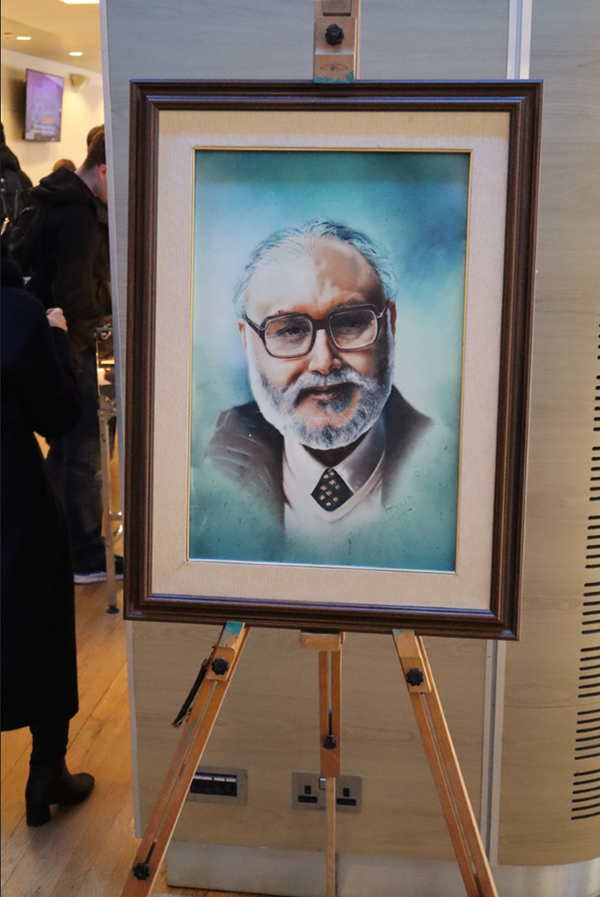
Abdus Salam joined Imperial’s Maths department in 1957, and three years later moved to the Physics department, where he set up the Theoretical Physics group with Paul Matthews.

Abdus Salam joined Imperial’s Maths department in 1957, and three years later moved to the Physics department, where he set up the Theoretical Physics group with Paul Matthews.
While at Imperial, in 1979, Salam won the Nobel Prize for Physics together with Sheldon Glashow and Steven Weinberg, for his contribution to the electroweak unification theory, which outlines the unification of the electromagnetic and weak forces.
He became the first Muslim Nobel Laureate in science, but Salam’s legacy is often ignored in his home country, because of his Ahmadi Muslim faith.
The Pakistani government has declared that Ahmadis are not Muslim, and the community faces persecution and discrimination. The word ‘Muslim’ has been erased from Salam’s gravestone in Pakistan.
Imperial’s decision to rename the Central Library to the Abdus Salam Library last summer is a poignant tribute to Salam’s profound contributions to physics.
He has rightfully earned a place among the many distinguished figures in the College’s history. The renaming of the library, and this week’s events, ensure that Salam’s impact on the field will continue to be celebrated for years to come.
In the Science section this issue, we feature pieces from students who have been inspired by Salam’s legacy.
Neha Yasin reflects on how Salam’s life fills her – a fellow Pakistani Ahmadi Muslim – with pride and hope for her own career in science.
Anubha Bal celebrates Salam’s work by exploring the electroweak theory, and explaining its link to the elusive ‘Theory of Everything’ that physicists continue to search for.