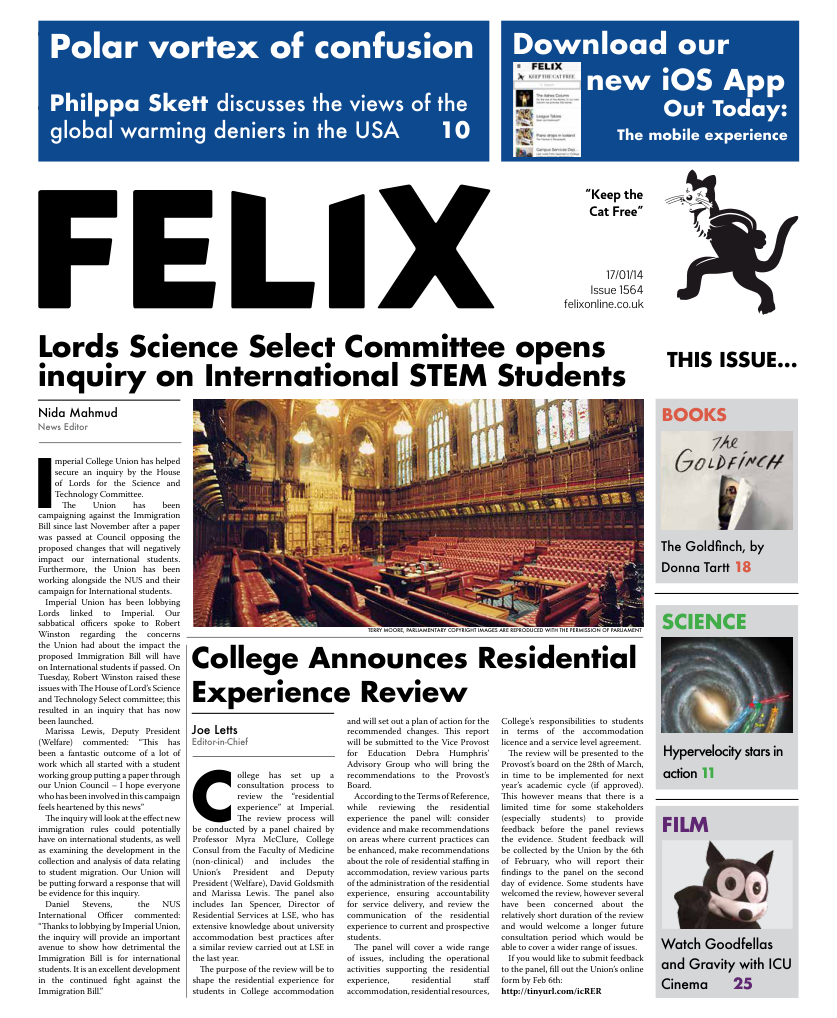
Hypervelocity stars discovered trying to escape the galaxy
20 candidates for a new type of hypervelocity star have been announced by an international team of astronomers.
20 candidates for a new type of hypervelocity star have been announced by an international team of astronomers.
These are stars travelling fast enough to completely escape our galaxy’s gravitational field, which means travelling at more than six hundred kilometres per second relative to the galaxy.
Previously discovered hypervelocity stars are thought to have been accelerated by the supermassive black hole at our galactic centre, but the newly announced stars appear to be travelling in all directions, none of them from the centre of the galaxy. Neither do they seem to have come from the black hole of our closest large galactic neighbour, the Andromeda galaxy.
Possible mechanisms for their speed include a binary system where one of the stars goes supernova and ejects its companion, or a single star that encounters a binary pair of black holes. It is hoped that observations of their spectra may give clues to their origin.
The candidates were identified by the Sloan Sky Survey, and were spotted by looking at their angular speed relative to the centre of the galaxy, which had not been focused on before. This method can come with large errors, but a number of statistical tests were run to check the accuracy of the velocities.
“We think that although some of our candidates may be flukes, the majority are real”, said Lauren Palladino, the lead author of the paper.
An additional puzzle comes from the size of these stars – they are all much smaller than the hypervelocity stars known to come from the galactic centre. If the theory of the previously discovered hypervelocity stars is correct, then there should be a range of sizes of star ejected from the centre of our galaxy. These smaller stars are still being searched for.