News

A look into the Great Hall

And some details on what's to come.

Great Hall renovations are well underway, with the space scheduled to be fully operational for the start of next academic year (2027-28). 

For larger events, the Great Hall will have a maximum seated capacity of 541 attendees, with the space engineered to be divided into three individual lecture halls for 170, 265, and 140 students, respectively. 

Several adaptations have been made to optimise accessibility, like the addition of two accessible lifts, integrated BSL support and live captioning on screens, and hearing loop systems to support attendees with hearing aids. 

With the old organ installed, 144 speakers, and music and instrument store spaces around the Hall, the space is designed to transform into a venue for high-quality music events and performances. 

  It has been confirmed that students who wish to operate any part of the space will have to be trained and registered as a member of the Events team as a remunerated, casual worker.  

The project team is in contact with ICU to finalise the operating mode. 

Render of the Great Hall when split into three lecture halls. Cristina Carrillo
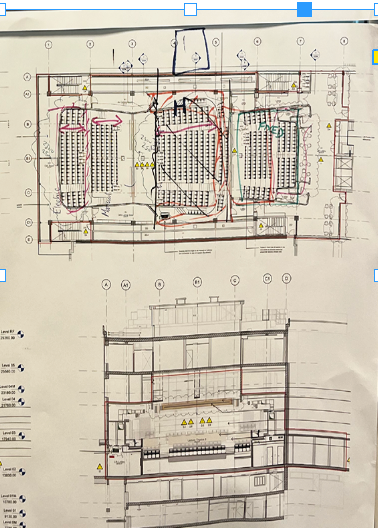
Great Hall blueprints. Cristina Carrillo

From Issue 1907

6 November 2026

Discover stories from this section and more in the list of contents

Explore the edition

Read more

Two-year graduate visas allowed for "high-compliance" universities after updated Government plans

UK Chancellor John Healy, appointed by Andy Burhnam earlier this year, delivered his first Budget speech to the Commons on Wednesday 28 October, where he announced graduates from UK universities with “strong labour market outcomes” will be allowed to obtain a graduate visa valid for two years.  The Labour Government

By Cristina Carrillo
Imperial robotics AI spinout Machenta breaks seed funding record raising £40 million

Imperial robotics AI spinout Machenta breaks seed funding record raising £40 million

Machenta, an Imperial spinout focused on the field of Instant Robot Learning, has raised £40 million in seed funding, the most ever by a UK robotics startup. This funding round was created by early Spotify backer VC firm Creandum and Union Square Ventures, who have also backed major tech startups

By Cristina Carrillo