British Science is FAKE!
A Brit walks into a bar, orders spirit; the bartender serves rationality and a punch to the skull.
This past weekend I had the pleasure of saying goodbye to a friend of mine before he was to head off to Japan to shovel snow for several months. Despite having a potentially Scottish sounding last name, he is distinctly British, and, more aptly, South England British. Many of the classic tales of Britain began around these lands, we wouldn’t have the wonderful romance of Arthur and Merlin if not for Avalon (Glastonbury), and heck even the big British stones in the form of a henge and the best British cheeses live here. It then shouldn’t have come as a shock to me to learn, in curious casual conversation, that my friend was bereft of spirituality, much like the lands we found ourselves in. Through some mutual prying we discovered that all I felt to be spiritual – the emotional contextualisation of the self, the other, and the connections in-between – he felt to be wonderment. A fine feeling, but not quite spiritual on its lonesome. As soon as he tried to feel any deeper, “rationality” crawled up his throat and out his mouth to say it was all atoms wiggling in particular ways. In that moment, all I could do was thank god for British science.
In these Irish and British Isles of yore, there were a plethora of tribes, societies, and understandings of theism. The Gaels of Ireland and Picts of Scotland practiced varying forms of Paganism with spirits inhabiting the natural world that surrounded them, offering a living force of nature to respect and with whom to coexist. The world was animated; all was alive. This practice of Animism ensured these Pagans held a profound connection with the environment in which they lived, and through this connection, as with countless cultures around the world, they developed knowledge. Stored in word and shared in song, their knowledge helped build a common understanding of how society can flourish and continue to do so. All the abundance therein, grounded in spirituality.
To cut a tragic story short, and use a healthy dosage of creative licence, everything changed when Saint Patrick’s Catholicism attacked (euphemistic). And then again when Cromwell’s Protestantism attacked (not euphemistic). Over time, knowledge carried in spirituality and animism was squashed, replaced with that of monotheism, and began to erode. With each, often violent, overturning of the culture in the Irish and British Isles, the meaning of spirituality moved from one dominant world view to the next, sometimes being perverted to persecute others, but frequently still holding onto a notion of connection with something divine. However, even these powerful monotheistic world views have been met with their own attacker. The rise of scientific rationalism and rationality has played a major part in the growing popularity of atheism, and it is here that the real danger lies for spirituality.
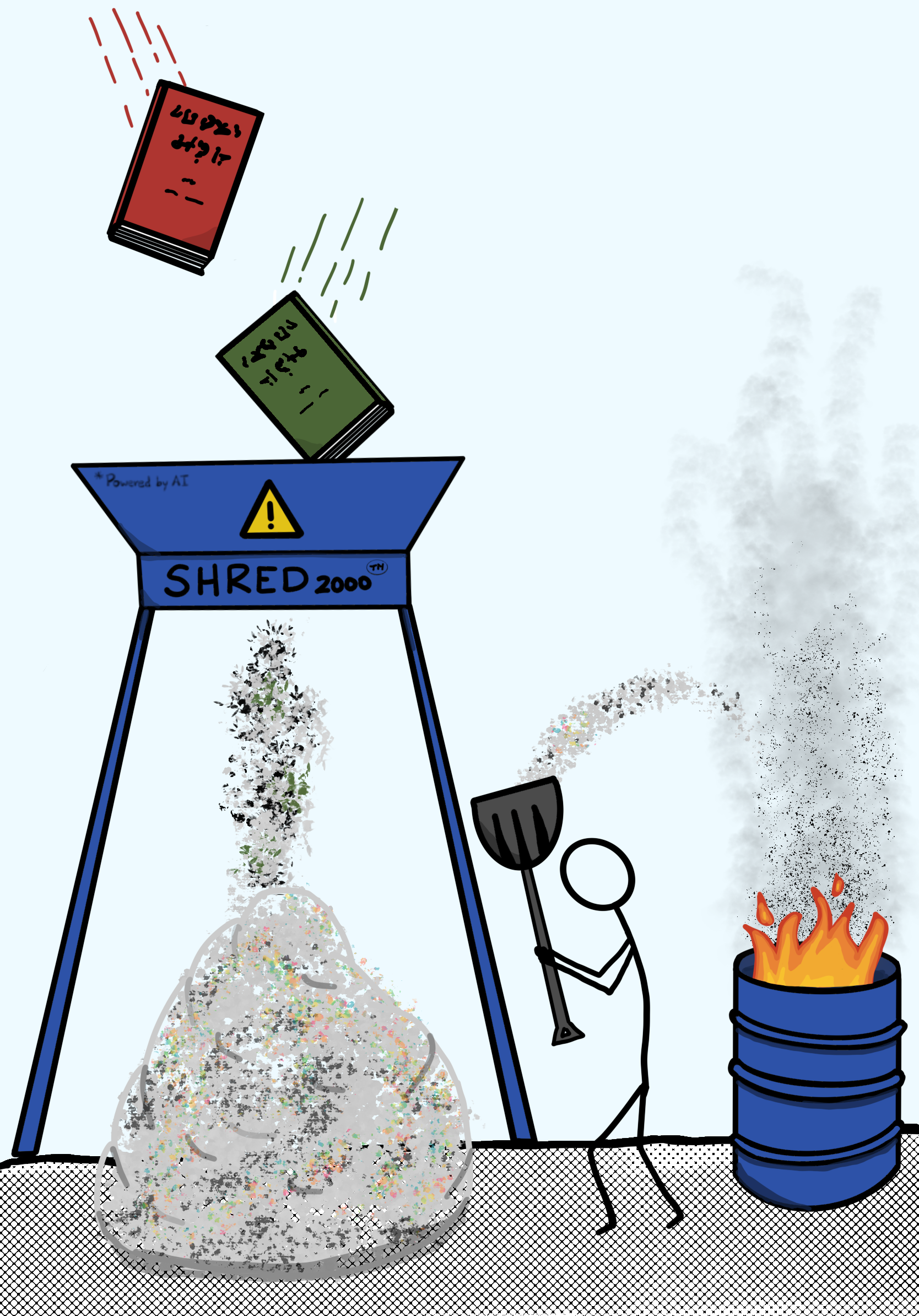
In my friend’s attempt to understand spirituality, they deferred to the toolkit that modern British education had equipped them with. They instinctively sought to explain something emotional and experiential through scientific rationality alone. That is to say, all the wonderment he felt could be perfectly explored via a set of logical principles grounded in the theoretical and experimental work of, predominantly white male, scientists, as though no wider knowledge could come of use. Not only are the teachings of spirituality being dismissed, overwritten by science, but the “spoils” of our beloved science and rationality have manifested as machines of mass erasure. Modern generative AI is fed by the rapid, brilliantly efficient, evisceration of books, just as Cromwell’s crusades were fuelled by the burning of books and the Roman occupation of the Irish and British Isles was empowered by the culling of knowledge-bearing druids. Only now has the erasure of knowledge, especially that of the “other” and the spiritual, been suitably industrialised.
I adore my friend, while my writing may hint that he holds malice or knows/can know no better, neither holds any truth. Understanding of the spiritual, and the empowering connections to be uncovered from it, are more than within the grasp of anyone. Effectively combatting modern knowledge erasure requires appreciating all the culture who’s knowledge is being targeted. And I see no better way of doing so than by sprinkling a little animism in the world around you. Animate the book you’ve got your nose in before bed. Animate the theorem that doesn’t quite make sense to you just yet, but that you still accept. And above all, allow those around you to show off just how animated they are and share your animism with them. Feel the connection, for there is knowledge worth preserving in-between.