Guy Fucks: Burn the effigy
Do we burn an effigy of Guy Fawkes on Bonfire Night? The Pope? Or our conception of the person represented?
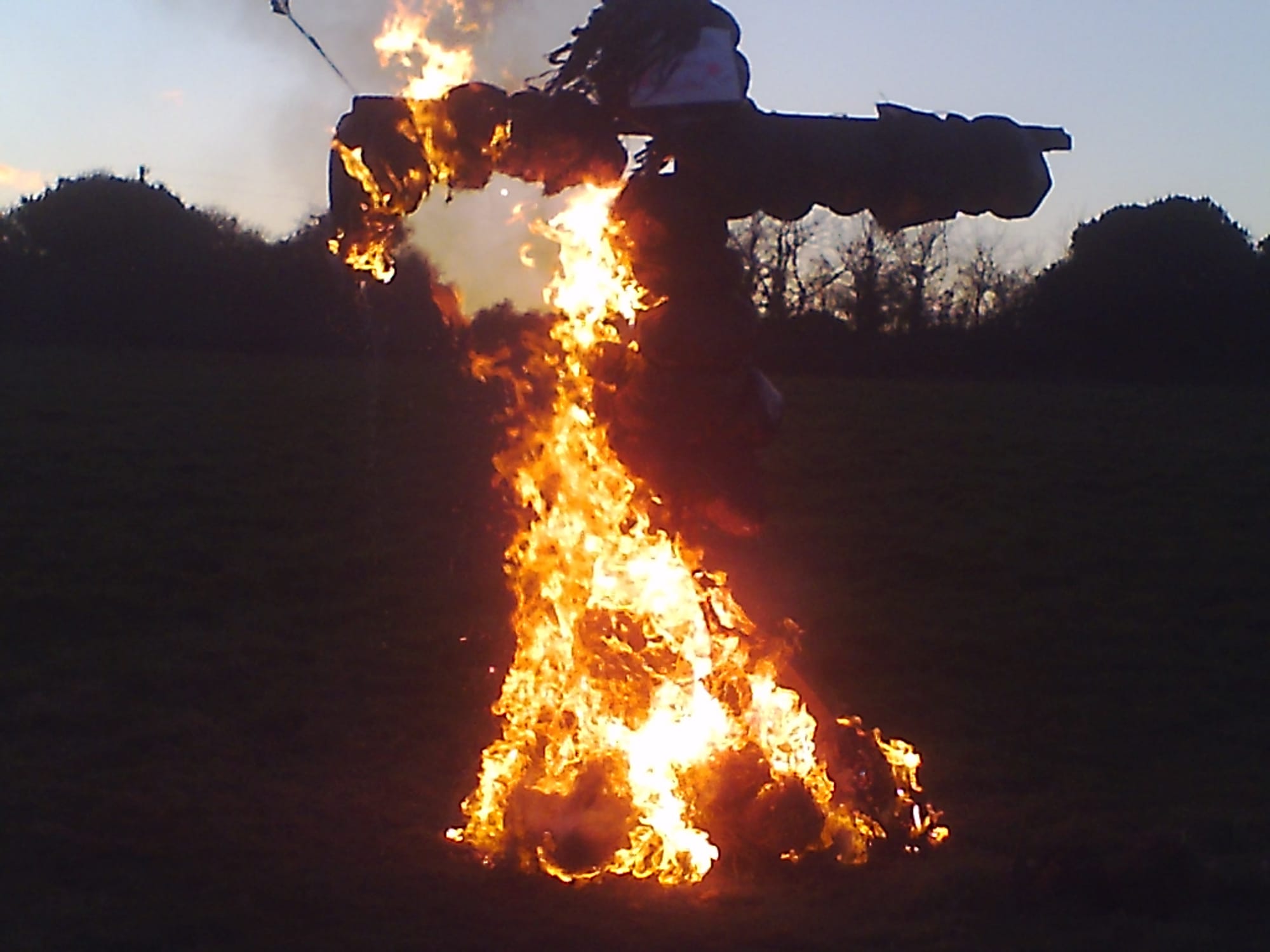
If you’re only just tuning in to UK culture, Bonfire Night just came and went. On that night, centuries ago, a skilled and pious man of war, Guy (Guido) Fawkes, was found leaving a cellar below the UK Parliament building surrounded by barrels filled with gunpowder and a slow match on his person. This little lad had been part of a conspiracy (drably named The Gunpowder Plot) to blow up Parliament and in doing so, rather crudely assassinate the (god forbid) Protestant King of England James I for not being Catholic. However, thanks to the knight sent to check the basement of Parliament that night, every 5th of November the UK stands as a nation to pile flammable materials, sculpt (or imagine to sculpt) a crude representation of the worst political figure one can think of, and set them ablaze, soaring off into the sky as ash and ember. Back in the day, this little act of artistic creation was an expression of the political will of the local community. When James II announced his conversion to Catholicism, the people rejoiced, reminisced on the intentions of Guy Fawkes, and burnt an effigy of the Catholic pope on Bonfire Night in protest. I find this to be a wonderful embodiment of community spirit and how that spirit can enshrine political will for centuries to come: after all, the sitting King is Protestant. But what has come of these effigies today? Who is it that we burn? And why are we still living under neoliberalism even after burning all those Thatcher effigies?
In the modern day, especially in the UK, satire reigns supreme. We use it to tell jokes, make quips, and draw wry smiles, and especially to mock political figures.Up and down the country, from The Guardian to The Times, we place playful, and often satirical, cartoons in our newspapers making jabs at a wide range of figures of all political leanings (but often just Trump). We’ve moved beyond the wishful burning of hand-crafted effigies by communities once a year to the commercialisation and editorialisation of a few people’s opinions every day. It seems that groups of people depending on one another no longer come together to discuss who best represents their political plights enough to burn. Those challenging conversations have been replaced by the consumption of filtered political satire, ready to be misinterpreted and to reinforce our pre-held beliefs.
None of this is to say that the people of the 1650s were free of being misled or consumed by the opinions of a select few, but rather that they had to be conscientious when choosing who it was they were to burn and why. Some modern media fosters such a culture of conscientiousness, even through satire. Mock the Week, a classic UK satirical news-based quiz show, at the very least offers conversation by design with several big comedy personalities sitting in front of a studio audience just begging to differ with one another and converse in the language of satire. I would even argue its weekly TV appearance encourages a communal viewing environment: it’s not quite so funny if you’re laughing alone. However, for all its wonderful community-building, much modern media online traps the viewer in an echo chamber, a cycle of TikToks burning the same effigies, even politicising minorities into becoming effigies, until all that’s being said is based solely on vitriol.
The problem with this individualised effigy burning is twofold. Through isolated consumption, the platforms delivering the content can themselves homogenise, and suddenly, conversation becomes the beliefs of even fewer, more powerful people. Worse still, even when we disagree with the burning we are presented with, we see the same people burnt so often that they stop being human at all and just exist as the effigy. This incessant burning mythologises the person, and in our collective conscious they become invincible, able to receive all of the hate we want to spit at them while never needing to be accountable for their wrongdoings. At the end of the day, they’re just an effigy we’re going to throw onto the bonfire.
Let’s not fall victim to the trap of isolated burning. Instead, start a conversation with your friends, speak loud enough for it to leak to the next table at the pub, throw in a bit of satire for fun, and think together about what little Guy you want to sculpt and then burn.