Decolonising the canon: Felix recommends
Following on from calls in Cambridge to include more BAME authors in its curriculum, Felix makes some suggestions.


Trumpet, by Jackie Kay
Kay’s only novel Trumpet is in a class of its own, and one of the most unconventional books I’ve ever read. Joss Moody is a renowned jazz musician whose death sparks a frantic seeking of truth by his son and the public about his ‘true’ identity and gender. It explores the tumult that results from the invasion of a family’s private space by the public. This is a story about de-clothing – the stripping down of appearances, prejudices, conventions, insecurities – to reveal the bedrock of relationships and to demonstrate just how superficial our assumptions are. Herself often categorised – as black, Scottish, lesbian – Kay refuses to conform to boundaries, whether in style or content. The most beautiful passage in the book is written like verse, with a cadence that reminds one of the jazz music that runs passionately through Joss’s veins. Kay breaks down the barriers of gender, race, and sexuality sensitively and elegantly, while at the same time revealing the different kinds of love that underpin every relationship. JC
Woman in the Dunes, by Kobo Abe
All too often, when we speak about writers who are also doctors, we can be tempted to slip into lazy metaphors centring around the idea of dissection and examination: the doctor-author who peels back the layers of our consciousness to prod at the soft psyche underneath. For Japanese writer Kobo Abe, however, these analogies seem perfectly accurate.
Abe’s masterpiece, Woman in the Dunes, is one of the most haunting and disquieting works I’ve ever read. It tells the story of an entomologist who manages to get trapped in a large hole whilst out in the desert; he must spend his time assisting a mysterious woman in sweeping away the sand that inevitably trickles over the sides of the hole. It’s a sisyphean task, one whose repetitive futility evokes feelings of extreme anxiety. As bleak and oppressive as a work by Kafka, Woman in the Dunes is one of the best works of modernist absurdist literature to emerge in the 20th century – not only in Japan, but throughout the world. FF
The God of Small Things, by Arundhati Roy
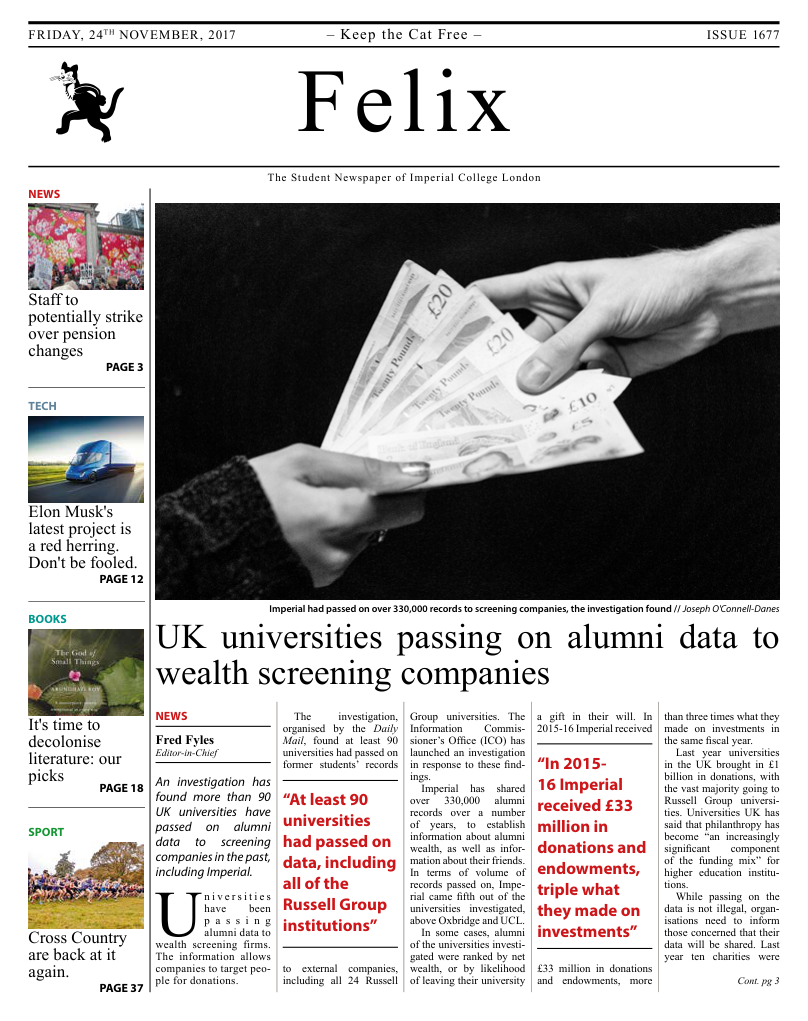
Hauntingly beautiful but at the same time irrevocably tragic, Roy’s first novel begins with twins Estha and Rahel returning to their hometown as adults, trying to make sense of the tragedy of their cousin’s death when they were children, then flashes back to the past. In the midst of this intimate tragedy, however, Roy weaves in sociopolitical issues of caste, religion and the promise of Communism - historical pressures that challenge a family facing devastation. Winner of the Man Booker in 1997, this novel is significant here as the most successful book by a non-expatriate Indian writer. Roy’s language is exquisitely beautiful and unique, capturing the veneer of calm that surrounds tragedy, as well as the interiority of the young twins trying to make sense of these events. The God of Small Things is a story deeply entwined with its setting and and ambitious effort at intimately representing a culture through a non-native language. JC
Do Not Say We Have Nothing, by Madeleine Thien
The family novel is one of the building blocks of literature. Like the Bildungsroman or tragedy, family novels are books that help us conceptualise our understanding of the written word, and how it fits into the world around us. In Madeleine Thien’s Do Not Say We Have Nothing – shortlisted for last year’s Booker Prize – the exploration of the dynamics of a single family provide us with an insight into life in mainland China during the 20th century, a time marked by extreme social change and upset.
Following a single family from the rise of Mao in the 1940s, through the Cultural Revolution of the 60s and 70s, up to the Tiananmen Square Massacre in 1989, Do Not Say We Have Nothing looks at the impact national politics had a local level. With a cast of characters stretching through three generations, Thien loops backwards and forward through time, in a dazzling display of lyricism. FF