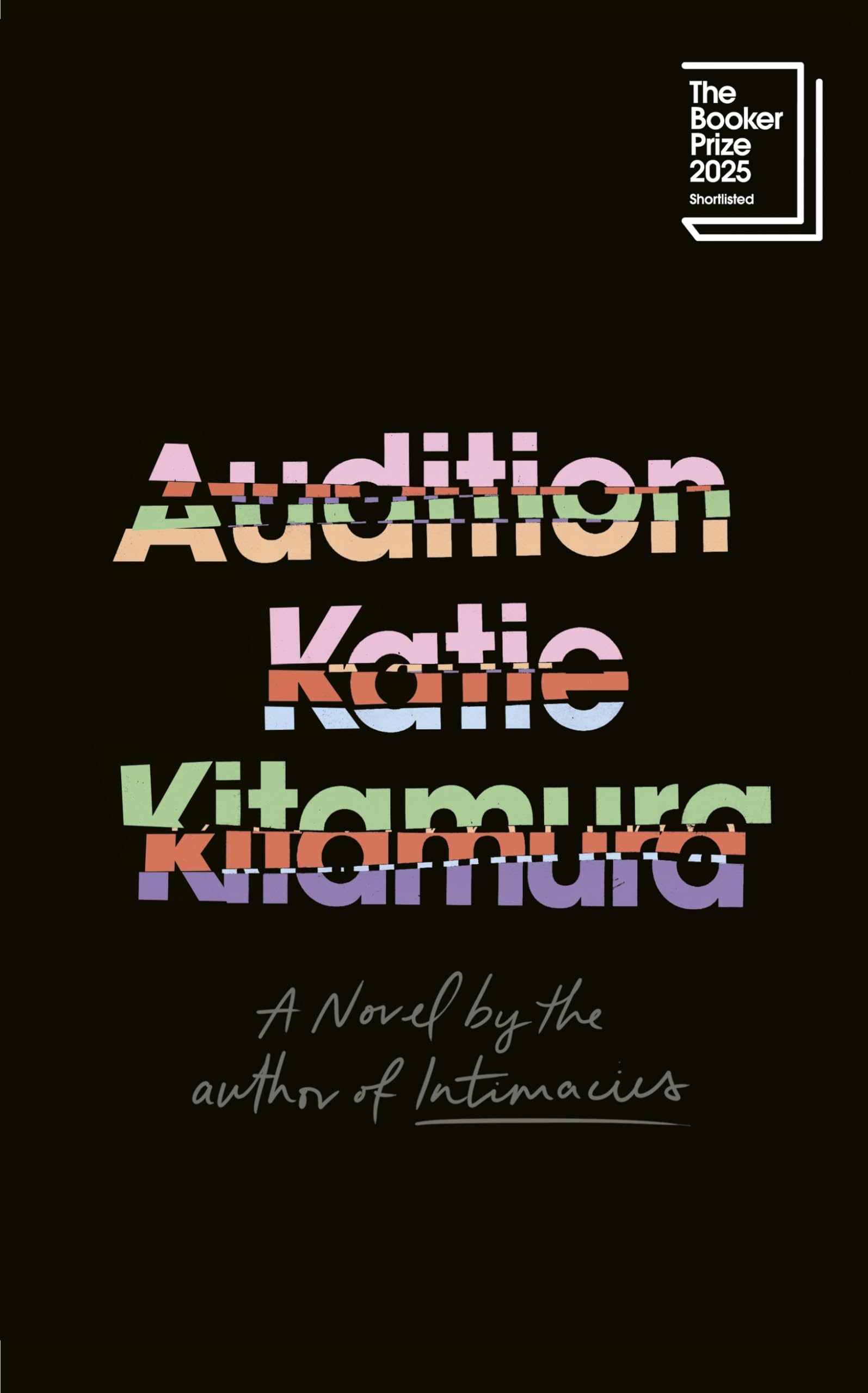
Audition by Katie Kitamura
What is identity? Booker Prize shortlist 2025 novel, Audition, reimagines our already fragmented perspective.
Katie Kitamura’s Audition argues that identity is inherently performative. Whether mother, spouse, artist or stranger, we all play roles – and Kitamura explores what happens when our scripts are suddenly rewritten. Yet, despite this compelling premise, the book’s emotional distance and extreme minimalism undercut its intended impact, leaving its big ideas far more interesting in theory than in execution.
The novel revolves around an unnamed actress whose life is shaken when a young man, Xavier, insists he is her son – a claim that contradicts her beliefs. This confrontation forces the narrator to reconsider the roles she has performed throughout her life, both onstage and off. Motherhood becomes a role she may or may not have inherited, and her memory a script too unstable to trust. The novel’s central question, who are we when the roles assigned to us suddenly shift, has a clear dramatic power, framing the uncertainty that drives the narrator’s story.
As the narrator’s identity is deliberately unstable, Kitamura’s execution results in a character who feels more like a concept than a person; someone living in their own mind detached from everything real. The protagonist’s internal responses are muted to the point of abstraction and descriptions of raw emotion are rarely convincing. Moments that should provoke intense emotional upheaval remain oddly flat, as if the narrator is rehearsing detachment rather than experiencing conflict, most notably when she is forced to confront destabilising truths about her past. This stylistic coolness aligns with the themes of performance, but it also deprives the narrative of urgency. Instead of inviting the reader into the heart of the rupture, we remain spectating from an alienating distance.
Moments that should provoke intense emotional upheaval remain oddly flat
Kitamura’s minimalist prose furthers this sense of detachment. Her sentences are precise and spare, yet often so reduced they skim over the deeper emotional terrain the themes demand. What if the self is an unstable performance? What if the role of ‘mother’ is simultaneously real and unreal? Kitamura merely gestures to these questions – the writing rarely lingers long enough to give these ideas weight. The sparseness mirrors the slipperiness of identity, yet it also makes the story feel lifeless, stripped of its necessary emotional oxygen.
Structurally, the book introduces further ambiguity, creating more distance between the narrator and reader. The novel is divided into two parts, and the relationship between those parts becomes more interesting than the relationships between the characters themselves. Each part centres on a different play the narrator performs in, and the plays themselves feel possibly connected, possibly separate, mirroring how the two halves of her life may or may not align.
In one reality, Xavier is unquestionably not her son; in the other, he is. Other characters are briefly introduced but remain difficult to grasp, sometimes feeling less like fully realised people than extensions of the narrator’s shifting sense of self – perhaps deliberate, but not necessarily satisfying.
Ultimately, Audition succeeds more as an intellectual exercise than as a resonant reading experience. Its exploration of performative identity is thought-provoking, but the novel’s fundamental self-consciousness prevents its ideas from fully landing. It’s a book that rewrites the script of the self but never quite lets the reader feel the shock of the change.
Perhaps deliberate, but not necessarily satisfying