Han Kang: Capturing humanity in historical trauma
Doyeon reflects on Han Kang’s remarkable lessons of empathy and the universal power of her novels.
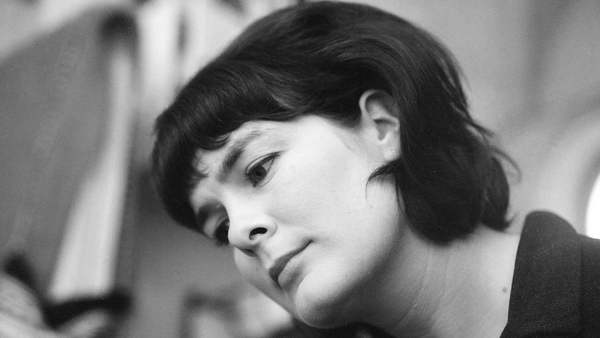
The announcement that Han Kang was awarded the 2024 Nobel Prize in Literature was met with jubilation across the world, and especially my home country, South Korea. Like most children of my generation who grew up there, Han’s novels were an integral part of our youth and education – her presence was, and continues to be, the pride of Korean literature. As someone from a non-English speaking country, I never dreamed that one day I would be able to read Nobel-winning books in their original language.
Han’s Nobel Prize is significant not just because it was awarded to an Asian female novelist – a group historically marginalised in the literary community and society – but because she writes about the discarded and silenced with passion and empathy. At a time when empathy in relationships is increasingly rare, Han’s books hold great value by making her readers think deeply about human nature.
Han Kang’s influences
Han Kang’s birthplace of Gwangju, South Korea, played a significant role in shaping her. In 1980, 10 years after she was born, the Gwangju uprising took place. The uprising – arguably one of the most violent events in South Korea after the Korean War – was a student demonstration movement against the South Korean military dictatorship. During the demonstrations, the military shot participants and innocent civilians. Under government authority, even those who discussed the demonstrations were punished.
Miraculously, Han’s father managed to keep some photos taken during the uprising and shared them with his daughter. Two pictures particularly affected her: one of bloody, bullet-lined corpses, and another of people lining up to donate blood for injured students. In an interview with Korean news outlet, KBS , Han explained she was “shocked by both the violence and the kindness people show under such extreme situations and started to question the duality of human nature.” This led her to write novels and poems delving into the strength of human empathy in confronting violence.
Facing historical trauma
Han works often touch on historical traumas that resonate deeply with South Korean culture. What makes her work distinct, however, is her depiction of the discarded and unheard. Han’s novels don’t focus on people with power and voice. Rather, they are about people who were pressured, silenced, and unable to openly grieve.
One of Han’s most famous novels, Human Acts is set during the Gwangju uprising. The Korean title means “The boy is coming” and fittingly, the novel begins with a teenage boy compelled by the thought of justice to participate in the uprising. The novel depicts his painful death under soldiers’ guns, how this affects individuals, society’s view of the demonstration, and the concept of humanity.
Han revealed she named the novel Human Acts because she interpreted the memory of the uprising as an act of humanity confronting historical tragedy. A key theme in Human Acts is how the experience of enduring loss can fuel a will to live. She wanted to show the people that even in moments of violence and despair, beauty exists in remembering humanity and surviving another day.
The power of Han Kang and her work
The reception to Human Acts was astounding. It became a bestselling book, especially catching the attention of students that didn’t know about the Gwangju uprising beyond government narratives. South Korean schools started to use Han’s novel as mandatory reading in history lessons in response to students’ growing interest. Generations that lived through the Gwangju uprising also emphasized the importance of the book, especially given its honesty and bluntness.
As Human Acts gained recognition in 2014, the South Korean government blacklisted Han and Human Acts, preventing media attention and banning its exhibition internationally. But Han refused to bend to the government’s will. In response, she wrote I Do Not Bid Farewell, about the Jeju uprising, where the government slaughtered communities on Jeju Island.
Han’s short stories and poems from this era also marked her name into the canon of Korean literature. Her books are more than just a retelling of history. The common themes of violence, loss, and confrontation of pain are applicable to all generations. The Vegetarian taught me the dangers of male chauvinism in South Korea, while The Wind Is Blowing offered solace as I navigated the grief of losing a dear friend.
Over time, her books have also resonated with global readers, earning awards and recognition around the world.
Han Kang’s message
Han Kang does not tell typical stories of victory or success. Instead, she deals with how devastating life can be, how violent and inhumane some people are, and how injustice can ravage the world. Yet, by depicting people’s struggles against cruelty and their continuous triumph after tragedy, Han also reminds her readers that we have an internal strength that allows us to carry on. In a 2019 interview, Han revealed that she is driven by a belief that “there is something inside humans that cannot be killed or destroyed”. As an ardent reader of Han Kang’s work, I hope her messages can be delivered to every corner of the world, continuously reminding us of the strength of humanity.