Private Pages, Public Ethics
Books editor Aditi questions the morality of reading posthumously published work.

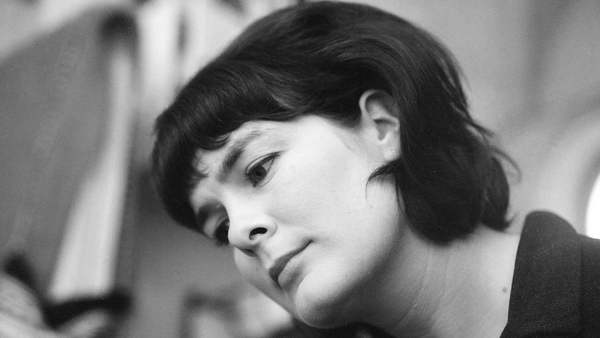
Like any teenage girl who read The Bell Jar as a rite of passage, I became fascinated with its author, Sylvia Plath, and the mystery surrounding her life (and death, suicide at age 30). This summer, I sat down to read the 768-page-long series of journal entries titled The Unabridged Journals of Sylvia Plath. This edition is supposedly the most complete version of her journals, offering a direct window into her life.
I told my best friend (an equally, if not more, avid admirer of Plath’s work, demonstrated by her choice to write her 4000-word Extended Essay on Ariel, Plath’s most renowned poetry collection) about starting the book. In her usual contemplative manner, she asked me if I thought reading Plath’s journals was an intrusion into the deceased author’s privacy.
I pondered about it in relation to my own experience. My diary is unequivocally personal – a snapshot of my innermost thoughts spanning fragments of my life, utterly candid, and absolved of restraint. The thought of someone reading my journal, dead or alive, makes me rather queasy. Why shouldn’t the same have applied to Plath?
The deeper I got into Plath’s journals, the more I gained conviction that they were not for millions of strangers to see. They read like butter. Plath’s language, overwhelming and intimate, spanning years without a plot, are pages upon pages of mastery. I often found myself uneasy, disturbed both by her ennui and my fluttering jealousy of her craft. Yet I couldn’t bring myself to stop.
A question of consent
Less than halfway through the book, I arrived at the paradox that underlies any published autobiographical work. To be an authentic, unfiltered version of the author’s thoughts, the journals must be written without any intention of them being published.
Franz Kafka’s last wishes were clear: he wanted his diaries, letters, manuscripts and drawings to be burned. Many were published posthumously. This issue remains relevant today and extends beyond literature. Mac Miller’s unfinished music continues to be released after his death, while Tyler, The Creator stated in his will that he will not allow his incomplete work to be released after he dies.
The simple truth is that we will never know if Plath wanted her journals to be published. This uncertainty is central to the ethical dilemma of reading The Unabridged Journals. Can Plath’s work be rightfully appreciated if reading it feels like an act of voyeurism?
Truth vs misconception
The journals may bring truth to the complexity of Plath’s life. In certain instances, you see the vagaries of Plath’s thoughts; in others, your see her as a product of the society in which she was raised. These entries unravel the ambiguity of her literary ambitions and her ideas of life as a woman, wife, and mother. Though many people confound the mentally ill protagonist Esther Greenwood from her 1963 novel The Bell Jar with Plath herself, the diaries may aid in separating the person from the persona.
Despite this, Plath’s young suicide remains a subject of speculation. The book is missing entries from her final two years, which Ted Hughes, her widower, admitted to destroying under the pretext of protecting their children. The destruction of her journals only deepens the scrutiny and misconceptions surrounding what drove her to a tragic end. This raises critical questions about who controls Plath’s legacy – and now that she is gone, who reaps its benefits?
History or art?
Disregarding the moral argument, some value Plath’s journals purely as a literary masterpiece. I certainly sympathise with that.
However, the issue arises with an incorrect expectation of biographical material (which this text fundamentally is): conflating art with a record of raw thoughts and emotion. Far too many reviews dismiss The Unabridged Journals as boring, complaining about Plath’s navigation of societal expectations or dismissing her as anti-feminist. But the work shouldn’t tarnish Plath’s reputation, and no one should be rebuked for writing down their private thoughts.
So, who has the right to know?
The diaries evidence Plath as a devastatingly complicated individual, as with any human being. They shed light on some of her shades of grey, but certainly only a fraction.
It can be argued that the diaries humanise Plath, giving her depth beyond ‘the writer who stuck her head in an oven’. Yet it is equally dehumanising for her most vulnerable moments to be laid bare without her permission.
Ultimately, I find myself asking who – if anyone – has the right to know? Does the mere fact that a public figure is ‘public’ grant people the right obsess over their private lives?
There is no point in wondering if we will ever really know Plath. The real question is whether our misguided quest for understanding leads to an irrevocable violation of another’s privacy.