I Love Boosters
Laugh-out-loud funny, Boots Riley’s I Love Boosters is a scathing anti-capitalist vision, featuring a star-studded cast including Keke Palmer, Naomi Ackie, Will Poulter and Demi Moore. It follows Corvette (Palmer), an aspiring fashion designer and leader of The Velvet Gang (a gang of boosters), as she steals clothes from designer Christie Smith’s (Moore) boutiques. It combines a surreal heist plot targeting the fashion industry with wild sci-fi and social commentary elements. This is a film overflowing with creativity and talent, fever dream-like in its pacing. Its stacked ensemble is uniformly excellent, each performer seemingly operating on exactly the same bizarre wavelength as Riley. Remarkably, Riley never lets this abundance tip into incoherence; every eccentric directorial choice feels purposeful, however bizarre it becomes. Beneath its anarchic heist plot, I Love Boosters is interested in the distance between individual rebellion and collective resistance: Corvette begins by wanting her piece of the system and ends by questioning why the system should exist at all.
Corvette is unhappy with her life in The Velvet Gang, she feels she is destined for more, and she is chomping at the bit to make a change. The film’s main plot is catalysed by Christie stealing one of Corvette’s designs – a neon-coloured jumpsuit. This sets Corvette on a path of revenge. The Velvet Gang then begin exclusively targeting Christie’s boutiques, going so far as to work in one to have access to the most stock. However, the day they plan to enact their grand plan, someone gets there before them – and this time with a seemingly magical tool. They hunt down their competitor, Jianhu (Poppy Liu), to steal her secret weapon, but instead they discover her motivation. Corvette’s personal vendetta expands when the gang encounters Jianhu, a Chinese garment worker whose family has been devastated by the conditions in the factory producing Christie’s clothes. Stealing from Christie is no longer just revenge: the gang’s petty rebellion becomes entangled with a global system of exploitation.
Sade (Naomi Ackie), Corvette’s closest confidant in the Velvet Gang, is the first to puncture Corvette’s obsession with personally getting back at Christie. She reminds her that Christie is a billionaire: she doesn’t care about Corvette, and Corvette’s attempts at revenge risk costing the gang a jackpot that Sade, a single mother, needs to provide for her children. This tension comes to a head in one of the film’s standout exchanges. Throughout the film, Corvette responds to disagreements with Sade by telling her “you always do X” or “you always say Y”, until Sade finally tells her to stop putting her in a box and become less self-involved. The confrontation allows them to see each other more clearly and makes their relationship a vital anchor for the film’s deeper anti-capitalist themes. Palmer and Ackie are superb here, grounding Riley’s maximalist political satire in a friendship that feels genuinely intimate and lived-in. Sade represents pragmatic, material survival: her motivations are grounded in the immediate necessity of providing for her family. Corvette, on the other hand, represents the aspirational dream. She initially buys into the capitalist myth of meritocracy, idolising Christie and longing for the same individualistic climb towards success and recognition. Their bond highlights how capitalism fractures collective identity by forcing people into different modes of survival - one just trying to stay afloat, the other chasing an engineered illusion of upward mobility. Sade acts as a truth-teller for Corvette, gradually forcing her to look beyond her personal vendetta towards the industry’s wider exploitation. Their relationship therefore mirrors the film’s own expanding political scope: what begins as a small-scale survival alliance ultimately becomes a bridge towards global worker solidarity.
Riley’s critique of individualism extends beyond Corvette’s ambitions within fashion. Even human connection becomes another commodity and another distraction. Corvette is continuously romantically pursued by a soul-sucking demon (LaKeith Stanfield) who symbolises the trivial distractions, empty romances and surface-level ego traps that drain a person’s energy, derailing them from the collective struggle. It is the kind of ridiculous conceit that could easily derail the film, but Riley commits to it so completely that the absurdity becomes part of the argument. When he asks Corvette to stay with him, claiming true love will turn him human, it mirrors that trap of trying to save or fix a destructive dynamic instead of building solidarity. Ultimately, Corvette realises she doesn’t need him or the empty fantasies he offers, symbolising how breaking free from individualistic fog allows her to return her energy to the collective movement. The film also exposes the false dichotomy between ‘high fashion’ and ‘fast fashion’. If the demon literalises the forces consuming Corvette’s attention, Metro Designs reveals the much larger system consuming people’s labour. Christie runs the mega-brand that presents an illusion of elite, high-end luxury while relying heavily on the fast-fashion model. Riley illustrates how multi-thousand-dollar garments are produced in the exact same overseas factories using the exact same exploited labour as dirt-cheap retail apparel. The film shows that consumers aren’t paying for superior craftsmanship; they are paying for a heavily marketed, heavily gatekept lifestyle concept. Fast fashion relies on quickly copying independent creators - a form of corporate plagiarism that the film literalises. Christie ruthlessly steals Corvette’s design and packages her identity as a corporate brand aesthetic. Riley shows how corporate fashion functions as a parasite: it vacuums up the raw culture and street style of working-class communities, strips it of its context, and sells it back as luxury. And if exploitation is built into the industry’s structure, Riley is equally sceptical that consumers can shop their way out of it. I Love Boosters presents an anti-capitalist critique that rejects simple ‘eco-friendly shopping habits’ as a solution. The Velvet Gang’s initial act of “Fashion Forward Philanthropy” (stealing expensive clothes to resell to the community at a discount) is shown as a fun, radical micro-rebellion, but it still operates within the system’s margins. The film argues that fast fashion cannot be defeated by lifestyle changes or small-scale theft. Instead, it requires global, grassroots solidarity.
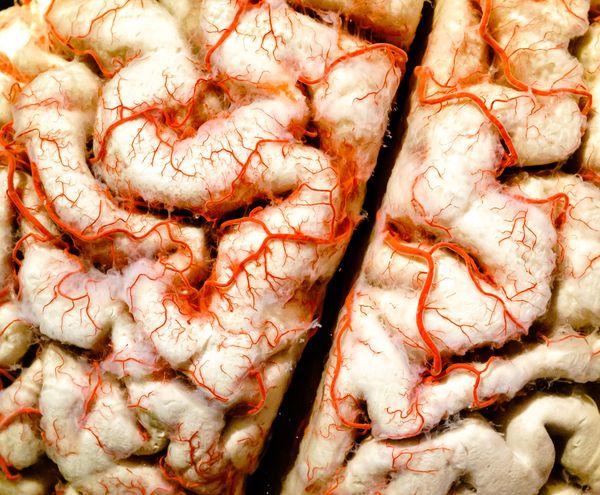
Riley eventually makes that exploitation grotesquely literal. The skin suits in the climax of I Love Boosters are the ultimate expression of his trademark socialist surrealism. They literalise how corporations view workers as beasts of burden, acting as a visceral, body-horror critique. Throughout the film, Corvette chases the status and validation associated with a $100,000 designer suit made by Christie. When the Velvet Gang finally tracks down the elite media figures and right-wing think-tank (“Forge democracy”) members who wear these luxury garments, they order them to take the suits off. Instead of just removing fabric, the media figures literally strip away their skin, leaving behind stop-motion bodies composed of raw muscle, bone, and exposed organs. The sequence is simultaneously revolting and extremely funny, a tonal balancing act Riley somehow manages without blunting either effect. It’s an unsubtle image, but subtlety would almost be beside the point. Riley pushes the metaphor until it becomes physically disgusting: the human cost that luxury fashion conceals is suddenly impossible to look away from. By showing that the $100,000 ‘luxury garment’ is inextricably fused with human flesh, Riley is literalising commodity fetishism, arguing that high fashion under capitalism demands the literal, physical sacrifice of human life and identity to maintain its allure. The skin suits represent how the capitalist class buys out the media to script public reality. The people delivering the news have surrendered their own skin, their own agency, and their very humanity to become literal marionettes for corporate power.
Corvette begins I Love Boosters wanting recognition from the very world exploiting her. By its end, she no longer wants to beat Christie at her own game; she wants to stop the game altogether. For all Riley’s demons, teleportation and grotesque skin suits, that transformation is remarkably simple. Individual rebellion might steal a dress. Collective action can shut down the factory.