The youngest Facebook mom of all time
Sydney Sweeney and the plight of right-wing populism.
The U.S. midterms just wrapped up, warranting a last-minute update to this piece. I began writing while deep in thought about what my eventual Subway Take would be. I’d just watched one (shout out Youtube Shorts) from youth icon and cloud rap savant Yung Lean. While in conversation with the host, Kareem, Mr. Lean goes on to make a profound statement about our generation’s social culture. A former hypebeast kid himself, he declares “the party” to be officially over. The rest of the conversation veers into his journey into sobriety, but my takeaway of what the party being over truly means was different. Is a generation raised entirely in a digitally influenced world on the precipice of being endowed with tidal shifting agency for the first time? What exactly does our responsibility look like going into an age of maturity, and what perhaps might be the threats to it?
It’s an especially important consideration in evaluation of the current political climate: the global pendulum shift rightward has been a phenomenon demarking the last decade. However, there is a youthful spring taking place; a global cognisance of the need to dismantle authoritarian establishments. To say that collectivist narratives are a modern innovation is naive, but, in my opinion, we should be touted as an active and strongly abrasive political hivemind against totalitarianism, the likes of which the world has not seen in the few decades prior. We have accepted the onus with open arms and enacted action that is shifting the zeitgeist. Regime change has gone from being a distant dream to a plausible outcome: New Delhi, New York, São Paulo, and St. Petersburg all bleed the same fervour. Symmetry of information and access to vocalisation have been key devices in our fight for these goals. These are the liberties that we have access to that our priors didn’t, the tools that accelerate the dissemination of our message to scales that activism had not been able to achieve so far.
Of course, enshrined in many a constitution are the usual rights to freedom of speech and protest: token symbols of make-believe democracy. They have been quelled in spades in classic displays of fascism. It is our mobilisation of the digital sphere that bridges this gap, providing access and opportunity for action. Perhaps unsurprising for a generation raised with an iPad, social media, and the ability to talk to complete strangers in Call of Duty lobbies.

In India, the Cockroach Janta Party (a name satirising that of the ruling political party, the Bhartiya Janta Party) is exemplary of this tidal charge. Born out of a fight against corruption and paper leaks in one of the largest nationalised undergraduate examination scandals, the student-led movement is systemically isolating areas of cronyism in the current administration. Their pan-Indian demonstrations drew ire from the bureaucratic elite, resulting in suspension of protests, illegal detainments, and police-initiated kidnappings. Orwellian scenes. The movement would have died down, beaten into fear, had rhetoric online not exploded. A singular photograph from the inside of a jail cell made it out onto our Twitter timelines amongst the many that were forcibly deleted, igniting new gusto.
Like a local cafe announcing a new line of overpriced lattes, the CJP has coordinated multiple nationwide protests through Snapchat stories. Access to information is the first step before the mobilisation and armament of the protesting populace. In the States, the charge has been electoral, with prominent democrats like Zohran Mamdani, Ilhan Omar, and Abdul El-Sayed crafting an entire campaign situated digitally. Their policies speak directly to the demands of a younger, liberal segment, and designing their publicity to be focused primarily online allows them to engage with voters more easily. The proliferation of their message was rendered an eventuality the minute Gen Z voters willingly digested it; from Instagram to the dinner table to out in the streets, we actualised what we believed in. Soon, most of America accepted them.
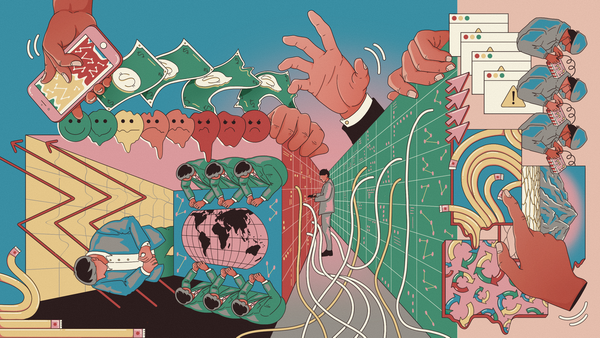
Demonstrably, the political choices, actions, and opinions of this age are impacted by dialogue and content present online. It’s been a boon for the most part, as I managed to highlight in my analysis above. However, my Subway Take is that it is the digital forum that the authoritarian right is trying their hardest to manipulate to swing the pendulum back their way. It’s up to us to be more aware of the dog-whistling of fascist narratives.
It would also be naive to say that guerrilla propagandist tactics are an innovation of the modern-day conservative party Twitter moderator – Goebbels existed. However, there have been some noteworthy strategies deployed.
The most obvious one that comes to mind is Sydney Sweeney’s rise to prominence in public discourse. Like a rare type Pokémon appearing in the middle of a dual carriageway, Sydney Sweeney entered our lives through some form or other of massive production. Catapulted into stardom out of literally nowhere, for a good few years, celebrity hubbub found her being mentioned on the daily. Her performance particularly resonated with a nigh-adult audience for reasons beyond my comprehension. Thence commenced the reshaping of her public persona; out with the “young pop culture icon” and in with the “young red eugenicist.” Her American Eagle-clad catchphrase “I have good jeans” made her an instant hit within the Rust Belt and was plastered onto the screens of almost every 20-teen year old globally, despite me clicking on “block ad” a fair few times.
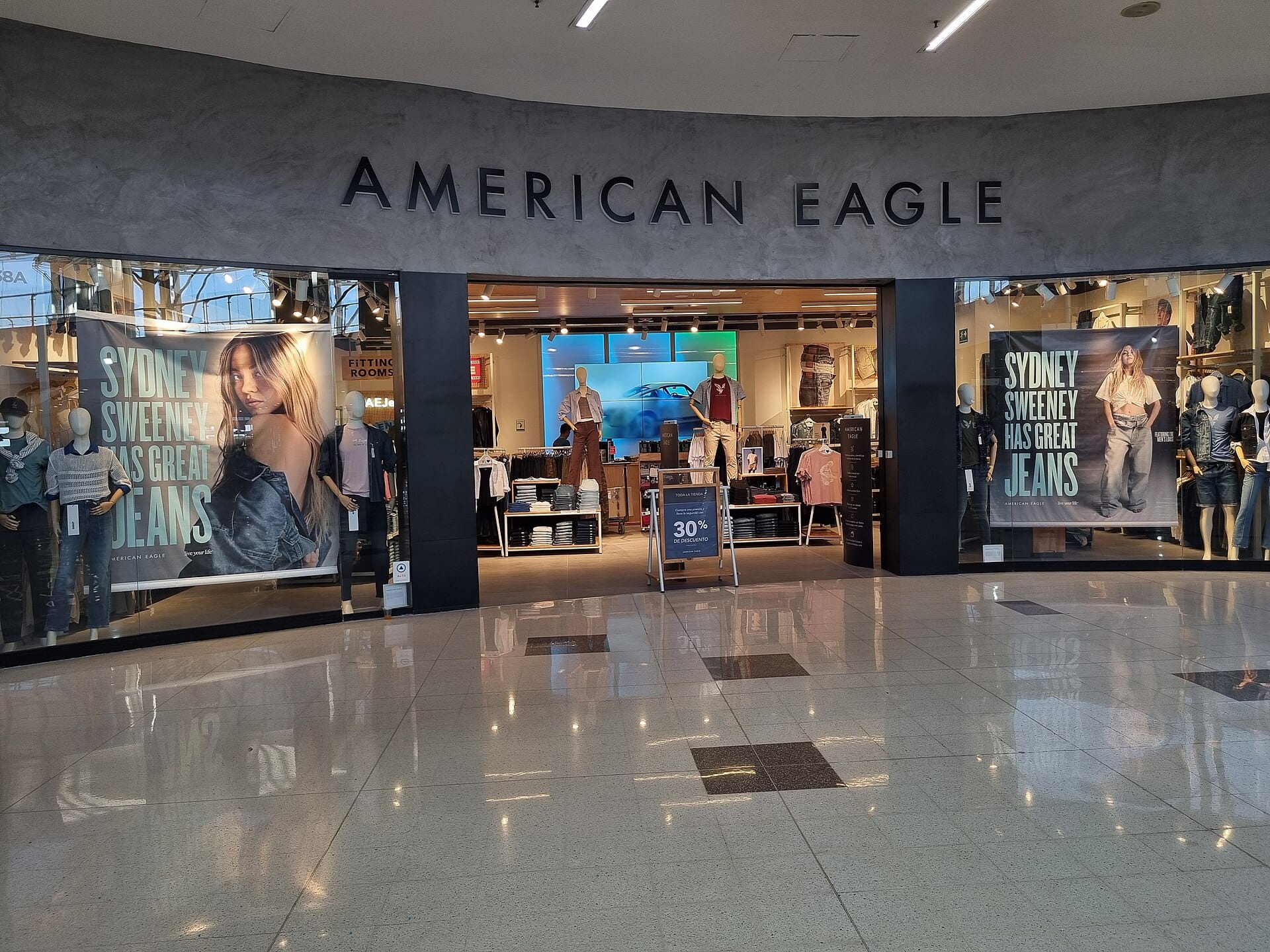
But, it didn’t stick. And, in doing so, the global conservative propaganda machine gave away its tell. Formulaically, they attempted to isolate a corner of the internet that was driving increasing viewership from a younger, more malleable audience. They then proceeded to reshape discourse within that niche by inserting elements of conservative identity, substantiated by the halo surrounding key figures to that community. The end goal was to achieve the subconscious sowing of value systems more attuned to their positioning, encouraging greater rightward veering from a potential first-time voter.
Whether the GOP executed the above-described methodology or whether I am a tin-foil hat conspiracist is irrelevant: the advertisement was a brand’s attempt to revitalise stereotypically “true American” ideals for an impressionable viewer, ones that would usher in more conservative stances. The pattern is not isolated to American Eagle and Sydney Sweeney, however; globally, there’s been a rise in social media creators and pop culture personalities nudging their younger audiences towards more pro-establishment content.
The reason almost all of these projects have failed is endemic to the challenges faced by conservative movements in the modern times. The digital space has given younger voters the agency of critique and the autonomy of choice. Fundamentally, liberal movements in a digital sphere push policy, not posturing. They have never had the need to advocate for morality or agendas because the digital space values individualism within collective goals. As such, as long as the conservative think tank continues to advocate for approaches of adulteration to free media, it will be viewed more similarly to a cult than a bona fide political choice. 100% agree.