Adding fuel to the fire
Burnham blunders into a war in which the UK should not get entangled.
Last Tuesday, the UK Ministry of Defence (MOD) announced that the RAF would deploy a single Voyager air-to-air refuelling aircraft to “support Saudi defensive activity” in Yemen. Specifically, they will be refuelling Saudi Arabian combat aircraft that are shooting down missiles and drones fired by the Houthis, a rebel group in Yemen backed by Iran. This will be Prime Minister Burnham’s first military deployment.
The justification
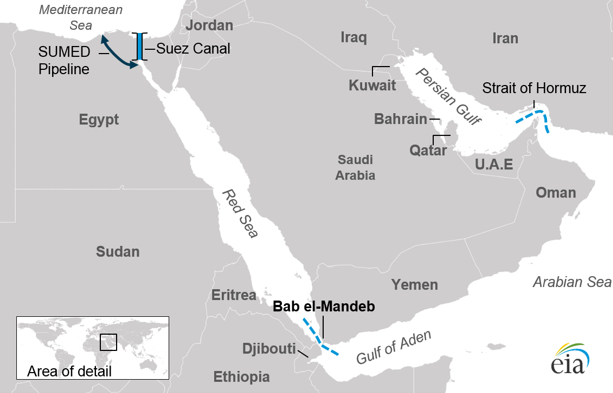
The Houthis have recently made major gains, wresting control of much of the Red Sea coast from Yemeni government forces. This allows them to fire on ships passing through the Bab al-Mandeb strait, a maritime chokepoint that handles nearly 10% of global trade. They have since declared a blockade on Saudi shipping, causing global oil prices to rise above $100 a barrel.
Some weeks ago, drones struck a pumping station on a key Saudi oil pipeline, putting it out of commission. Before the strike, about 4% of the global supply of oil was routed through this pipeline. The MOD states, “It is in the UK’s interest to protect regional stability, protecting vital trade and energy supplies.” To do so, the RAF Voyager aircraft will refuel Royal Saudi Air Force combat aircraft, allowing them to stay in the air for longer and thereby intercept more Houthi attacks.
There is no doubt that further spikes in oil prices will be felt here in Europe, but it is hard not to notice the irony of refuelling Saudi warplanes to secure fuel for the UK. Effectively, Burnham appears to be trying to clean up the spillover from the war with Iran that the US is unable to extricate itself from.
It seems unlikely that British military intervention, especially at such a small scale of just one aircraft, will have any meaningful impact on the global price of oil. However, it comes at a massive cost.
A humanitarian tragedy
Saudi Arabia has been at war in Yemen since 2015, intervening in the Yemeni civil war that has since become a proxy war between Saudi Arabia and Iran. In the first five years, the Saudi-led coalition killed 8,672 civilians and injured 9,741, according to the Yemen Data Project. Per the United Nations, at least 377,000 died overall due to direct or indirect causes between 2014 and 2021. To contextualise this number, that is approximately five times the death toll Gaza has suffered since 2023.
In 2022, the Saudi-backed government and Iran-backed Houthis agreed to a shaky ceasefire. However, since war began between the US and Iran, the Houthis have attacked many American allies, including Saudi Arabia. This has reignited the Yemeni civil war, and the World Health Organisation reports that 838 people have died in the past two months alone.
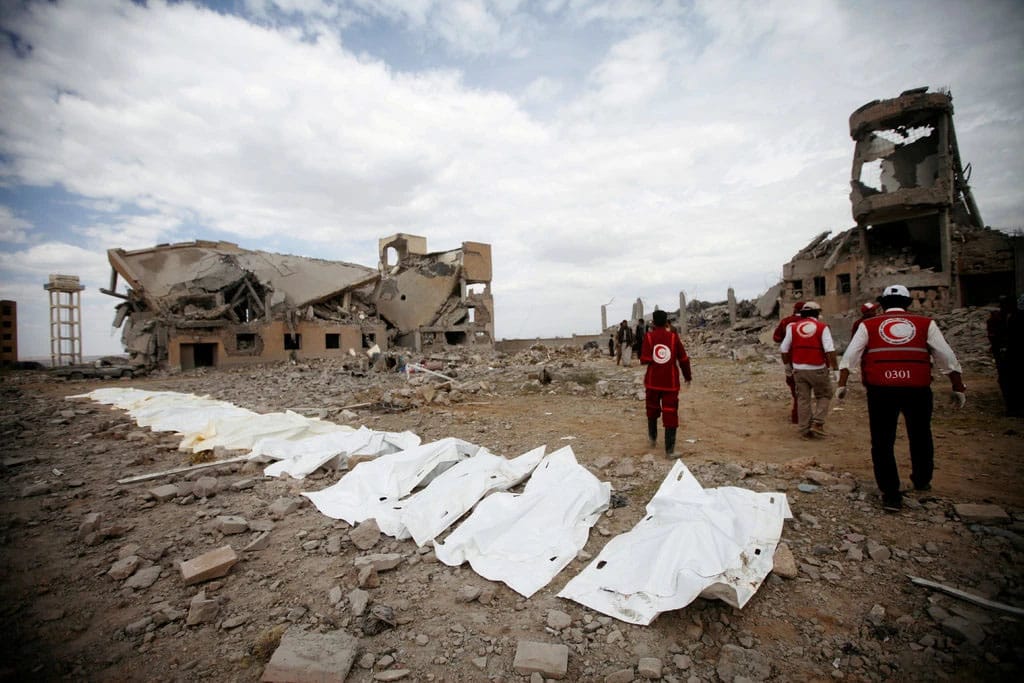
The Saudi-led coalition, including the United Arab Emirates, has been accused of numerous war crimes. In 2015, the coalition began to impose a blockade that plunged millions of people into famine and contributed to a devastating outbreak of cholera. Somehow, the entire Saada Governorate was declared a “military target”, and Saudi airstrikes have hit hospitals, camps for internally displaced people, and apartment buildings. Medical facilities run by Doctors Without Borders were struck four times in three months.
One of the most egregious examples is the 2016 bombing of a funeral that killed 140 people and wounded 600. After initially denying fault, Saudi forces confirmed their responsibility and blamed “wrong information.” Even the US government, the world’s foremost expert in ignoring civilians killed by airstrikes, was “deeply disturbed” and stated that their support for Saudi Arabia was not a “blank cheque.”
Despite the international condemnation, Saudi Arabia has not changed its ways. On Sunday, the Royal Saudi Air Force reportedly struck a market in the city of Taiz, killing seven and wounding 40.
Saudi Arabia’s domestic track record on human rights is just as bleak. In 2025, it executed 347 people, more than any other country except China and Iran. Historically, these executions have been conducted by mass public beheadings. Saudi Arabia is also one of the world’s most repressive countries in terms of gender equality and consistently ranks at the bottom of the world in terms of religious, political, press freedom.
It refused to adopt the Universal Declaration of Human Rights, claiming it contradicted Sharia, the Islamic law that all Muslims and non-Muslims in the country must adhere to. Additionally, the kafala system that restricts migrant workers’ right to leave has been linked to modern slavery. In 2018, dissident journalist Jamal Khashoggi was brutally murdered in the Saudi consulate in Istanbul, dismembered by a bone saw.
In 2019 a British Court of Appeal found that the UK government’s decision to continue licensing exports of military equipment to Saudi Arabia was unlawful, as ministers had “made no attempt” to consider alleged Saudi violations of international humanitarian law. An official review found that there had only been “isolated incidents,” and arms sales resumed the following year.
This is not to defend the Houthis, who have a penchant for firing rockets indiscriminately at population centres. It goes without saying that they too are repressive and should not be allowed to hold the global economy hostage. That said, it is a travesty that the UK is continuing to ramp up support for the Saudi regime and its war. Even deploying the RAF to intercept the missiles themselves would be preferable to signalling support of Saudi Arabia and tacitly accepting its flagrant disregard for human rights.
A pointless voyage
Burnham’s decision to deploy a single aircraft is pointless. The military effect of a single Voyager aircraft is likely insignificant, the economic impact even more so. Clearly, it is an attempt to signal support for Saudi Arabia without committing significant resources. Despite sanctioning Israel over its illegal settlements in the West Bank, Burnham does not extend the same logic to trade with Saudi Arabia. Aside from the kingdom’s immense oil production, this is also likely due to the expected lack of a domestic reaction: the UK populace is much less aware about the war in Yemen.
However, the stakes are high: in the unlikely scenario that the Voyager is downed, the UK will be dragged into a war it can ill afford to fight. If Burnham is intent on bringing down prices at home, he would be better off attempting to negotiate a ceasefire – or launching an air campaign on his own terms. As it stands, Burnham’s decision amounts to nothing more than a token of support for one of the world’s most despotic regimes, accused of regularly committing war crimes. It is militarily useless, politically treacherous, and economically inconsequential.