United we stand, divided we soar?
An analysis of devolution in the United Kingdom.
In the 1920s, Northern Ireland became the first constituent of the UK to receive devolved powers, a brief experiment in the so-called “old model” of devolution, that was stamped out upon the onset of the Troubles. By the turn of the century, however, the idea of devolution swung back into the zeitgeist when Westminster passed acts granting Northern Ireland, Scotland, and Wales devolved administrations.
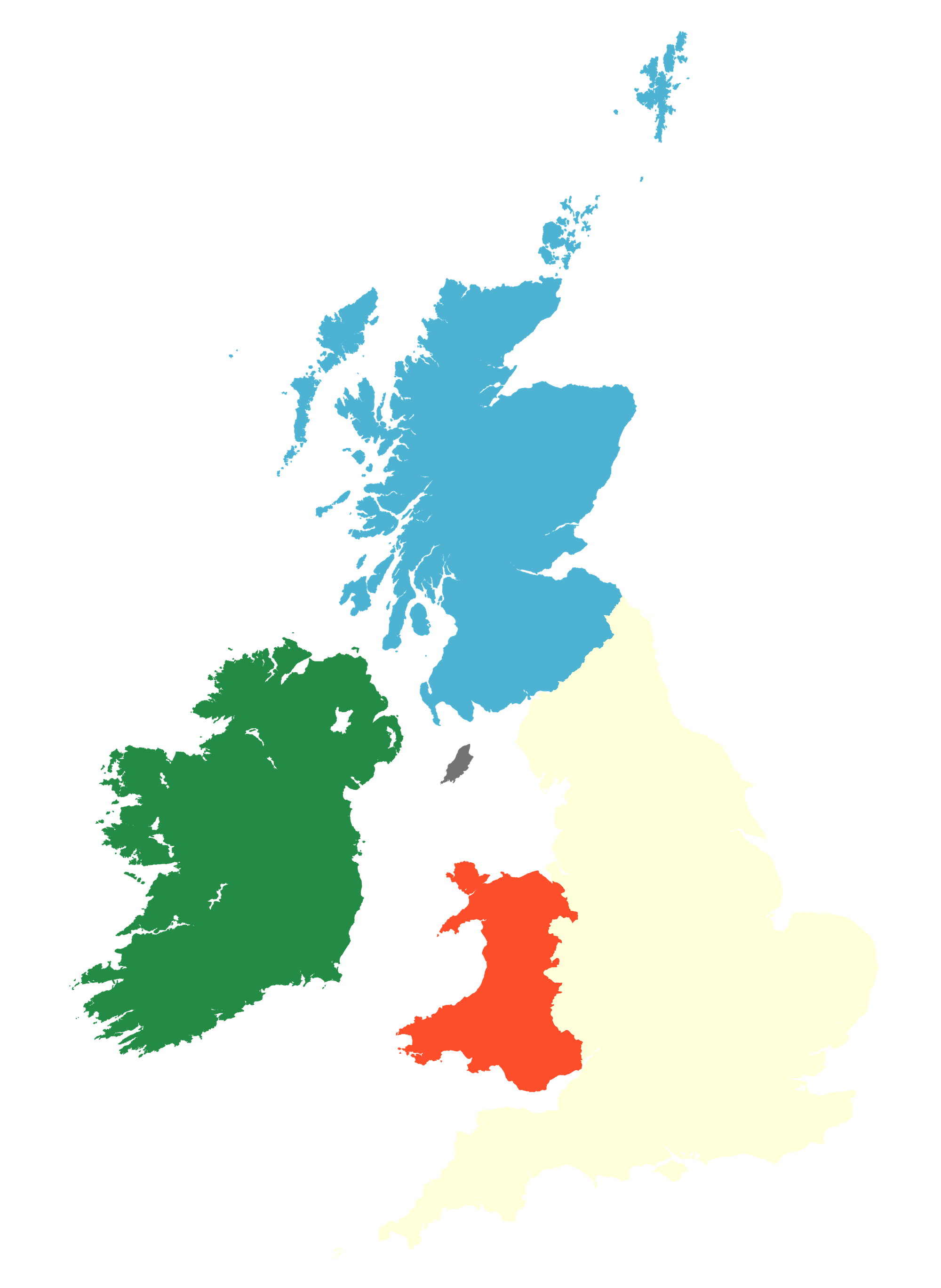
Devolution is not a concept unique to the United Kingdom by any means, with regions across the world having received a transfer of powers and autonomy from their central government. However, the UK is certainly a standout case, with three entire countries still deferring to the central government in Westminster for national matters. The political response to the situation has varied historically, both across the decades and across the constituent nations; with some parties content with limited home rule powers and others advocating for complete separation. Until recently, this variation has stalled any mutual understanding between parties, and as direct consequence, diminished the potential of any action being taken in the direction of independence.
A union of secessionists?
A distinct change in this rhetoric was marked 14 September, however. The 2026 Cardiff agreement brought together the leaders of the devolved nations (Rhun ap Iorwerth, John Swinney, and Michelle O’Neill) and the president of Sinn Féin (Mary Lou McDonald), in their capacity as party leaders, to share a commitment to independence from the UK for their respective nations. This marked the first time since devolution where all three leading parties have been committed to independence.
This sharp turn has not occurred in a vacuum. Prime Minister Burnham has reignited the national conversation on devolution thanks to his campaign’s promise to begin fiscal decentralisation and devolution of power to local authorities in England. Yet, despite this charge forward for English constituencies, he has been somewhat reluctant to extend the same energy for the other countries in the UK. After an initial openness towards Scottish independence during a speech in the Commons, Burnham sent a letter to Swinney indicating that a referendum was “off limits”. To the same tune, the Prime Minister earlier declared an Irish reunification referendum to be “off the table”, despite this administrative decision being entirely out of Westminster’s hands ever since the 1998 Good Friday Agreement.
What remains to be seen is whether Westminster desires to retain its historical power at the cost of rapidly diminishing public perception in the constituent nations. The most recent independence referendum in Scotland, held in 2014, led to a ‘no’ vote, with 55% of voters against an independent nation. Yet in the 12 years since, Swinney claims that opinion has swung to the extent that a new poll will guarantee a choice for independence. Public attitudes across the constituent nations have similarly been swaying, and the recent agreement will no doubt bolster this rhetoric. Even across the pond, Trump has broken precedence to indicate support for Irish reunification.
Going back to the cooler Union
There is also an elephant in the room that requires addressing. A likely catalyst for these recent calls for independence, and the decade-long shift towards pro-independence political parties, is the separation from the European Union that was enforced on all the devolved nations because of Brexit. While Wales, like England, voted in favour of the split, both Northern Ireland and Scotland were against, with the Scottish electorate voting nearly two thirds in favour of remaining with the EU. For Scotland and Northern Ireland, independence from the UK represents a possibility of return; either directly, or in the case of Northern Ireland, via reunifying with the Republic of Ireland (which is in the EU). Even in Wales and England, recent polling has demonstrated a sharp flip in opinion, with most now firmly against leaving the EU in the first place.
For all the constituent countries, the prospect of a return to the EU is extremely attractive, and clearly more so than remaining in the UK. All three nations would immediately enjoy the benefits of a much more open market to trade in, without the post-Brexit tariffs that have been imposed on the UK, as well as a return to the freedom of movement that residents of the nations previously had. For Scotland and Wales, rejoining the EU would now come with the added benefit of having direct representation and their own seats at the table, instead of having to rely on Westminster to do the negotiating for them. Even for Northern Ireland, which currently still has access to the EU single market for goods (thanks to the Windsor framework), it would open up the EU single market for services, capital, and people; as well as shrugging off the remaining control that the UK still has over the goods market in terms of VAT and medical goods.
Burned if you do, Burnham if you don’t
Dissolution of the UK would not be an unequivocally beneficial situation for England. The split would mean that a nation already isolated by Brexit would now be further divorced from its immediate neighbours, potentially leading to trade becoming even more strained. However, the insistence on devolution over outright handover of power has led to slowly rising tensions, and it feels increasingly like the United Kingdom is heading to a point where these tensions will bubble over and lead to more serious social unrest.
The Starmer government tried to tiptoe around the label of unionism, despite the ex-prime minister holding largely unionist beliefs. Perhaps in response, Burnham’s comments in the Commons seemed to be initially distancing himself from the ideology; with the Scottish deputy first minister recognising that he didn’t seem an “ardent unionist”. Yet now, after the Cardiff agreement, the British prime minister has leaned back towards a familiar stance for Westminster and explicitly stated that he “believes strongly in the union”.
I think this is because the political atmosphere has created a deadlock for Labour, and Burnham’s fear of losing voters to Reform may be informing his decision to portray a pro-unionist view for Westminster. Yet if the prior administration has taught us anything, it’s that pandering to the right only adds more fuel to the fire, with Reform promising to commit to even more extreme unionist policies. Voters who are already aligned with the right will read Burnham’s attitude as being a half-measure rather than an olive branch, and the remaining progressives will be more polarised.
In the best-case scenario, this polarisation will lead to more support for the Green party, who have already indicated support for independence of the constituent nations if they are to come into power. Yet while independence may be a win for progressives, it could paradoxically lead to Parliament itself favouring the right, with a lack of opposition from left-leaning Scottish and Welsh MPs. Burnham is faced with a choice now for the future in which he thinks Labour is most likely to come out on top.
Moving out (and moving on)
I do think that a separated UK is simply a future that Labour now has to reconcile and accordingly prepare for. Thanks to the Good Friday Agreement, the prospect of Irish reunification is one which Westminster has no control over; and with a growingly nationalist Northern Ireland, this is a possibility that cannot be simply dismissed (as Burnham seems to be doing). Similarly, the second Scotland negotiates a referendum on its independence, a prospect that the ruling party is now heavily pushing for, the odds strongly lean towards resounding turnout and favour for separation from the UK. According to the Scottish first minister, Burnham may very well be “the last prime minister of the United Kingdom”.
At the risk of comparing apples to oranges, the UK of all places should be rather familiar with the idea of decolonisation by now, and the work required to smoothly transition out of a controlling role in another nation. And while it is too blithe to consider any of the constituent countries to be “colonies” as they stand in the present day, it is still true that local governance, culture, and politics in the constituent countries has long been far removed from Westminster, to a degree where I think it is soon becoming pertinent to cut the remaining strings tying them to ourselves. It’s time to stop imposing Westminster’s desires onto the constituent nations and simply look at what the countries themselves desire. And in the wake of the Cardiff agreement, I think that their desires seem rather clear.
Perhaps in the future, the modern state of the United Kingdom (only present since the 1920s) will be a short blip in the history of the region, with independence slowly cementing itself as a perennial norm. Or perhaps unforeseen pressures will lead to the current state of devolution sticking around for centuries to come.
We may be on the cusp of change at the moment, but only time will tell.