Is Imperial’s STEMM specialisation still prudent?
Or is it time for the long-standing tradition to change?
Imperial is certainly one of a kind. Regularly rising in global university rankings and this year reaching 2nd on the QS ranking, it has long been a zenith of academic rigour and scientific achievement. However, its most unique feature is its singular dedication to STEMM: science, technology, engineering, mathematics, and medicine. Since 2003, it has also been home to a Business school, which has not reached the same superlatives as the other departments at the College. With all these accolades, one begins to wonder if Imperial’s STEM-only success is a rare gem or a fluke. In my view, it is the latter.
No other university of similar stature or ranking is as dedicated to STEM-only research and education as Imperial. In the UK, Imperial College London is the only Russell Group university that has no faculties of humanities or social sciences. Globally, while STEMfocused universities do exist with similar repute to Imperial, they rarely exclude all non-STEM subjects from their grounds. The Massachusetts Institute of Technology (MIT) and the California Institute of Technology (Caltech) both are home to well-regarded departments of social sciences, including economics and politics, which offer undergraduate and doctoral degrees. ETH Zurich, while only offering one undergraduate degree in the humanities and social sciences (mainly focused on military sciences and history), does employ a sizeable faculty of humanities who administer historical and philosophical modules on ‘Science in Perspective,’ which are required of all undergraduates. The École Polytechnique Federale de Lausanne (EPFL), Technische Universiteit Delft (TU Delft), and Nanyang Technological University Singapore (NTU Singapore) all have similar structures. Meanwhile, though Imperial offers its Horizons modules to all undergraduates, these modules are one of three options available via the I-Explore requirement, the others being Business for Professional Engineers and Scientist (BPES) and further STEMM modules. There is thus no requirement to complete a humanities or social sciences module as an undergraduate at Imperial.
It should be noted that the inverse of this phenomenon rarely occurs. Prestigious universities dedicated mainly to the social sciences and/or humanities are rarer to begin with, and the ones that exist do not presume that mathematics or sciences would not be useful to their studies. For example, the London School of Economics and Political Science has a reputable department of Mathematics, as does Bocconi University in Milan, Italy. Sciences Po in Paris offers specialisations in climate sciences and policy, bioethics, and big data. Some of the best art schools, like the School of the Art Institute of Chicago, even require their students to take modules in mathematics.
The argument of this piece is simple: the lack of a faculty of humanities and social sciences at Imperial is a disservice to its students. The lack of exposure to nonSTEM ideas harms crucial workplace skills, including verbal communication, technical and non-technical writing, and ethical considerations of one’s work. While there are certainly avenues to build these skills at Imperial, is it not the duty of a university to ensure its alumni are up to par in these regards? Especially in the current landscape of artificial intelligence, it is a necessity, not a luxury, to build one’s strengths in the humanities. A recent study in The Economist revealed that philosophy students have been much more likely to be hired after finishing their degree than computer science students, which the authors attributed to the rising automation of entry-level computer science jobs. But AI currently cannot (and likely will not) write convincing rhetoric, while Imperial students can. The polymathy of a STEMM student with training in proper communication will be enviable for generations to come.
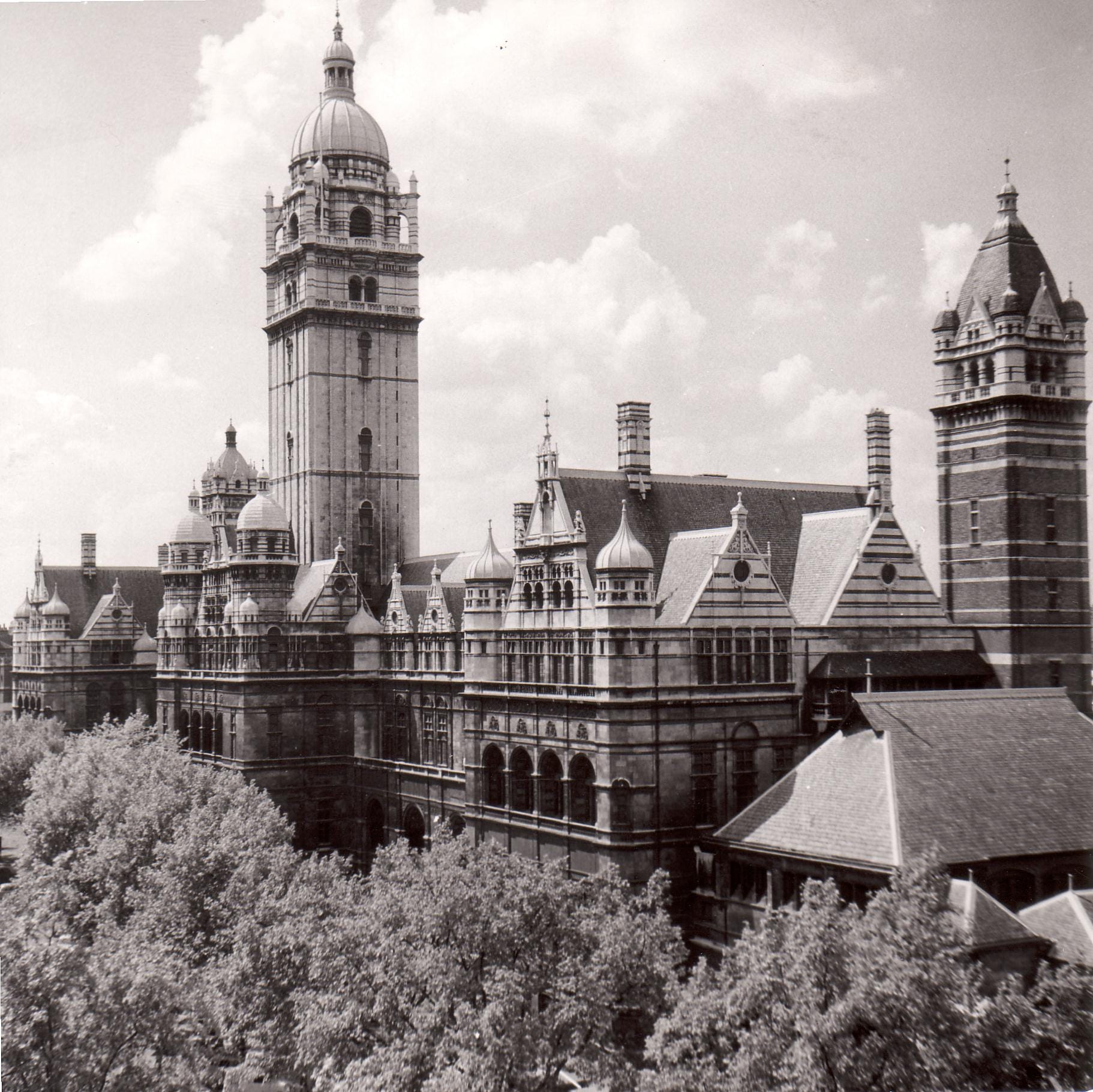
In short, I am hoping for a return to Imperial’s roots. At its earliest, Imperial was a remarkable blending of disciplines: the Royal College of Science, the Royal School of Mines, and the City and Guilds College uniting on one campus. In its surrounds were the Royal College of Art and the Royal College of Music, meant to exist in harmony and resonance with the sciences at Imperial. These are not opposing forces; they are both pure expressions of curiosity and creativity. The students at Imperial deserve to explore such disciplines without sacrificing time in their degree.