IC Hack 2026: Wizards Return to the Castle
Imperial’s famous event, and Europe’s biggest hackathon, took place over the last weekend of January.

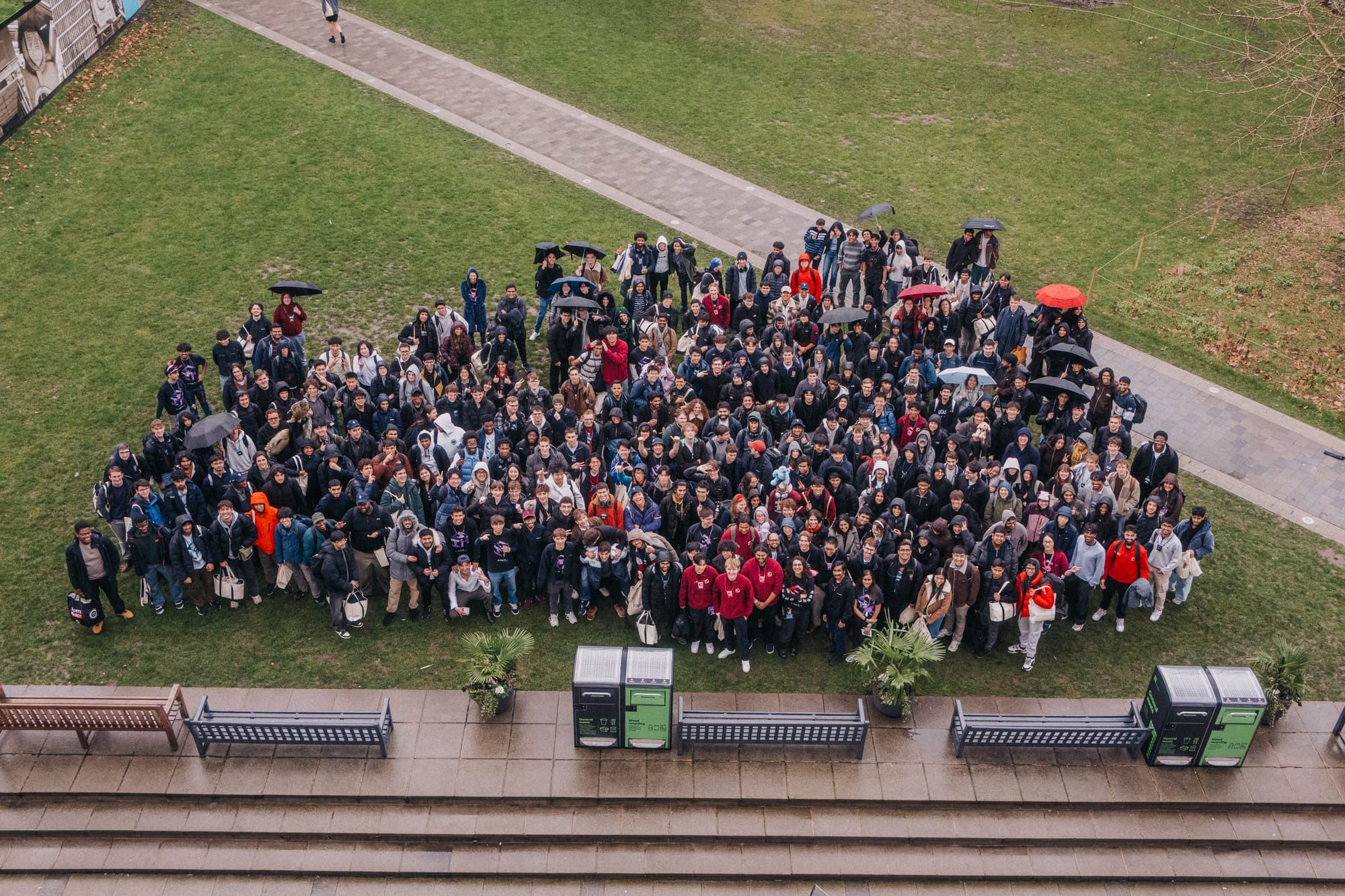
Last weekend, I had the chance to attend the 14th iteration of IC Hack. From the moment I stepped into the Sherfield foyer, I was greeted with a commotion of people who were waiting for their complimentary bubble tea – a line starting from the stairs, going all the way outside Queen’s Tower Rooms. This by itself reflected the incredible attendance of IC Hack, which was later confirmed by one of the organisers, Aidan, who very kindly gave me a tote bag full of goodies, showed me around, and introduced me to everything happening.
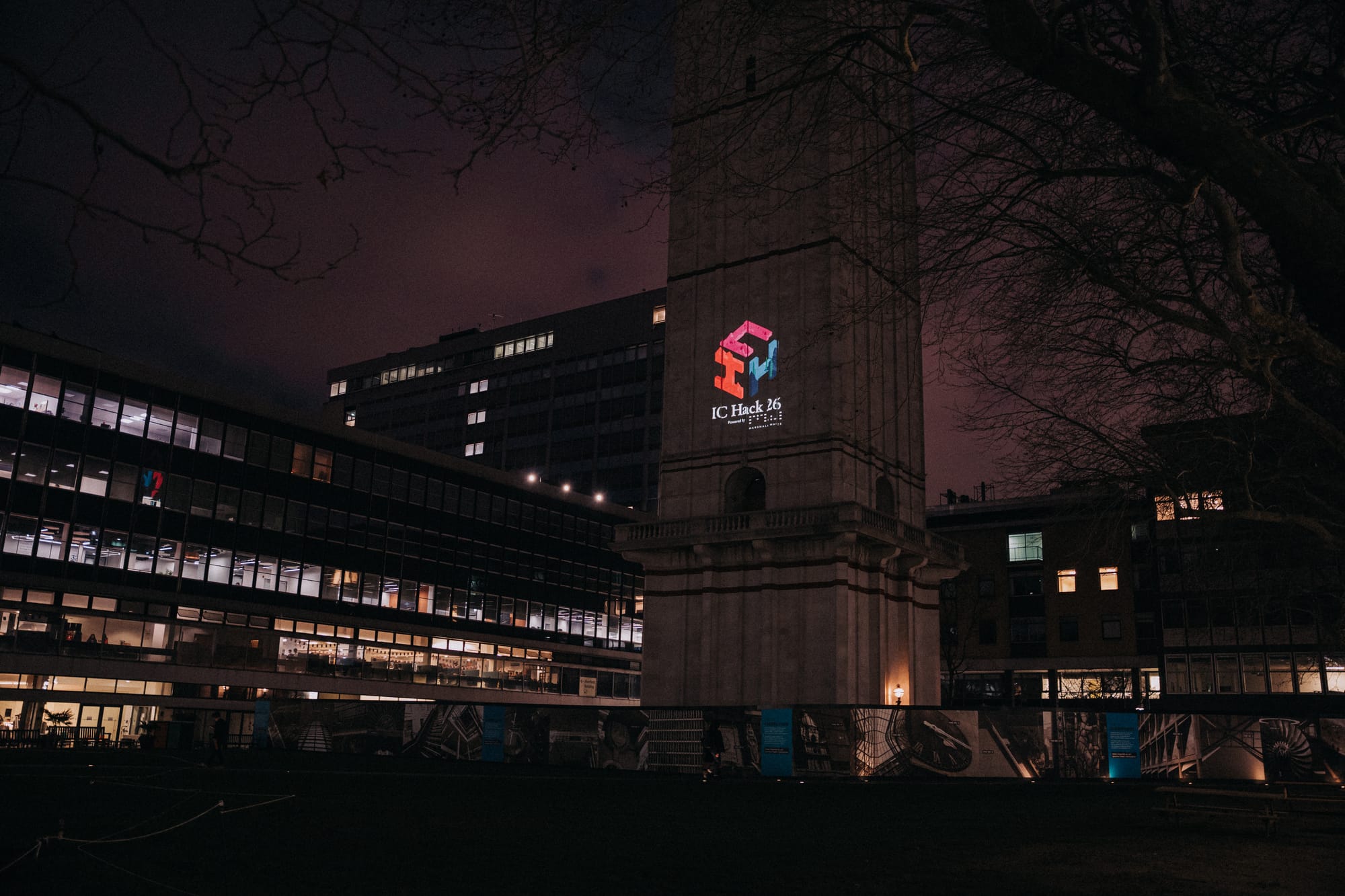
The totebag, more importantly the branding, deserves its own mention. I was mesmerised by the online presence of IC Hack even before I attended and I was pleasantly surprised to see that Sherfield was decorated in similar spirit with buntings and flyers. There was a lot to appreciate and the environment created by the creatives of IC Hack is definitely one of them.
Organisational side
This year, IC Hack was attended by approximately 800 people, 600 of them being participants and was orchestrated by 40 organisers and 80 long- and short-term volunteers. The amount of organisation required was not surprising at all, as the event covered all of Sherfield and Royal Geographical Society for its opening and closing ceremonies. With participants from across Europe (Finland, Spain, France, Switzerland to name some) and a three- or four-fold interest for tickets, Aidan expressed that it’s possible that IC Hack will be hosted outside Imperial next year as the event is pushing the limits of the campus. The amount of work and players that are part of IC Hack is immense – in Aidan’s words: “Who let us do this?”
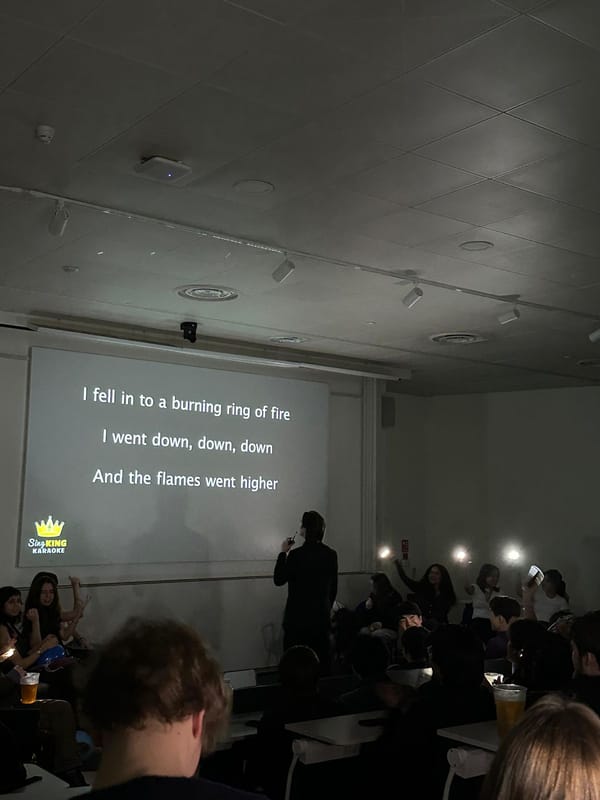
Not to mention, the event is free for participants and the team tried to make the weekend as entertaining as possible by implementing a bingo, which you could fill out with stickers you got from participating in events, as well as late night entertainment like karaoke, Mario Kart and Clash Royale sessions. Besides the copious amounts of snacks and complimentary food, which I had my fair share of, this year the organisational team implemented air purifiers in responses to “stink” comments from last year.
Sponsors
The interest for IC Hack comes not only from participants but also from companies eager to support this student-run event. The event had 23 sponsors and Aidan told me that they’ve even had sponsor meetings for companies interested in next year’s IC Hack. Participants had a chance to informally interact with employees from such companies, some of which are Imperial graduates, and also attend sessions hosted by them.
IC Hack isn’t only a ground for computing creatives to work on a project, but also get recruited for internships and graduate positions.
The participants
As a person who has no coding experience besides R and some Python, the realm of IC Hack was completely new to me and I was wondering if the participants were solely computing students. Aidan told me that there are increasingly more members who are not involved with the coding but instead presenting ideas. In fact, with the increase of generative AI use in hackathons result in groups of 50/50 coding and non-coding participants. While it is a benefit which increases the diversity of participants and reach of IC Hack, some participants and volunteers also believe that the rise of AI is taking some of the creativity away from hackathons and fostering an environment where AI becomes necessary to use rather than a tool.
One very important thing to note was the lack of female-presenting participants among the teams. It is not uncommon to see less female-identifying participants in events like these, as primarily the students who attend such hackathons are usually from computing-related degrees, which notoriously have a gender gap. From 2023 and 2024 UCAS undergraduate intake data, the percentage of female- and non-binary-identifying students among unconditional offer holders for the Joint Maths and Computing degree was around 9.1% and 14.81% respectively.
When I asked Aidan whether there was or is an effort to decrease the gender gap between participants, he mentioned that there isn’t a bias towards the gender of participants but also not a system of positive discrimination set-up. This is understandable, as the gender gap in computing can’t be solved only by IC Hack, but it does imply that there can be a greater effort from Imperial to increase the number of female and non-binary people in the computing department.
Next year
Any Imperial student can help organise IC Hack, and I was pleased to see some familiar faces not only from Computing but also Design Engineering and other degrees as well. If this is something that you would like to do, give a follow to @docsoc on Instagram and keep an eye out for volunteering information which will come out next October/November.