Inside the darkroom in Beit Quad basement
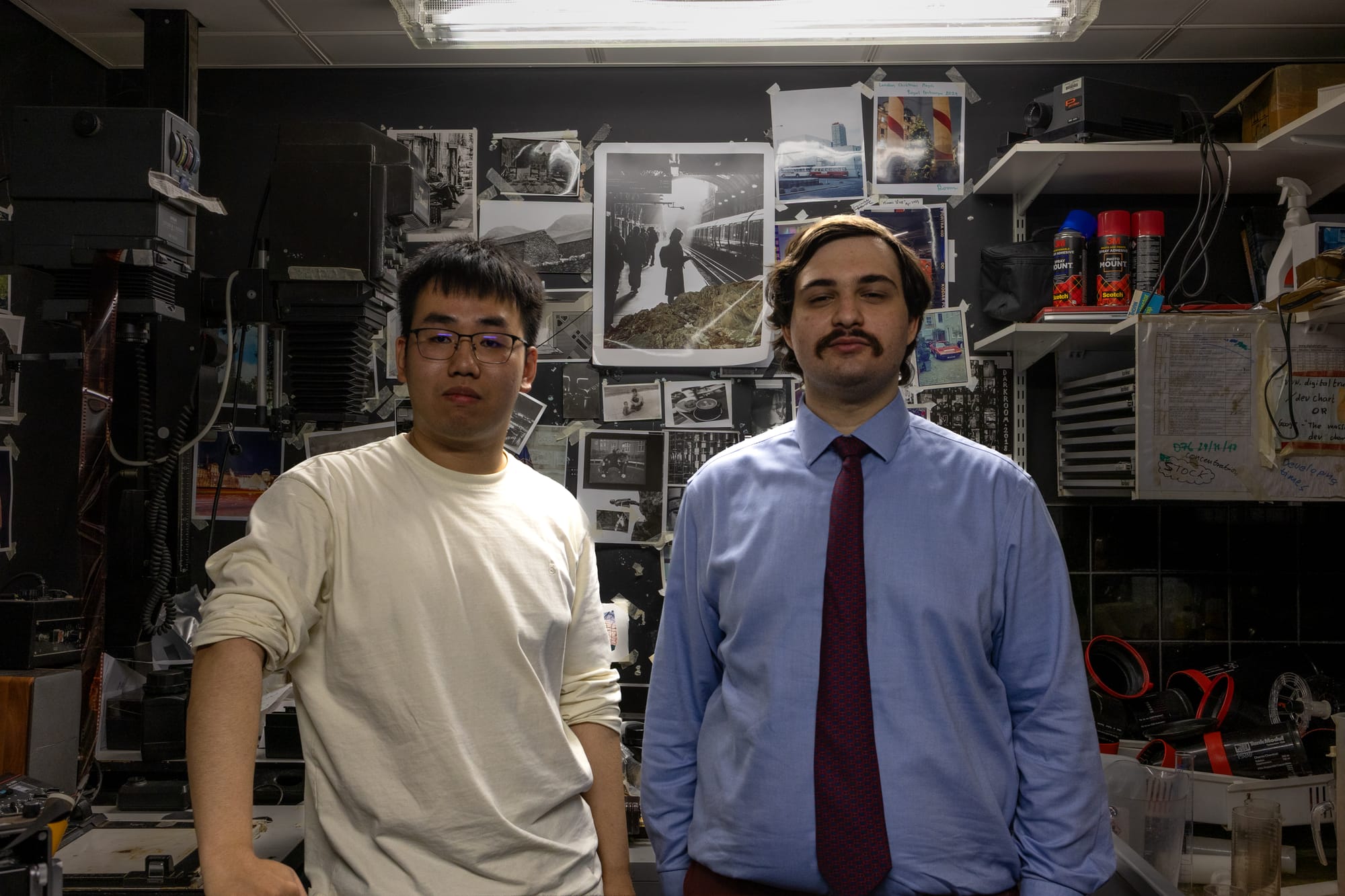
Felix speaks with the students doing photo the old way.
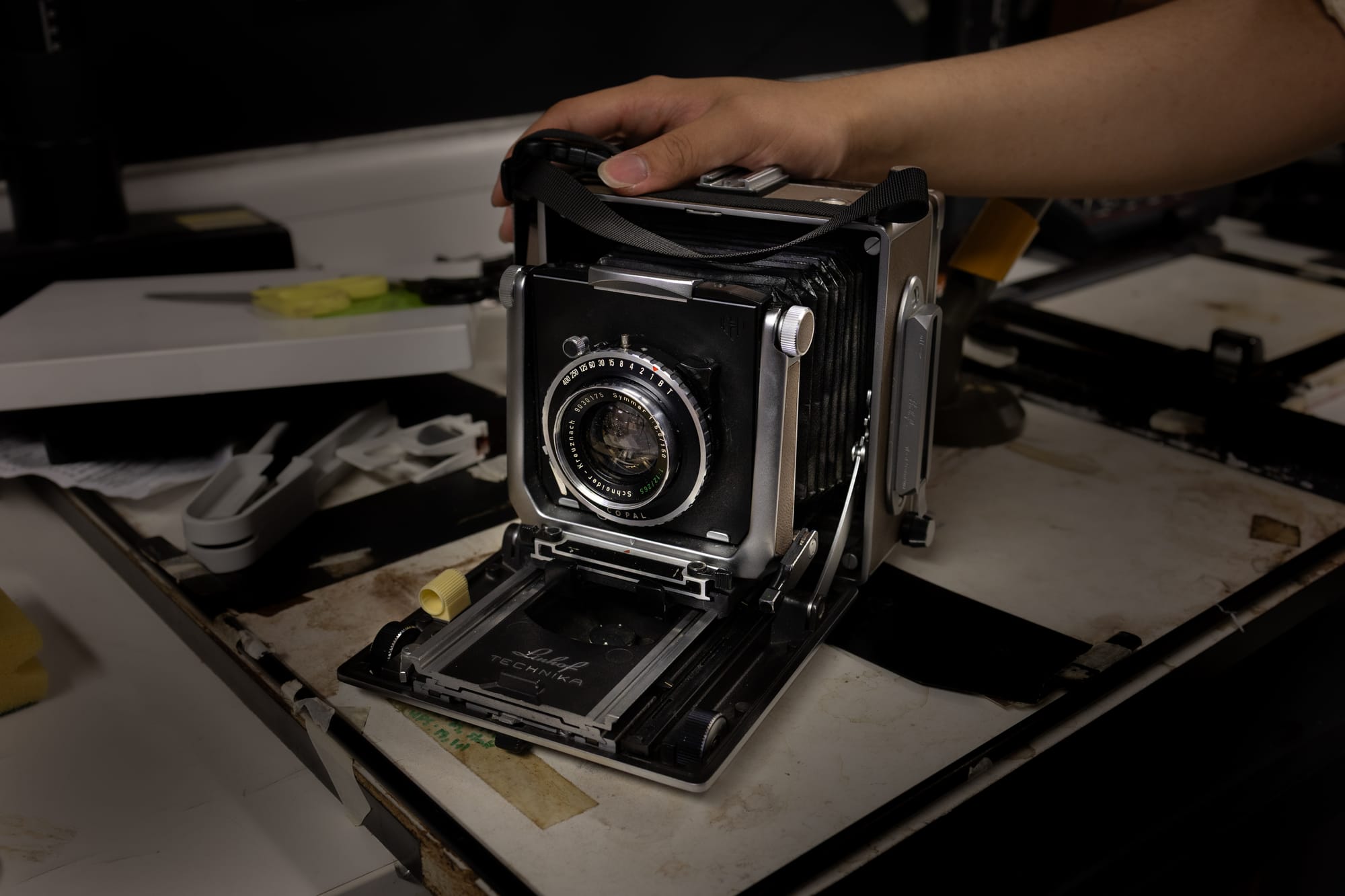
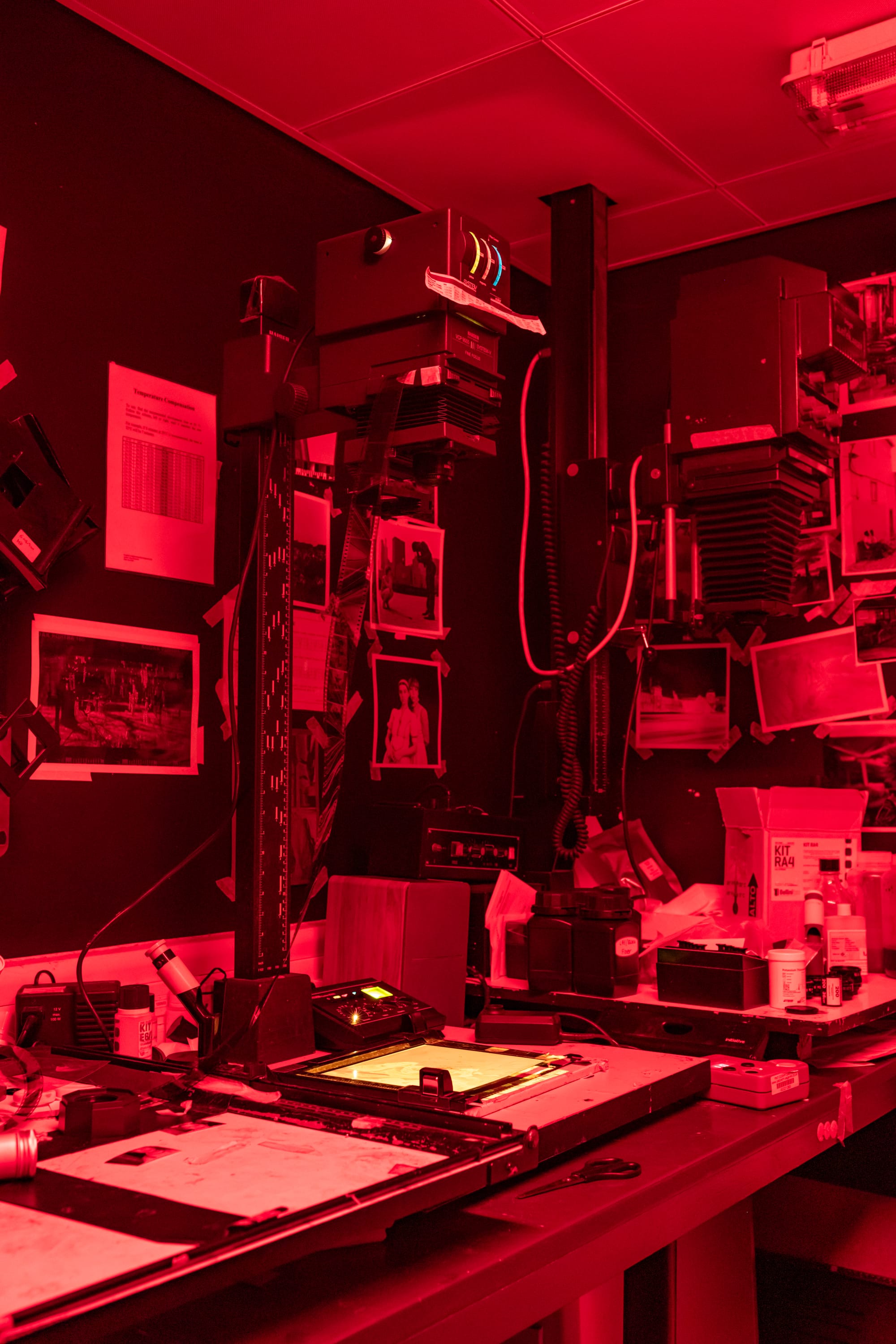
In the West Basement of Beit Quad hides an inconspicuous darkroom unbeknownst to many, a room where chemicals are meticulously used to develop film and curate prints.
Two weeks ago, I got the opportunity to tour the darkroom with Imperial student experts Dimitris Alexopoulos and Ye Zimao (Steven). Stepping into the darkroom felt like stepping into Walter White’s caravan from the show Breaking Bad. Bottles of mysterious white powders and assorted chemistry equipment (used strictly to develop film and absolutely nothing else) line the room. Zimao and his friend, Forrest Li, demonstrated the process of developing and making prints of the small strips of film taken. It was astounding to watch them work in virtually pitch darkness, solely relying on experience and feeling around to develop their film. The whole process seemed long and cumbersome to someone like me, whose experience with film extends to a grand total of one roll of film. I couldn’t help but question: Why do you still work with film, if digital is so much easier and faster to work with? As it turns out, the answer isn’t that they’re masochists. For Dimitris and Zimao, the charm lies in the parts of photography that technology has made easy to overlook.
Film photography and its development methods are much less conventional today, largely due to how convenient digital photography has become. Modern cameras can capture dozens of images in a single second, while editing software allows photographers to endlessly adjust colour and exposure with a flick of a slider. Even if these adjustments don’t look good, there’s always Ctrl+z there to save you. In stark contrast, film photography offers no such luxuries. Every roll has limited frames, meaning photographers must be more selective when choosing to capture an image. Once the film is exposed to light, it must be handled, developed, and printed through a process that requires considerable patience and precision. Making prints demands deliberate decision-making, since every adjustment and subsequent print costs time, effort, and materials.
Dimitris and Zimao imparted to me that these inconveniences are not flaws in the process of film photography, but part of the appeal. The need for slowness and deliberation encourages the photographer to think more carefully about when to press the shutter, the lighting in the frame, and the composition of the shot. Rather than taking hundreds of pictures and relying on extensive editing afterwards, film photographers are challenged to get the ‘best’ picture right off the bat and make each shot count.
It’s like chemical magic.
As someone who shoots exclusively on digital cameras, I can definitely see how the convenience and speed of modern technology can sometimes hinder the opportunity to be more intentional and involved in our craft. Film photography, in contrast, instills a deeper level of engagement in creating an image by promoting intentionality. After spending two hours immersed in the world of film, I do indeed see why so many photographers stay devoted to the film development process.
Beyond the darkroom, the Photography Society also hosts photography walks where photographers of all experience levels explore different locations and learn from one another. Their WhatsApp group also serves as a platform for members to interact with the community and seek advice from more experienced photographers. The Society also curates art exhibitions at Imperial, providing students with opportunities to showcase their best works. Whether you’re interested in digital photography, film photography, or simply looking for a place to meet fellow creatives, the Photography Society offers a welcoming place for all. To keep up with their activities, follow them on Instagram @icphotosoc.