Magica Is Burning
On hope, individual responsibility, and the willingness to make a change.
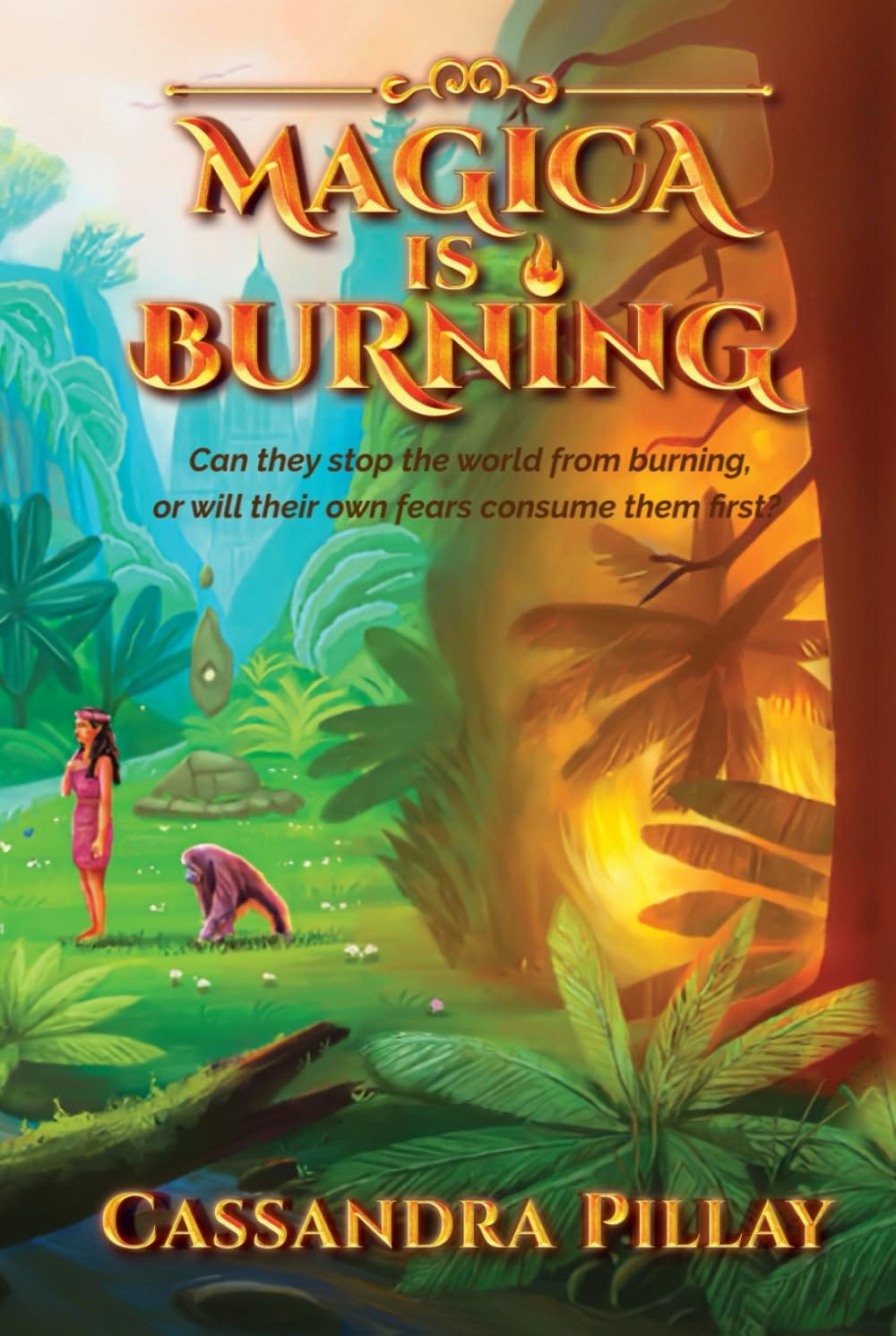
In Cassandra Pillay’s didactic fantasy, Magica is in the midst of a climate disaster not unlike our own. Reliance on non-renewable, pollutant-emitting Silver Liquid is threatening waterways, stoking forest fires and fuelling aggressive military invasions. For the realms’ next generation of leaders, systematic change is as vital as it is daunting. Among the five elemental realms – Earth, Fire, Water, Wind and the Void (formally Space) – disputes over the future use of Silver Liquid have devolved into violent conflict, with grave losses on all sides. Despite their magical powers, the citizens of Magica are reliant on mining and burning Silver Liquid for energy.
Drawing on her career as a climate change expert, Pillay takes on the multifactorial issues of fossil fuel usage and climate change. Reliance on Silver Liquid is a multi-headed hydra; no one person or solution can fix it. The crusade for further mining extends from the monarchs of the Void to indoctrinated average citizens. At the end of the novel, the path to full climate remediation remains largely uncharted, despite the victories of by protagonist Mahari and her allies.
Between rising tensions, the story meanders through magical schooling and regional festivities, relaxing the narrative pace and saturating the world of Magica in rich detail. Being Pillay’s first foray into creative fiction, the syntax and voice were imperfect but energetic and endearingly earnest, much like her determined Magica inhabitants.
The intertwined fates of humans and animals, and gravity of non-human suffering is central to the novel’s message, reminiscent of other ecologicallyinformed young adult fantasies like Jasper Fforde’s The Last Dragonslayer.
Particular attention is paid to the necessity of mental wellbeing, using meditation, affirmations and therapy as readily available combatants to grief, stress and psychosomatic pain. Although “ecoanxiety” chiefly affects the novel’s younger characters, Pillay uses figures like Mahari’s grandmother to emphasise the historical nature of climate action and responsibility. Her wisdom and experience contradict the assumption that battling climate change is a novel or isolated struggle. Fear also feeds the vulnerability of young people to reactionary ideologies under the burden of crisis.
Ultimately hope, individual responsibility, and the willingness to make a change, no matter how small, are all that stand between Magica and irreparable destruction.