Neural implant chips developed at Imperial
Imperial neurotech spinout MintNeuro is creating specialised microchips that enable next-generation treatments for neurological conditions.

Brain chips are allowing paralysed patients to communicate, move around and perhaps even play the piano. Hardware allows electric pulses into the brain to treat symptoms of Parkinson’s disease and depression. They sound like science fiction, but brain-computer interfaces are a powerful and thriving field materially affecting the lives of hundreds of people today. Neuralink made headlines in 2024 when its first experimental implant was trialed in a quadriplegic patient to great success.
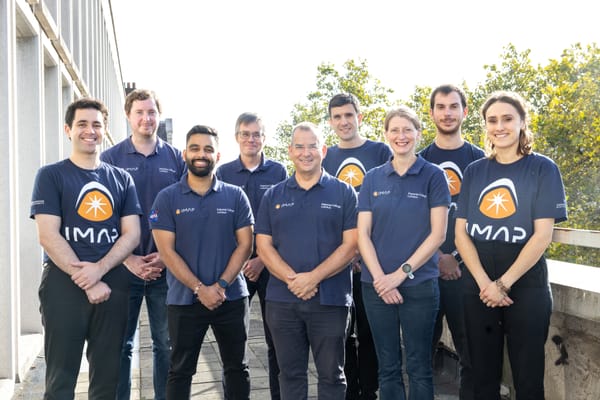
Felix spoke to Professor Tim Constandinou, co-founder and CTO of MintNeuro, an Imperial spinout focused on creating very small chips specifically for use in neural implants. He graduated from Imperial with a degree in Electrical and Electronical Engineering and has been working on research at the intersection of engineering and neuroscience since starting his PhD.
Despite the futuristic-sounding name, neurotechnology is not a new concept. The fundamental principles of collecting signals from the brain and transmitting information to it have existed since the electroencephalogram (EEG) was invented in 1924. They consist of attaching electrodes to the head to collect and transmit waves of electromagnetic activity from the brain. This is an example of a noninvasive computer interface. The most recent breakthroughs in measurement and treatment have come about because of painstaking improvement in engineering, neurobiology and medicine.
Neural implants are highly advanced electronic devices that can be used to address many different medical applications. According to Professor Constandinou, neural implant applications can be classed in four main categories. Most people have heard of brain computer interfaces (BCIs). “These use tiny electrodes implanted in the brain to sense neural activity and then decode something useful like the user’s intention. So, for example, people with ALS or locked-in syndrome can communicate or control a computer as we do with a mouse or keyboard.”
There are also devices which take external signals and relay them to the brain, allowing people to perceive something. These are what Professor Constandinou calls “sensory interfaces, things that can kind of bypass a dysfunctional sensory pathway. For example, cochlear implants for hearing, retinal implants for blind people,”—essentially restoring lost senses. There are also implants which affect the brain directly, changing its behaviour. These are called neurostimulators, and they “are devices that stimulate the brain, quite similar to a pacemaker. They inject a pulse of current a certain number of times a second, and they can disrupt, say, an abnormal oscillation. For example, in movement disorders, there can be a tremor, and stimulating certain deep regions can help suppress that tremor.” Then there is bioelectronic medicine, not directly targeting the brain. “It is interfacing with the nerves of the body for treating conditions that aren’t necessarily neurological conditions. So, could be things like rheumatoid arthritis, interfacing with the autonomic nervous system in order to modulate inflammation, which can suppress the progression of some conditions.”
MintNeuro’s goal is not to create a neural implant to treat a specific condition or achieve a specific outcome. Professor Constandinou claims that “there are tens, hundreds of neurotech companies out there that are vertically-focused on developing devices and therapies targeting specific conditions”. Instead, MintNeuro positions itself as a horizontal, serving the entire industry. They aim to produce high-performance chips that are purposebuilt for neurotechnology applications and versatile enough to address different needs. This is “one key element that will catalyse the neurotechnology industry to grow from being worth billions of dollars towards trillions, much in the same way as Nvidia chips are enabling the AI industry. Our ambition is really to have MintNeuro chips inside every neural implant out there in the future.” The spinout was created because “there are no standard chips that are targeting specifically neural implants that are sufficiently low power, high precision and meet quality standards to be used in clinical grade devices. That’s really the gap that we’re filling; we understand the application really well and know how to design low-power chips that help optimize the whole neural implant. Really a systems engineering approach. This is specifically what we’ve been working in the research group for over 15 years now.”
MintNeuro chips are currently being used in preclinical studies whilst also being integrated into devices for clinical use. For example, the DREAM project, in collaboration with Imperial and teams from Kings College London and Newcastle University, is working on incorporating their semiconductor chips into neural implants to create more efficient measuring methods for drug-resistant epilepsy. “It’s creating targeting devices to massively improve the patient experience in hospital undergoing assessment for surgery to treat drug-resistant depression. As of now, patients have to undergo up to two weeks being restricted to a bed with electrodes implanted into their brain, and wires connecting through their skull and skin.” MintNeuro’s technology will allow the team to miniaturise a lot of the bedside equipment into a chip, or at first instance a portable device. They are also working with Amber Therapeutics, which is developing a therapy for mixed-urinary incontinence and also has several other ongoing trials, including treatments for Parkinson’s disease and epilepsy.
Professor Constandinou explained how developing any medical device therapy takes years, from proof of concept to first in-human studies: pivotal studies to widespread clinical use. Particularly for implantable devices, safety and efficacy are paramount: “we need to ensure all aspects of the device are safe, and remain safe even if something may go wrong, and that they offer a significant therapeutic benefit that outweighs any risk.”
Professor Constandinou consistently praised the entrepreneurial environment on campus, which has defined avenues for developing intellectual property and for collaborations, which he says helped MintNeuro secure investments. He explained that “within Enterprise there are divisions dedicated to supporting spinouts based on underpinning research at Imperial such as MintNeuro, but also student-led startups.”