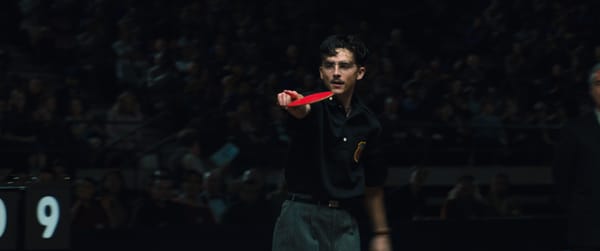
Sentimental Value
The Norwegian film storytelling intricate family dynamics has secured nine Oscar nominations this year.

Sentimental value refers to the subjective worth that individuals assign to objects, experiences, places, or relationships due to emotional attachment or some nostalgic, personal meaning. A childhood home, a souvenir from an unforgettable trip, a grandfather’s watch… these are all examples of items that shape our personal identity and priceless memories. But can these always be described as simply beautiful? Joachim Trier’s Sentimental Value (Norwegian: Affeksjonsverdi) is a restrained yet emotionally incisive film that interrogates such inheritance – not merely of property, but of memory, trauma, and identity. Renate Reinsve returns as the lead actress in a Trier film after her performance in Worst Person in the World. Since its release at the end of last year, the Norwegian film has claimed nine Oscar nominations for 2026, including Best Picture and Best Director.
Centred around a fractured family navigating the aftershocks of loss, the film carefully explores how sentimental value accrues to spaces, objects, and stories, often in ways that resist reconciliation or closure. Trier structures the film less as a linear narrative but more as unfolding through fragments of the past and present – conversations half-finished, recollections disputed, and memories that bring further ambiguity instead of clarity. At its core, the family house functions as a symbolic axis, bringing tension to the characters’ quiet conflicts. Often, shots linger throughout empty rooms and corridors long after a conversation has ended, suggesting that sentimental value attaches less to portable objects than to spaces that have absorbed emotional history.
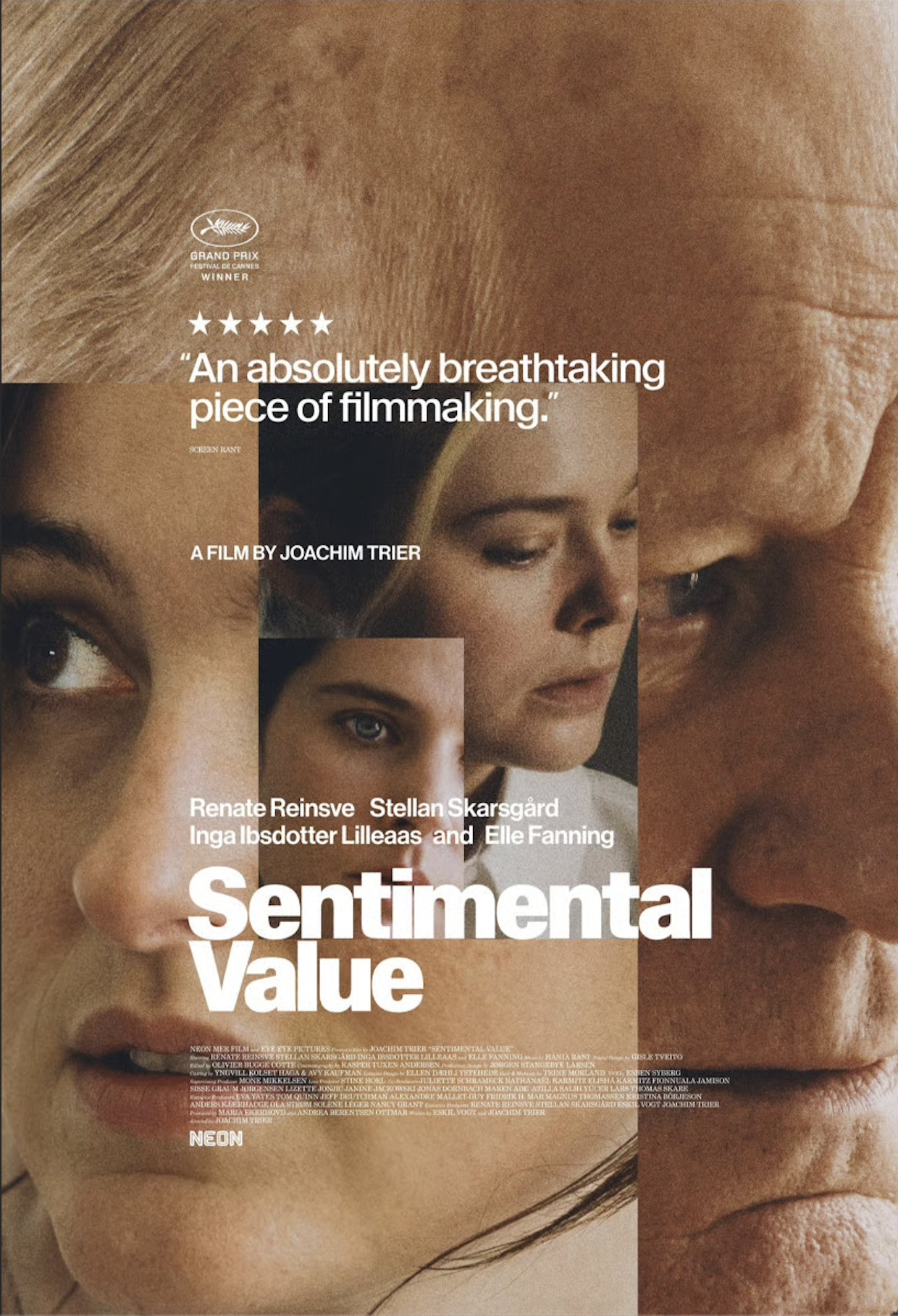
The performance that Stellan Skarsgård delivers as Gustav Borg, both an estranged father and a once-renowned director, creates a character that cannot be perceived directly. He returns to Oslo and offers the central role in his comeback film to his eldest daughter, Nora (Renate Reinsve), but she immediately refuses due to her resentment towards his absence throughout her childhood. He must then retreat into casting a famous American Hollywood actress, Rachel Kemp (Elle Fanning), unintentionally creating a surreal dynamic as he attempts to mould her into a version of his daughter. Gustav resists both apology and overt cruelty in dealing with his daughter, although at first his strategy to cast Nora in a Netflix drama about his own life may seem slightly exploitative. This is shown in one of his lines: “It’s hard to love someone without mercy,” he says, as if directing his own daughter on how to forgive him. The more the story and details about the film unfold, we see the delicate layers of Gustav’s personal history quietly seeping in; Nora wasn’t meant to play herself, but rather Gustav’s mother who committed suicide in the house that belonged to the family since the start of World War II.
The film has the power of moving you at different moments, in different ways, and for different reasons.
Nora is a character who absorbs the weight of the past almost visibly. Her face often registers feeling before language can catch up, and we can see her frustration and vulnerability the most. Fit to her character, she is introduced as a stage actress who ironically has extreme stage fright. As Rachel begins to realise that she cannot play the role because she simply hasn’t experienced it, we also begin to understand that Gustav’s film is not just about his mother – it’s about Nora, himself, his grandson, and an attempt for reconciliation where answers cannot be found.
Interestingly and quite importantly, a central theme that the film explores beyond the father-daughter dynamic is one of sisterhood. Agnes (Inga Ibsdotter Lilleaas), Nora’s younger sister, is an academic who has built a stable family of her own and acts as a grounded, emotional anchor that bridges the family. But why are they so different? Nora asks the same question to Agnes, to which she replies: “I had you.”
Is turning real pain into art an act of understanding, or avoidance? Personally, I think this film has the power of moving you at different moments, in different ways, and for different reasons. Just like the characters in the film, we all carry individual dynamics and lived experiences that uniquely shape how we would approach Sentimental Value. It is a film definitely worth watching and to keep an eye out for this year’s Oscar season.