The original ‘nihilistic penguin’
Surf’s Up follows the tale of a penguin, Cody, going towards the waves instead of the mountains

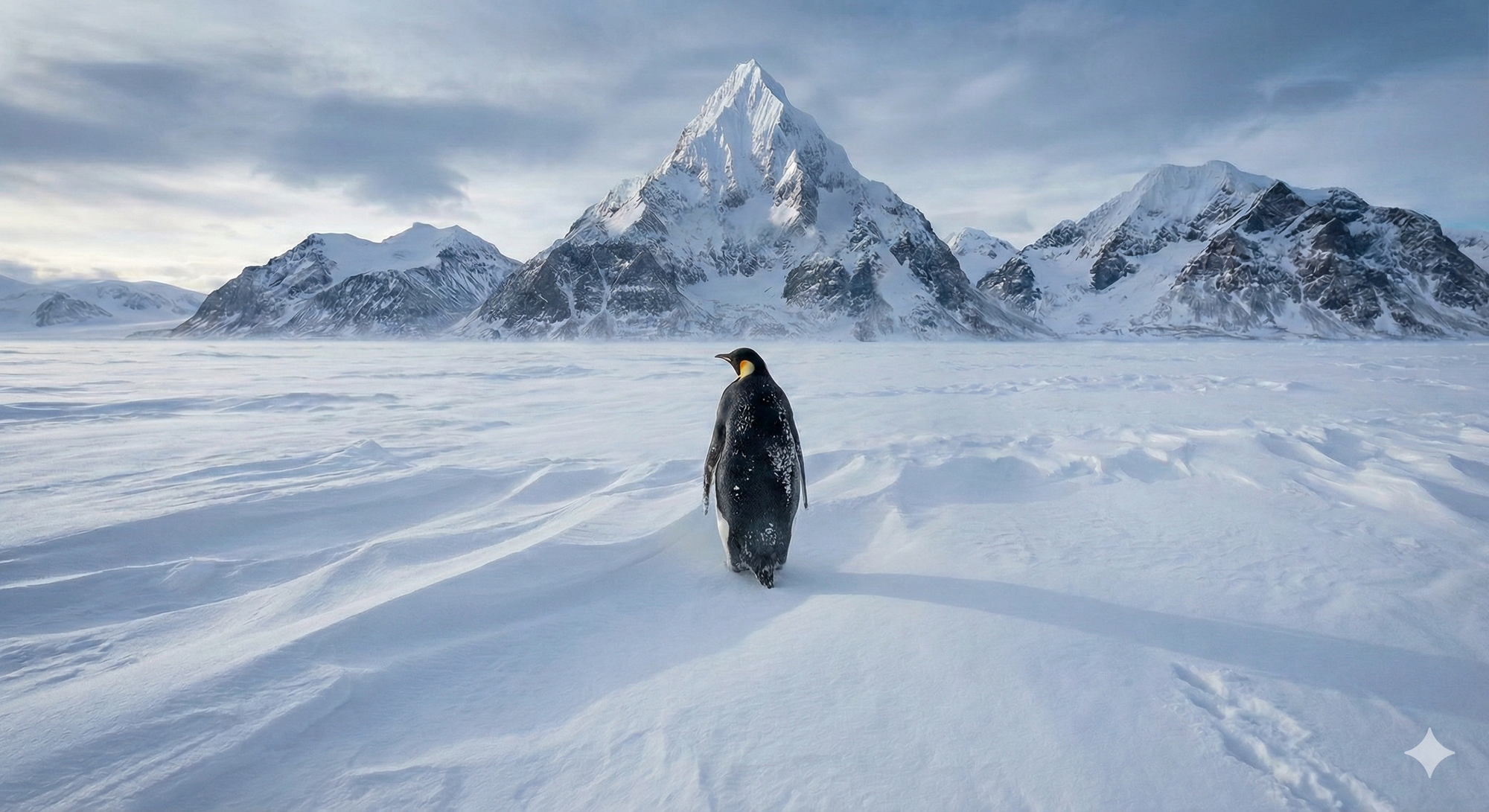
In a 2007 documentary by German filmmaker Werner Herzog, Encounters at the End of the World, a single Adelie penguin abandons its colony and heads towards the mountains – away from food, the ocean, and survival. The commentator asks: “But why?” This clip has been rediscovered in 2026, going viral on all social media platforms, termed as the “nihilist penguin”. Strangely enough, people seem to be connecting to this oddly existential penguin, who marches towards certain death without clear reason but full of intention. Despite several scientific theories, this image has evoked links to nihilism, which rejects societal values and states that there is no ultimate or intrinsic purpose in life. But this phenomenon cannot quite be described as a grand philosophical movement; it’s more about mirroring human psychology and creating a canvas onto which viewers can map their own feelings, struggles, and disillusionment. Where have we seen such a penguin before?
Surf’s Up, released in 2007 before the documentary, is an animated sports comedy that follows a teenage penguin, Cody Maverick (voiced by Shia LaBeouf) in the icy backwaters of Antarctica. Directed by Ash Brannon and Chris Buck, this mockumentary depicts Cody as a young surfer who embarks on a quest to compete in the Big Z Memorial surfing competition, away from home. He idolizes the legendary surfer Big Z (Zeke, voiced by Jeff Bridges), who vanished years ago. Like most classic sports protagonists, Cody wants to be respected and believes that he can validate his existence through fame, trophies, and public recognition. However, unlike other animations of the era, the unique mockumentary set-up, where a camera crew follows him around conducting awkward interviews, compounded with a soft satirical narrative, is what set this film apart.

Before Cody gets qualified for the contest and travels to the tropical Pen Gu Island, we get a glimpse of his life in Antarctica, where he lives with his mom and older brother Glen. In Shiverpool, his hometown, life revolves around survival, repetitive routines, and modest expectations. Naturally, Cody’s surfing dreams aren’t understood purely due to their impracticality. In response to an interview question, “What’s your dream?”, Cody says: “To go away. […] I don’t understand why everyone has to be so judgmental. […] Everyone’s like ‘Cody’s this, Cody’s that, Cody’s this’. Cody’s me bro. Let me be me.” And so, like the Adélie penguin in the documentary, Cody walks away from home. Even though the documentary illustrates a darker, self-destructive ending, the part that people seem to be focusing on is the journey rather than the destination itself. When paired with sombre music and reflective captions, the scene becomes a metaphor for the human urge to walk away from expectations, duties, and the standard way of life. Both stories ask: What do we chase, and why? For Cody, meaning isn’t ultimately found at the podium; it’s found in the act of enjoying surfing itself. Surf’s Up thus takes us through a successful version of an existential crisis: one where meaning is reconstructed rather than abandoned.
Cody’s me bro. Let me be me.
Though one is a humorous family film and the other a piece of nature documentary, both have become meme vessels for exploring deeply human concerns about purpose, identity, and existential drift. Penguins, specifically those from 2007, are now somehow the existential symbol of our time. Whether it’s towards the waves like Cody or the mountains like the penguin from the documentary, it is relatable for people to want to pursue something more. So, it’s time to ask yourself: who are you without the crowd? Or, what kind of penguin will you be?