The Importance of Being Earnest: As dandy as they come

The most recent Imperial DramSoc adaptation of Oscar Wilde’s best-known play, The Importance of Being Earnest, is as effervescent as it is camp while remaining faithful to the original text. 97 years after the society first performed it, this production was brought together over the impressively short span of five weeks. The directing trio of Anya Chaudhary, Aaron Simpson, and Manu Greenfield managed to put on the work with a clear vision that resounded throughout the performance. As someone who has been around the block with DramSoc and their productions, it felt to me that this was the most confident and strong show they’ve put on in my time at Imperial. There was never a moment where the acting dragged, and audience immersion was instantaneous and seamless.
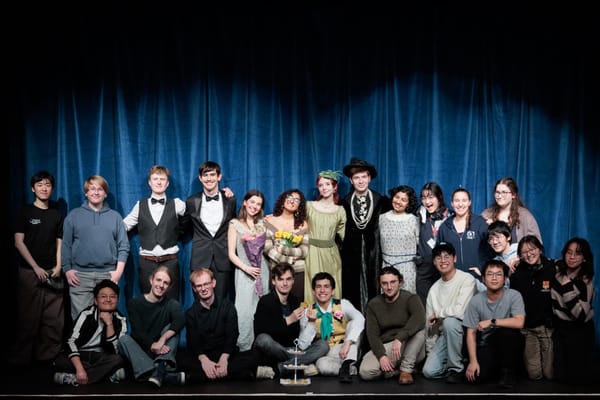
Going into this, I feared it would be played more as a pantomime, but it managed to avoid this without having to sacrifice the over-the-top production value or exaggerated acting choices. Rather, it was a totally believable version of the snobbish, domineering representative of the aristocracy, particularly in Daniel Rattner’s portrayal of Lady Bracknell. Each actor was able to capture the distinctive cadence of Wilde’s prose, delivering lines with clarity and excellent comedic timing, particularly displayed by Atom Lucenet (Algernon) and both butlers (played by Jack Childs and Daniel Browne), who didn’t even have to open their mouths for their presence to be felt. Their body language alone transmitted more than a lot of people could dream of expressing with words.
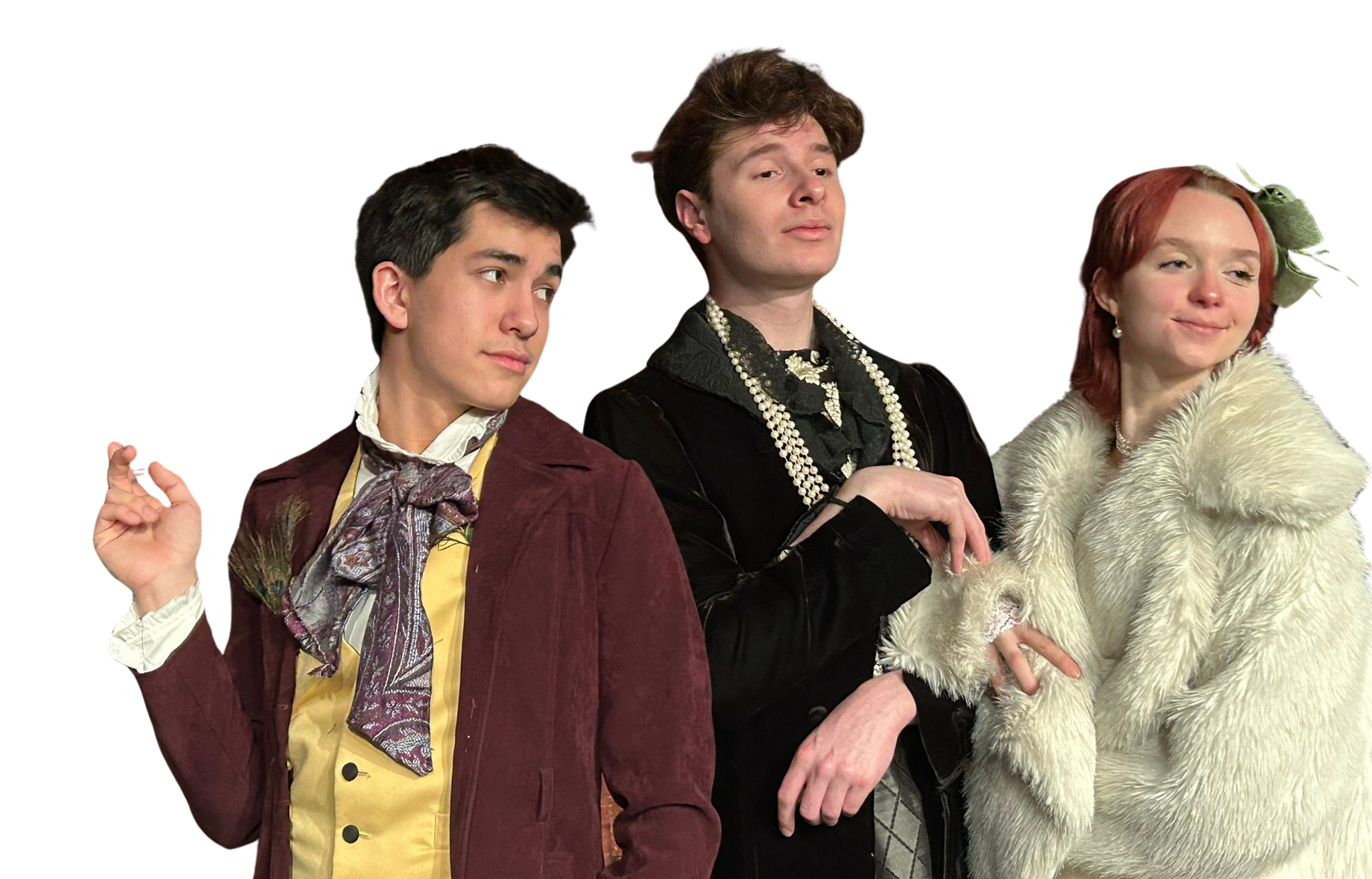
The actors make the parts their own, with Rattner relying on a quiet, clipped delivery to exert authority, or Lex Irish (Jack Worthing) utilising his physical comedy abilities brilliantly without steering into farce; an incredible debut into DramSoc. Atom’s performance of Algernon is reminiscent of Olly Alexander’s from the National Theatre’s adaptation, with his endearingly boyish charm. Elana Todd-Miller’s Gwendolyn was particularly memorable, with her biting wit shining through every line but with no loss of her more gentle, girlish qualities. Conversely, Jasi Wither’s portrayal of Cecily exemplified her youthfulness and innocence, while avoiding treating her as a complete fool. Both women’s acting chops are particularly showcased during the scene where they both believe they are engaged to the same Earnest and have an argument through the medium of afternoon tea, which both actresses gave their entirety to with believably immature sparring.
It was difficult not to laugh at Algernon’s butler, Lane’s (Daniel Browne), every entrance – a figure moving with mechanical stiffness and an air of aloofness, displayed in his monosyllabic responses. The dominance of the butler as a comedic tool continues when the play moves to the Worthing’s countryside estate, and Jack’s butler Merriman is excellently played by Jack Childs as a totem of complete bewilderment at the aristocrats’ wild behaviours. Jack’s warmth was palpable and hilarious when wistfully looking on at their budding romances.
In the countryside, the charming subplot of Miss Prism, Cecily’s tutor (Anwesha Putatunda), and the reverend Dr. Chasuble’s (Benet Horan), romance plays out. Their suppressed emotions, well portrayed by both actors, form a delightful counterpoint to the burning passion of the rest of the cast’s romantic outbursts – with the pair’s grounded performances adding a touch of sincerity to the play without losing the comedic edge.
It may have been able to avoid being a pantomime, but the production is still deliciously camp, with an impressive set, most notable in the garden scenes, and colourful costumes. The blooming bushes and antique furniture create an exuberant atmosphere. The two-tiered staging was a very effective use of space, allowing separation between stage elements. This was most well done in the scene where Algernon introduces himself to the Worthing estate on the main stage, where he is alone and singly the focus, before descending the stairs allowing the scene to shift back to normal. The verticality added a sense of expansiveness to the experience, complimenting the outrageous nature of the characters.
Both Cecily and Gwendolyn were dressed to impress in beautiful period dresses, on loan from the National Theatre, and our leading men were also well-suited. In a particularly notable scene, Jack’s dressed for mourning in an all-black suit, the centrepiece being the choice of long black gloves and a top hat, which were a brilliant decision to illustrate how insincere the faux serious moments are.
The show lives for pleasure, with the leisurely, even laborious line deliveries meaning the pace never becomes hectic, while the many side-eyes at the audience ensure it never takes itself too seriously. The entire ensemble gives a great performance whilst still allowing the lines to speak for themselves. A fine balance is struck between the relentless hamminess the script calls for without laying it on too thick. Wilde’s polished oxymorons and inverted wisdom retain their satirical celebration of shallowness without becoming tired. This timeless comedy is big enough to take a joke, and this is a very good one.