The London Neurotech Hackathon
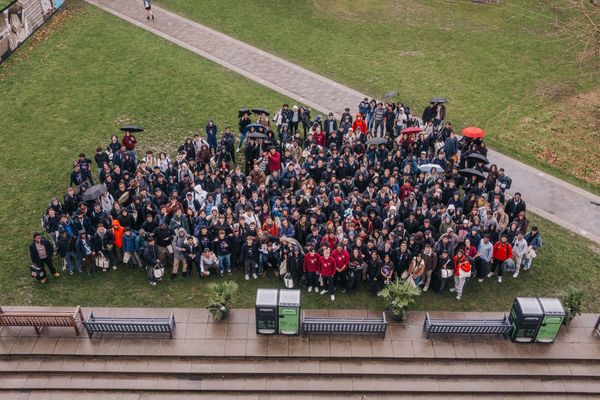
The second edition of the London Neurotech Hackathon took place on the weekend of 21st February, at the headquarters of Entrepreneurs First.
Participants, ranging from undergraduates to post-docs and lecturers, came from Imperial and beyond, with some flying in from across Europe for the competition. A flagship event for the Imperial Neurotech society, the Hackathon saw fifteen teams compete overnight for over 30 hours to ideate, code, and build a proof-of-concept demo to show a panel of entrepreneurs and investors.
The winning team for the NeuroAI track, Flextra, developed a mobile application coupled with an electroencephalography (EEG) headset designed to track and monitor cognitive rigidity, a difficulty to respond to new information found in some forms of obsessive-compulsive disorder (OCD).
“To objectively track cognitive rigidity, our platform measures, in particular, the heightened error-related negativity (ERN) brain signals in people with OCD, which occurs after a mistake is made,” said Sharleen Hu, an Imperial Bioengineering student on an exchange year from the National University of Singapore. “We hope tools like this can support clinicians by providing clearer insight into patients’ cognitive and neural responses over time.”
The winning team for the Bluesky concepts track, Sense-OC, developed a system to give natural sensations back to individuals who have lost it, which might happen as the result of a stroke or type 2 diabetes. Their solution comprised an arm sleeve with pressure-sensitive electrodes to simulate touch with electrical signals, guided by glasses with computer vision and neural feedback from EEG.
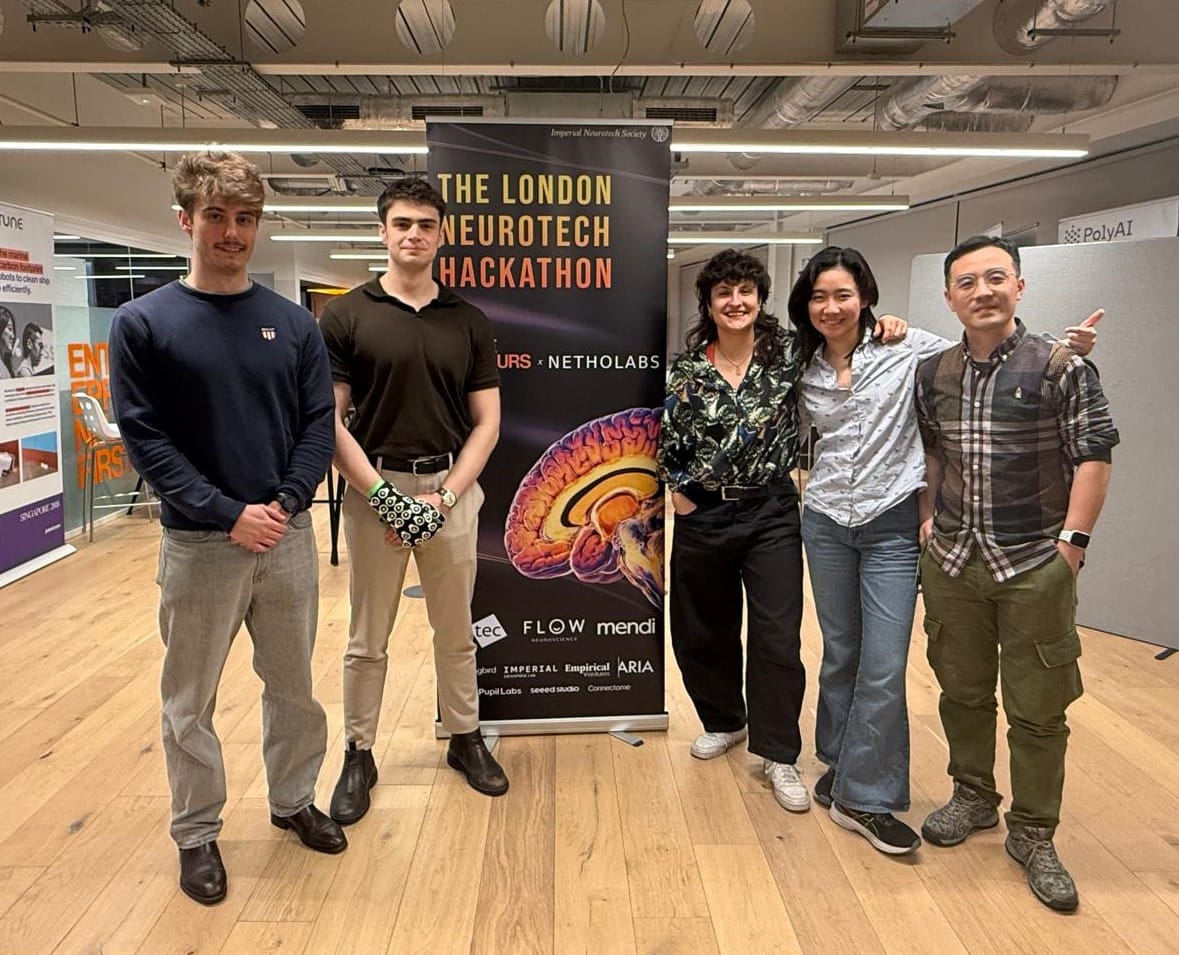
“I’m so proud of the team and what we managed to build in such a short space of time, and how well we melded our expertise, pulling together concepts from Neuroscience, Computer Science, Computer Vision, Machine Learning, and Electrical Engineering,” said Maria Alfaro, a PhD candidate in bioengineering at Imperial.
“Seeing people fly in just to be part of that, and watching a community form across students, researchers, and industry mentors is a clear testament that this is just the beginning,” Jayla Kwok, Chair of the Imperial Neurotechnoloy Society, told Felix.