This Week In Science (14/03/2025)
Felix's weekly digest of Science news

SpaceX’s failed launch scatters debris over Caribbean Sea – Neha Yasin
Firey debris was seen raining from the sky over the Caribbean Sea after a failed Starship rocket launch last Thursday. Launching in Texas, the thankfully unmanned rocket spun out of control, resulting in “a rapid unscheduled disassembly,” according to SpaceX. There has been no report of injuries or damage. Flights were temporarily grounded across several Florida airports, with 240 flights affected.
A similar incident occurred during a test launch in January, which did end up causing property damage. Last Thursday’s launch went ahead despite an ongoing investigation conducted by the Federal Aviation Administration (FAA) for the first incident.
Starship is designed to be the largest and most powerful rocket to date. SpaceX intends for the rocket to be fully reusable a to play a part in future trips to Mars.
Protein waste recycled into natural antibiotics – Eldrian Tho
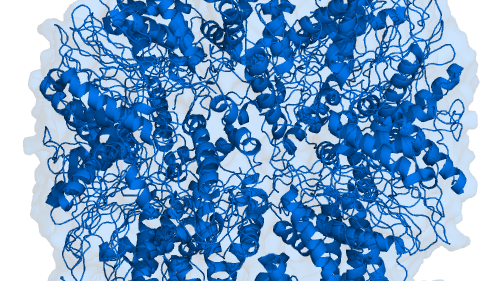
A recent discovery published in Nature by Prof Yifat Merbl’s lab at the Weizmann Institute of Science showed that our cells can turn protein waste into antibiotics as a defence strategy. The proteasome, primarily located in the cytoplasm and nucleus of eukaryotic cells, breaks down damaged or unwanted proteins into small fragments called peptides. Surprisingly, some of these peptides have antibacterial properties.
During infections, the proteasome boosts the production of these antimicrobial peptides, strengthening the body’s immune response. This finding not only reveals a new layer of our immune defence but also offers potential for novel antibiotic discovery. As antibiotic resistance is on the rise, harnessing this natural mechanism could provide an innovative approach to tackling bacterial infections.
Latest lunar lander mission is over – Taylor Pomfret
Intuitive Machines, a private company who were set to deliver a historic lunar lander on the Moon, announced that its lander, Athena, powered down. This came one day after having arrived at the lunar surface, with photographs taken by Athena taken before it powered down confirming the vehicle is lying on its side.
Athena was designed to investigate the presence and quantity of lunar water ice using PRIME-1, a payload consisting of a drill and a mass spectrometer. It also carried a drone coupled with a neutron spectrometer to explore the permanently shadowed region (PSR) of Marston crater. NASA Head of Science, and former Imperial physics student, Nicola Fox said: “Each success and setback are opportunities to learn and grow, and we will use this lesson to propel our efforts to advance science, and exploration.”