Why I don't care if Heathcliffe is white

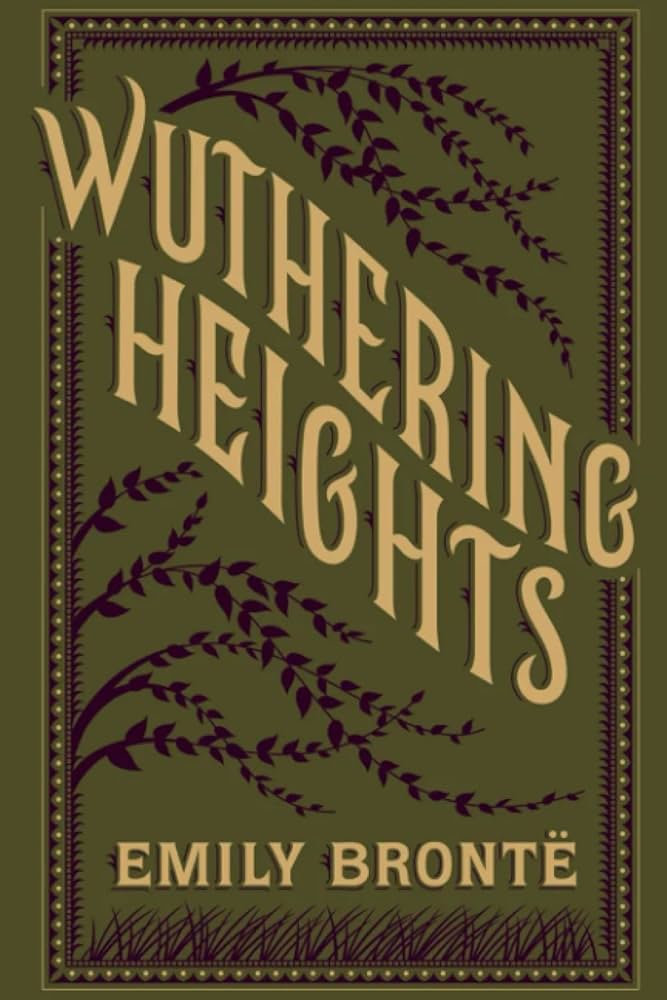
There’s been a lot of controversy about the casting of Jacob Elordi, a white Australian, as Heathcliffe in Emerald Fennel’s adaptation of Wuthering Heights, particularly that a white man could portray a character, who although never explicitly stated to be what we in 2026 would call a racial minority, has been deemed by many readers to be one.
I fundamentally disagree with the ideas that portraying Heathcliff as a minority increases the literary fidelity of a given adaptation. Brontë’s Heathcliff is described as [excusing the now slurs] a “dark-skinned gipsy”, “Lascar”, or “an American or Spanish castaway”. His racial identity is ambiguous, and I must admit, when I first read the novel, I did not assume him to even be more than a shiftless, wraithlike character. He appears as a “devil” and a “blackguard”, a term with unknown etymology, but no apparent reference to race. The point is Heathcliff is as a character both within the novel, and subtextually, a portrayal of the Other. Thus, to portray him as any one race – and there are arguments that Heathcliff’s racial ambiguity is used to investigate the treatment of the Irish during the 1840s, during the Potato Famine – or even to explore colonial stereotypes and projects that Victorian’s had, all in one novel is what makes it a masterpiece. If you define Heathcliffe’s race monomodally, you also reduce the nebulousness of his gender, and the theme of gender, and the themes of class, both of which Emily Brontë is grappling with in the novel.
I fundamentally disagree that one can even compress the novel through a visual medium.
A corollary to this argument is that Heathcliff as a racialised character, “going from victim to abuser”, is thus adequate representation for racialised people. This is an argument I disagree with. By attempting to sympathise with Heathcliff because of his Otherness, we reduce him from his actual role within the novel, that of a human character. He is both tyrant and victim: there is no transformation from any one singular state to the other, precisely because the novel is a critique of the Enlightenment, through its place within the Romantic canon. It is a brilliant novel as it grapples and diverts the cultural and social practises of its time in such a brilliant way. That is why it’s a classic. To view a gothic text through the lens of likeability or being problematic is emblematic of this media literacy crisis.
I am not proposing that Heathcliff must be white, as whiteness is the norm it is not the blank slate upon which the ambiguities of his character are drawn on. Instead, I fundamentally disagree that one can even compress the novel through a visual medium. Any interpretation is not designed to be a slavish reproduction, aiming to capture the essence of the original work of art it is based upon. Instead, the new medium is in itself worthy of standing on its own: one sees the work of the creative team behind the film to explore the film through their individual perspectives.
Even from an identitarian perspective, I would not want the only representation of my race to be that of Heathcliff. I am acutely aware of the structural constraints of my life. I am aware that my identity is that of the fifth column. Yet, I would want it to be explored from my own mouth, from my own perspective. Emily Brontë’s mastery and genius is well examined, but both intertextually and meta-textually, Heathcliff is only explored through the voice of the (white) nararator Nelly, or through Brontë herself. I disagree with the assertion that a non-white voice would be better placed, or could do a better job, but racialised people deserve a chance to try (and fail) to create art on their own terms.
As a final note, I do not think Fennel’s adaption is good; having seen it, I think it will be viewed in retrospect as the perfect representation of art and its reception in society in the 2020s. The libidinous undercurrents, designed to shock the over-repressed and under-sexed Victorians, have been replaced by their opposite: a sanitised glossing for oversexed and under-repressed generation Z. We witness sex scenes and appropriated kink in lieu of the primordial tension at the heart of the novel, just as we see this within the “Romantasy” genre, or even in shows such as Heated Rivalry. Romance – best enjoyed, best exhibited within the subconscious, expressed as subtext – does not work when tropified and turned into pure graphic excess. To do so, fetishises our own human nature.
Perhaps, it will be seen as camp or perhaps, it is a moment of cultural reckoning for Hollywood and film as a medium. Wuthering Heights, the novel, had a mixed, if not negative reaction during its initial release. However, I doubt that the film will receive the same reappraisal.