Imperial is unique rather than active
The Union's neutrality makes them different
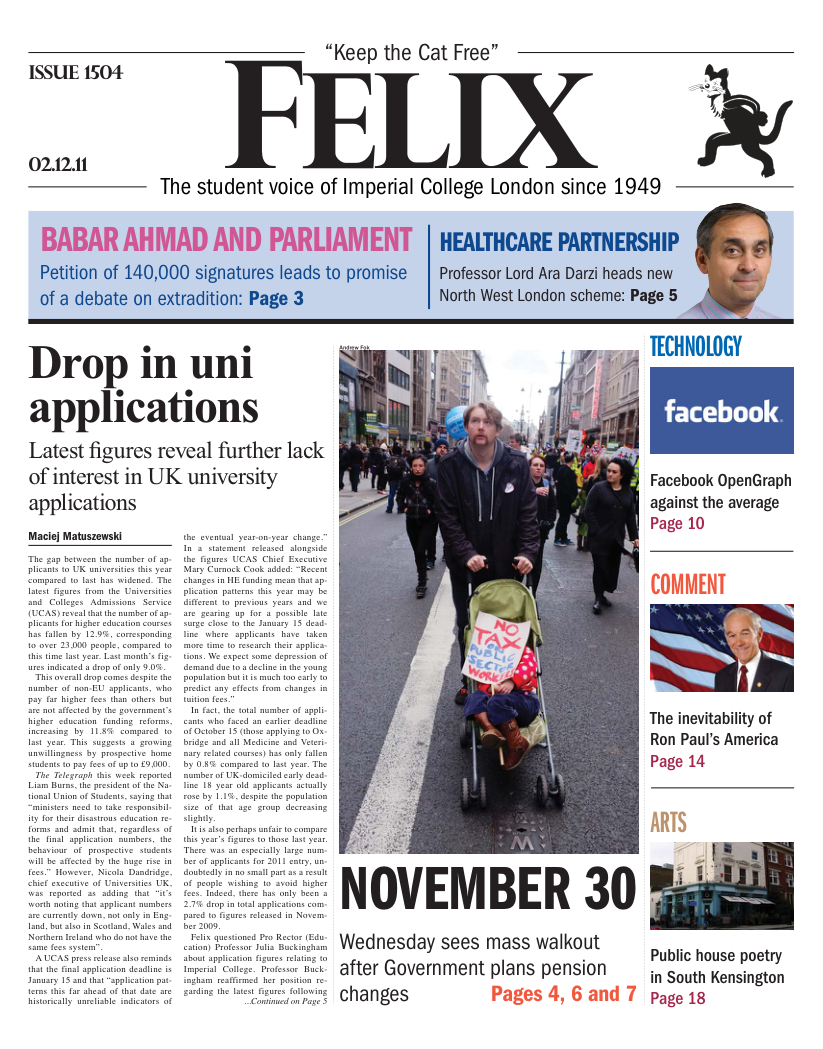
Following the sudden impact of the first wave of student protests last year, this week’s pension protests almost seem part of a natural occurrence, but one, nonetheless, that continues to demonstrate the ever-changing nature of political activism. Imperial, however, remains an anomaly amongst institutions as protests continue on (as demonstrated by limited campus action on Wednesday). This is by no means a negative aspect.
If there is one area of life at Imperial College that separates us from a number of other universities, it is the neutrality of our Student Union. The refusal of the sabbatical officers to break ultra vires means that, at least for the immediate future, we will not see them protesting in central London alongside their counterparts from other universities, such as University College London. If anything, officers would be representing only a portion of students’ views should they attend. They are, in a way, politicians rather activists.
As a scientific institution, Imperial prides itself on the search for answers to difficult questions through considered evidence and an avoidance, where possible, of bias. If our Union actively followed one particular political viewpoint, it would provide an opposing message to the aims of the College.
For those who believe that a more politically active Union would lead to a more politically active student body, they would be mistaken. As the student body is largely inactive when it comes to activism of their own accord, suggestions from student representatives would be equally likely to fall on deaf ears.
The fact that our Union does not, for the most part, take a particular political standpoint is something that should be praised rather than ridiculed. If anything, a far greater number of students are likely to stand behind a Union that is neutral and caters to as large a group of students as possible. Such a situation, as it stands at the moment, in no way hinders the potential for the individual student to organise a group to protest for their own political view.
Some may argue that they do not represent the student viewpoint, but the neutrality instead provides a blank slate that can be written on by the individual, rather than the result of dictation by a higher authority. We should not decry our apoliticism, but instead embrace the measured thinking and opinion that we are open to.