Public sector protests
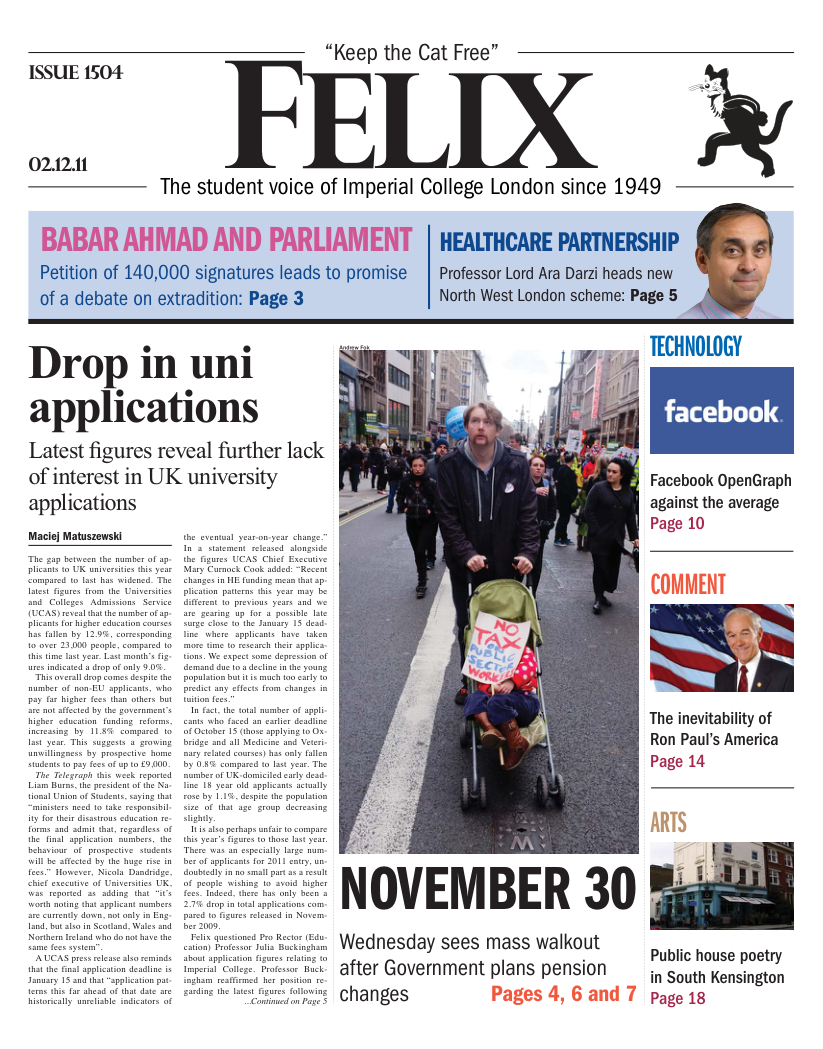
Workers took to the streets on Wednesday over Government pension plans
This Wednesday, public sector workers up and down the country went on strike, in what was described by some as the “biggest walkout for a generation.” The action was directed against the Government’s planned reforms of public sector pensions, which comprise part of its wide-reaching deficit reduction plan.
The most contentious aspects of the changes are plans to alter the method of calculating the pension rate from the current system – which is based on the worker’s final salary – to one which is based on his or her career average earnings. Accompanying this are plans to raise the retirement age to 66 by the year 2020, with the intention for it to eventually reach 68.
The Government argues that these reforms are necessary, since people are now living longer and contributions to pension plans are no longer keeping step with the costs of those pensions. The Unions counter that the proposed changes will unfairly and disproportionately impact public sector workers, with employees having to work longer and contribute more towards an ultimately smaller pension.
A number of public services have been closed or partially closed as a result of the action. Well over half of all schools in the country shut their doors, while in hospitals thousands of non-emergency operations and appointments were cancelled. Accompanying the strike were large marches in London, as well as other major cities such as Birmingham, Leeds and Exeter.
However, in spite of the scale of the action, problems at the country’s busy airports were kept to a minimum, with very few flight cancellations. Imperial College was also little affected, with very few lectures or tutorials being cancelled.
The Government has branded the strike “irresponsible”: they claim that it is damaging to the economy and a hindrance to negotiations currently on-going with the Unions. The Unions, however, say that the Government has not properly engaged in negotiations for some time: “this idea that negotiations are continuing is just not true.” In recent weeks, the Government has hinted that its current offer to the Unions could be retracted if an agreement is not reached soon.