Liolà gets frisky in Irish Sicilian Gypsy Musical
First, a disclaimer: for those with a strong aversion to musicals avoid this play at all costs. :)
What: Liolà Where: The National Theatre When: Until 6 November 2013 Price: £12 to £34, £5 with the 16-25 Entry Pass Scheme
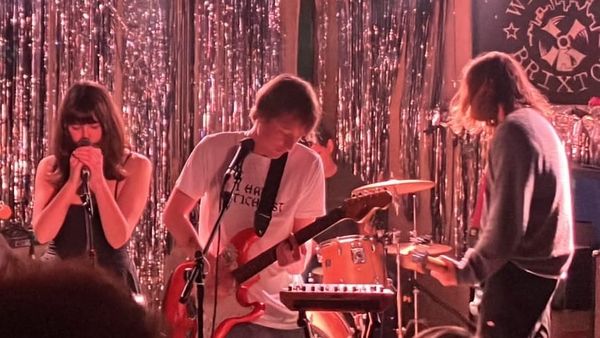
First, a disclaimer: for those with a strong aversion to musicals avoid this play at all costs. Liolà opens with a group of gypsy musicians providing music to what looks like a strange village sacrifice. One point to director Richard Eyre for immediate audience captivation.
It turns out that this is early 20th century Sicily, and the assumed-sacrifice, Mita, is in fact the young wife of rich ‘Uncle Simone’, forced to dance because she is blamed for his lack of children.
In a nutshell, without giving away too much of the very little story that there is, Uncle Simone’s niece, Tuzza, is jealous that she was not chosen as his wife and mother of his children. After getting pregnant by the charming but slimey Liolà, who already has three sons by three different women, Tuzza persuades Uncle Simone to declare the child as his own in order to stake a claim in the inheritance that the child would one day gain. Liolà, being Mita’s childhood friend and star-crossed lover, helps her to prevent Tuzza getting away with the devilish plan.
As demonstrated by the plot, this is not a very profound piece of work. Although I am unfamiliar with the original by Luigi Pirandelli, who an Italian source informs me was a classic author that many studied at school, there is not really any need to be able to compare it to Tanya Ronder’s adaptation for the National. The play really is what it is.
Which is, a bunch of Irish actors running on and off the stage in song, laughter, tears – but mostly song – with Sicilian hair (mainly dark curls), old-style Italian dress, and a Mediterranean backdrop. The fact that it obviously was not an Irish production that was so well-acclaimed that it had to be shipped over to us Londoners, but actually Irish culture as a centre-point to the adaptation, makes it slightly bizarre. I have tried to work this one out. Obviously, British actors squabbling in thick Italian accents and cries of “Mamma Mia!” or whatever we expect Italians to do based on our viewing of Dolmio adverts probably would not have been very PC.
Is the Irish element supposed to allow us to relate to the social values considered by the piece yet emphasise the foreign and anachronistic context they occur in? It is probably best not to think about it too much. In fact, there is little need to think about much at all during the play – but this is no bad thing.
Although it is easy to imagine it could have been controversial in its day, there is little else that invokes much pondering. There seem to be no hidden meanings or metaphors, and even the songs are so literal that I was slightly taken aback when one character started singing about peeling potatoes for her dinner.
Aside from the very few and very slight GCSE Drama cringe moments, it is a very well directed play. Its light-heartedness is humourous and charming, and although it borders on the cheesiness of what many musicals are known for, it never falls directly in, and even I with an aversion to them enjoyed it.