A €3 billion legacy
Is the regional model the answer to the Olympic urbanisation dilemma?
Since the establishment of the modern Olympics Games in 1896 in Athens, Olympic urbanisation has transitioned from a mere sporting backdrop to a powerful agent for urban transformation. Starting with Pierre de Coubertin’s utopian vision of a modern Olympia, host cities have used the Games to reorganise their urban fabric, moving from mono-stadium models to complex Olympic quarters. However, as we approach the Milan-Cortina 2026 Winter Games, a new paradigm is emerging. This article explores the shift from the centralised “Host City” model, exemplified by London 2012, to the polycentric “Host Region” model of 2026.
The London 2012 legacy: The limits of centralisation
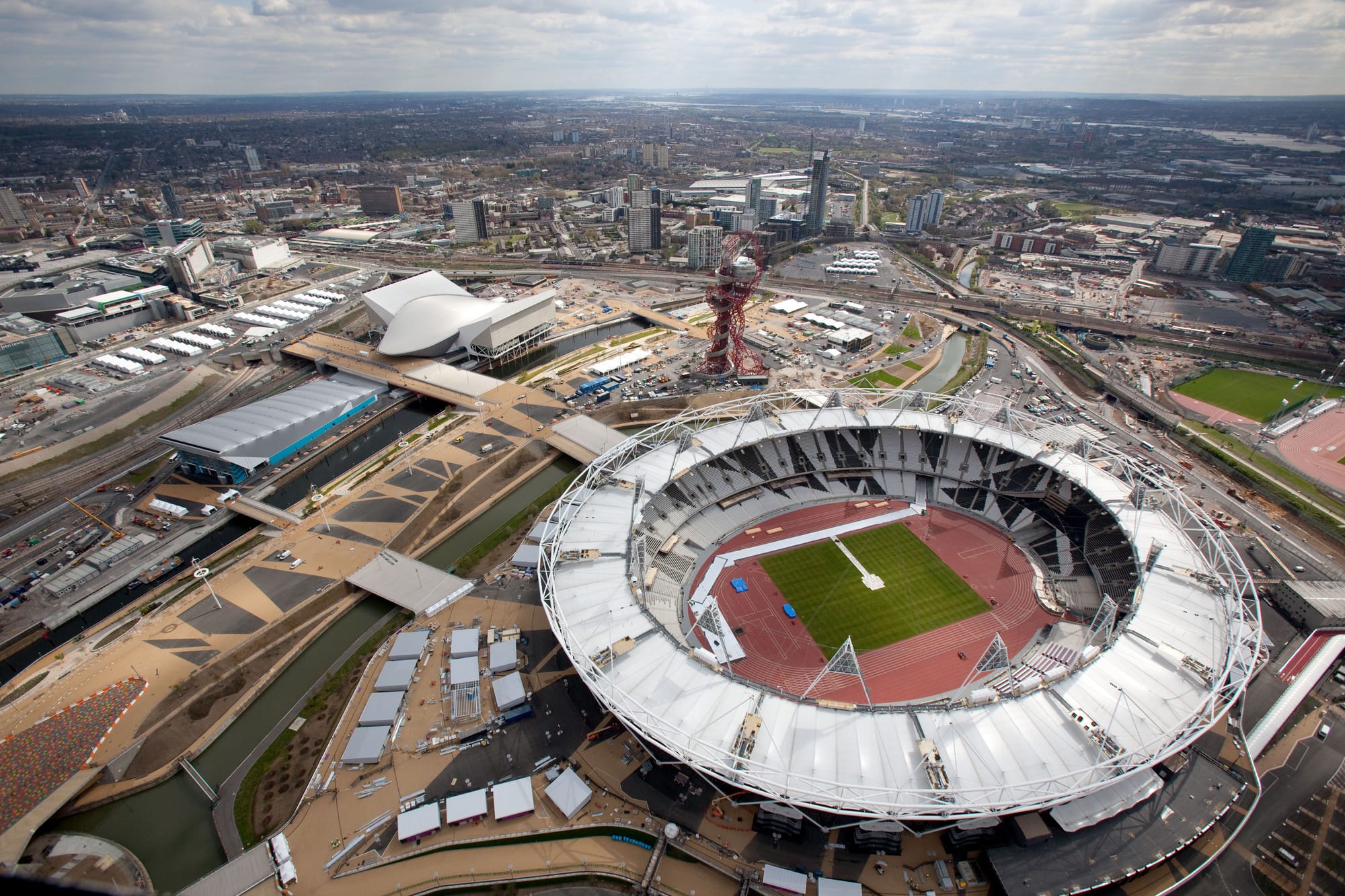
London 2012 represented the peak of the centralised model. The project focused on the Lower Lea Valley, aiming to use the Games as a catalyst for the regeneration of Stratford, one of London’s most disadvantaged areas. In fact, for years, the project was a hallmark of the Labour party’s urban policy.
However, the financial crisis of 2008 fundamentally altered the project’s trajectory. As political leadership shifted, the crisis became a justification to prioritise market forces over the needs of the local community, leading to a derailing of social promises. A striking example is given by affordable housing targets in Stratford, which were slashed from an initial 35-40% to just 20%. As a consequence, while London succeeded in staging the city and creating iconic landmarks, the resulting high-rise developments, often described as “steroidal towers,” highlight the risks of rising land values and the displacement of residents.
Milan-Cortina 2026: The “Host Region” model
In response to the “Mega-Event Syndrome” characterised by cost overruns and underutilised “white elephants,” the International Olympic Committee (IOC) adopted the “Olympic Agenda 2020”. The policy no longer requires a single city to host the event, paving the way for regional co-hosting. For this reason, it is possible to affirm that Milan-Cortina 2026 is the first true “Olympic Region”, with venues spread across a vast macro-Alpine territory that extends over 400 kilometres.
This new model aims to reduce the need for new and expensive construction by using existing or temporary facilities, a strategy closer to the sustainable models already seen in Vancouver 2010 or Pyeongchang 2018. However, this decentralisation creates unprecedented mobility challenges. While London relied on a localised “Olympic Javelin” train, Milan-Cortina relies on a high-speed regional rail link between Milan and Venice in order to ensure territorial cohesion.
The 87% Legacy Dilemma
Furthermore, the financial structure of Milan-Cortina 2026 reveals a new trend in contemporary urbanism. Of the €3.54 billion budget, only 13% is allocated to sporting venues. The remaining 87% is dedicated to permanent infrastructure intended for local communities, which will ensure the event’s legacy. This means that, for every euro spent on the Games, 6.6 is invested in long-term projects.
While this ratio suggests a commitment to sustainability, it also raises concerns regarding transparency and governance. The redevelopment of the Porta Romana railway yard in Milan, which will house the Olympic Village, is a primary example. Although the village is set to become Italy’s largest student housing complex, the high real estate value of the district poses a significant risk of event-driven gentrification.
A solution to the century-old Olympic Dilemma?
The evolution of Olympic urbanism is currently shifting from “starchitecture”, iconic buildings designed by internationally renowned architects, toward “parkitecture,” focusing on green infrastructure and urban parks. Milan-Cortina has the opportunity to lead this change, moving from simple urban regeneration to regenerative urbanism.
However, the success of this regional model depends on much more than 16 days of glory for the athletes who will return home with a medal. It requires a rigorous balance between global marketing and local equity. If the 87% legacy investment truly addresses social inequalities rather than just serving as a temporary marketing tool, then the 2026 Games may finally solve the century-old dilemma of Olympic urbanisation.
The author is a guest writer from Università Bocconi's student newspaper, Tra i Leoni. Find out all of the articles from our Winter Olympics feature here.