Appropriating Transhumanism
Palantir made a jacket and the only recourse is bodily mutilation.
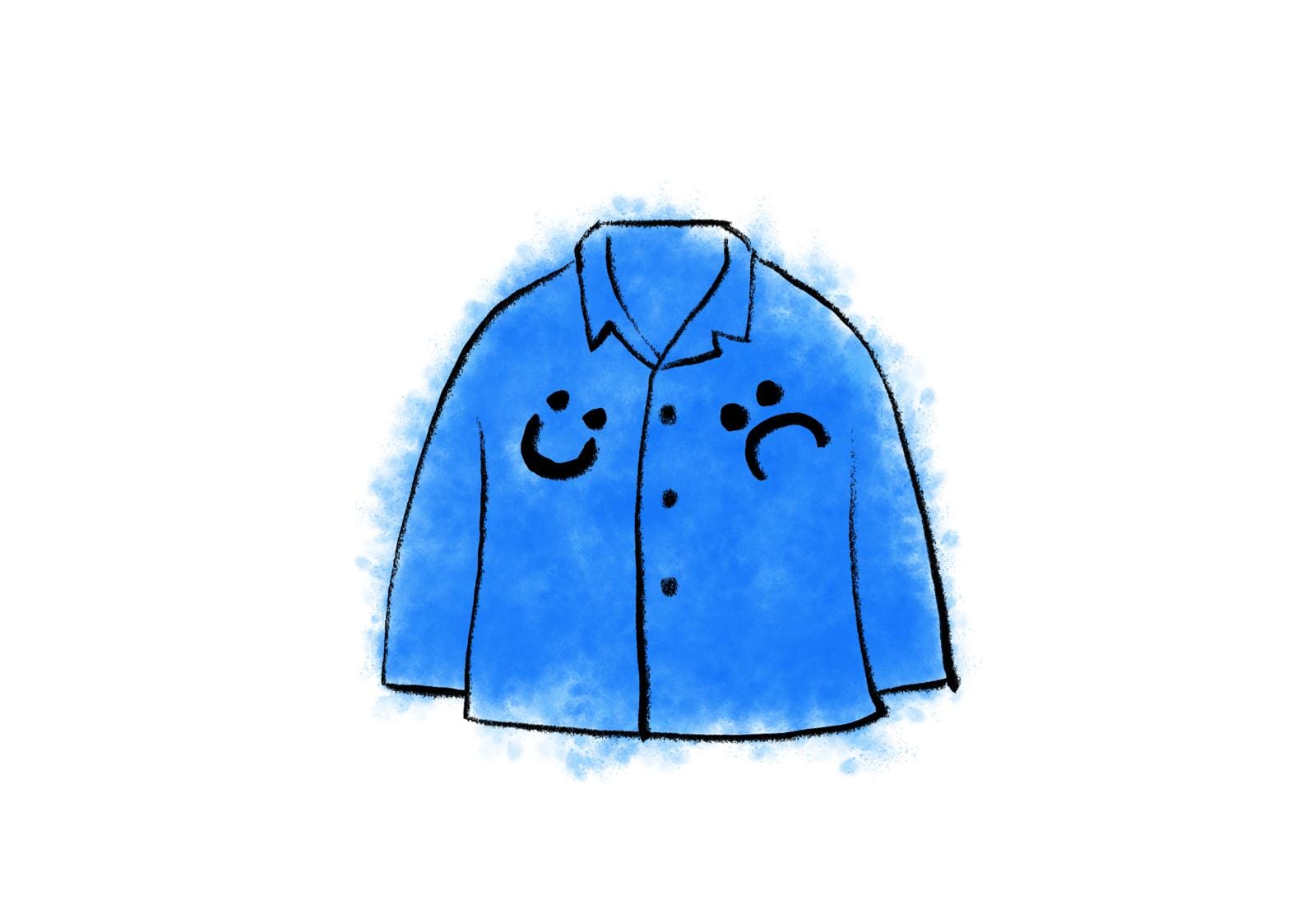
On 30 April 2026, Palantir, the multi-hundred billion dollar tech company, unleashed a line of branded chore coats on their merchandise store. The new product came as a bizarre diversion away from its tools of mass-surveillance and abstracted murder. Although, of all the garments to choose to tailor, the workwear of 19th-century outdoor French labourers makes the most sense. While luxury fashion houses have transformed the chore coat’s rugged look into a yearning for artisanal and outdoor work, Palantir seem to co-opt it as a disguise, allowing the corporation to blend in with contemporary fashion trends. Nevertheless, their attempt at appearing chic and personable only highlights the need for individuals to seek more provocative methods of self-expression. And what better way to do that than to hijack Palantir Co-Founder Peter Thiel’s transhumanist ideology through some bodily mutilation!
Transhumanism is a somewhat spellbinding word that conjures a flurry of ideas in my head, mostly about inter-culturally empathetic societies. Sadly, this is farfrom the case. Rather, transhumanism is characterised by the use of technological advancements to enhance human attributes to superhuman levels. Transhumanists seek semi-benign supplements and untested peptides to improve cognition and longevity. Their ideology even endorses acquiring body modifications like an antenna for expanding the breadth of colours they experience and the Neuralink skull implant to directly connect their brain with a computer.
On the surface, transhumanism can seem just like a set of radical ideas, purported to be grounded in science, aiming to improve the human body beyond the design of natural selection. However, it is frequently met with a torrent of critiques, and rightfully so. One of the more poignant criticisms focuses on the notion of “improving the human body”. If we ask who defines “improvement”, we can easily find ourselves in a conversation about eugenics wherein the case for achieving the “best” human health and individual expression boils down to the intrigues of a select few people. Even the scientific evidence for the proposed “improvements” is often guided by the scientific intrigue of a, historically, un-diverse group of people: scientists. After all, just because an argument employs science, does not mean the science is an authority in the argument.
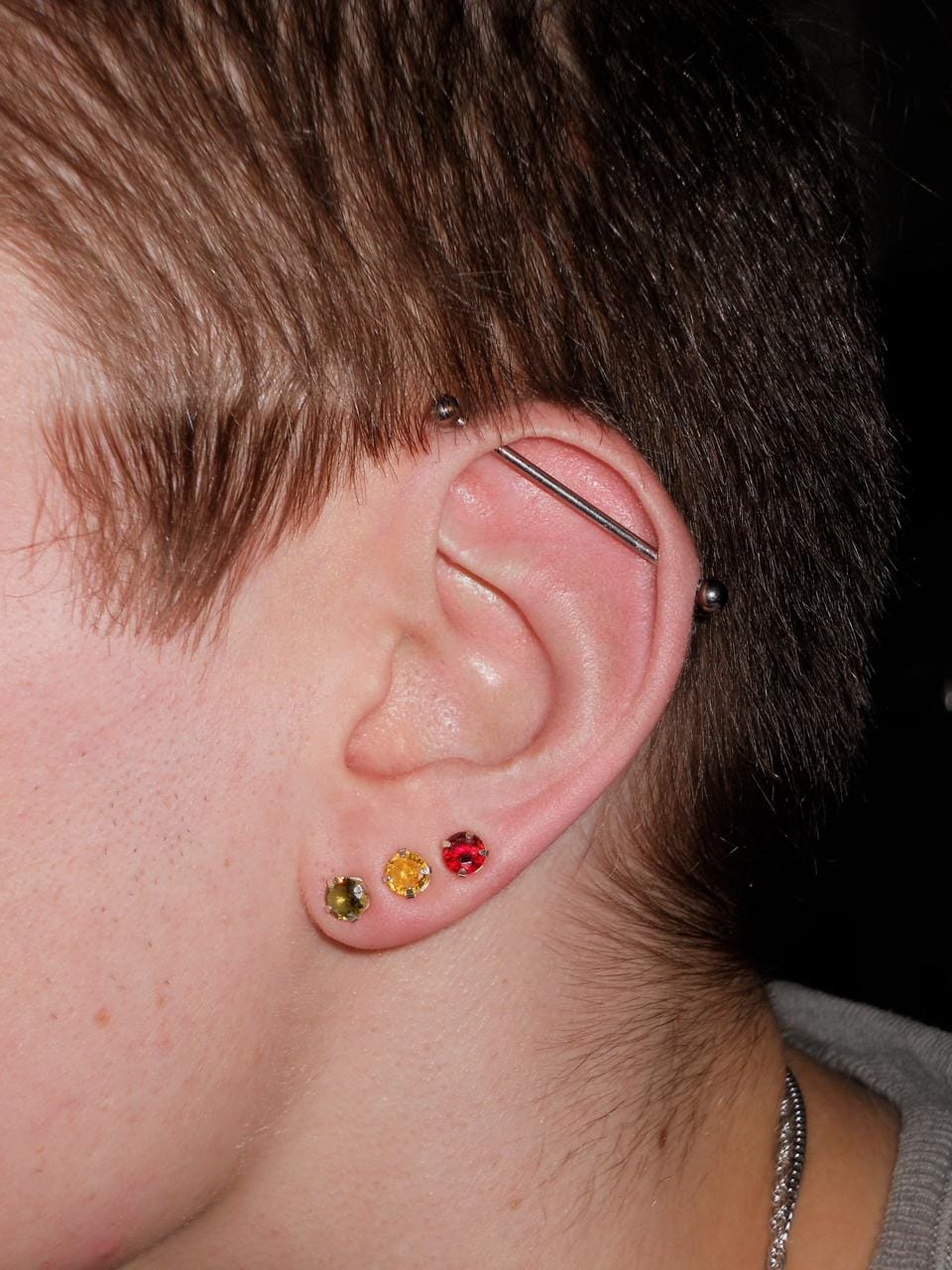
We are then brought back to Palantir, a company using fashion trends to be perceived as understanding of modern hyper-individuality, with a Co-Founder who professes improved self-expression through the eugenics-adjacent bodily enhancements. Yet these poor bids at hiding their true beliefs and actions beneath a shallow presentation only makes the dissonance more apparent. Thus, to reclaim any protection or power they get from appropriating individualistic ideals, one should reject it outright and appropriate their transhumanist values back. For me, this looks like getting body modifications of my own. Piercings adorning my ears, not for the purpose of quantifying and optimising my body, but for the opportunity to open a new avenue for my own self-expression. This way, one can centre their ethics on empathy instead of “enhanced” genetics, while exploring and appreciating the cultural movements that have shaped how piercings, and all vectors for expression, may inspire the self.