Against Efficiency
The aim of life is not merely to function well, but to become whole.
What goes viral on Instagram Reels now is not simply beauty, wealth, or pleasure, but a vision of order. Again and again, one sees the same perfected day: the 6 a.m. workout before work, the breakfast arranged with nutritional precision, the immaculate desk, the long hours of concentrated study or labour broken only by the sound of typing, the annotated book, the evening skincare, the dinner with friends or a partner that lends the sequence a final touch of emotional balance. These videos do not merely document daily life; they aestheticise productivity itself. They offer discipline as elegance, optimisation as fulfilment, routine as grace. What they sell is not only success, but a moral ideal: a life in which nothing is wasted, nothing spills over, nothing remains unjustified.
What is striking is that productivity no longer appears as a burden reluctantly endured, but as something beautiful. It is no longer confined to work. It has spread into the whole texture of existence. One must eat efficiently, sleep efficiently, exercise efficiently, socialise efficiently, even rest efficiently. Hobbies become skills. Reading becomes self-improvement or content. Friendship becomes part of a balanced routine. Rest survives only as recovery, valuable because it restores the body for further output. Life is no longer simply lived; it is curated, streamlined, and made answerable to performance.
And if one zooms out, the same logic is everywhere. The demand is always to reduce time, reduce cost, reduce friction, shorten the path between intention and outcome. One should communicate faster, produce faster, decide faster, learn faster. The rise of artificial intelligence only intensifies this tendency, because AI has become the contemporary emblem of efficiency. It promises to remove the slow, awkward, uncertain parts of thought: drafting, revising, searching, hesitating, failing. Of course, there is nothing inherently wrong with saving time or making things easier. Much that is tedious deserves to be lightened. The problem begins when efficiency ceases to be a tool and becomes an ideal; when the shortest route is assumed to be the best; when speed, convenience, and measurable productivity begin to define value itself.
Taken to its extreme, this logic produces something like a DOGE imagination of the world: a suspicion of whatever is slow, excessive, indirect, or apparently unprofitable, and a faith that any system can be improved by cutting waste and accelerating process. But a life is not a workflow. Not everything valuable appears first as inefficiency waiting to be removed. Some things matter because they resist compression. Thought needs delay. Friendship needs digression. Love needs time that goes nowhere. Art requires excess. Grief cannot be streamlined. Beauty often begins where usefulness falters. When optimisation becomes the ruling principle of existence, what disappears is not merely inefficiency, but depth.
What this culture erodes, above all, is purposelessness. Increasingly, everything must justify itself. A walk should contribute to a step count. Reading should produce insight or at least something shareable. A conversation should clarify, network, soothe, or solve. Even solitude is expected to be restorative, as if one were a device returning to charge. What becomes difficult to defend is any activity whose value lies precisely in not leading anywhere obvious: reading a novel slowly without extracting a lesson, wandering through a city without a route, sitting before a painting without converting the encounter into content, spending an afternoon in indirection. And yet it may be in these moments of apparent waste that something properly human survives.
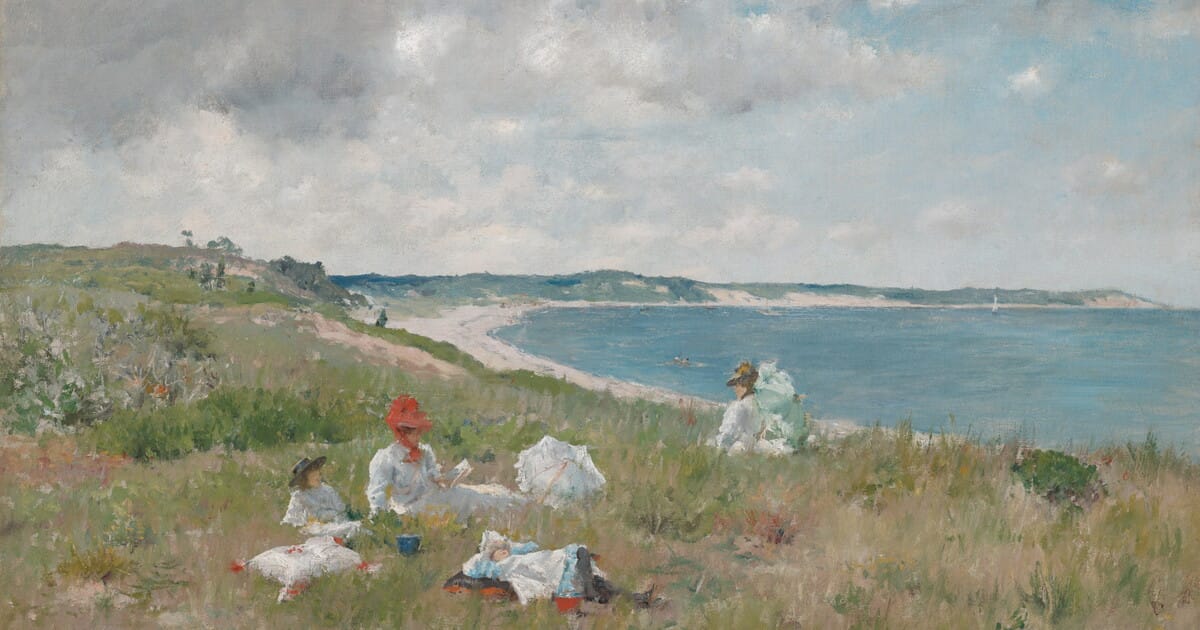
Virginia Woolf knew that consciousness does not move according to the clean sequence of productive time. It drifts, circles back, lingers over impressions, is arrested by triviality, overcome by association. Her prose gives dignity to hesitation, reverie, and inward delay. In Mrs Dalloway and The Waves, thought is not organised for efficiency; it trembles, disperses, returns. To read Woolf is already to resist a world that values only what can be managed and made legible.
But the age of efficiency does not only shape private life. It forms institutions. Even colleges, which ought to cultivate the person, increasingly encourage students to specialise as quickly as possible: to find a niche, build a profile, gather relevant experience, make themselves coherent and marketable. Curiosity must justify itself through application. Breadth appears indulgent; wandering becomes risk. The point is no longer to become expansive, but employable. Education, which once claimed to enlarge the self, is quietly reduced to training.
It is here that Schiller becomes indispensable. In On the Aesthetic Education of Man, he warns against a civilisation that fragments the human being by overvaluing utility, function, and specialisation. Modern man, he writes, becomes “eternally chained to only one single little fragment of the whole,” and thus never develops “the harmony of his being,” but instead becomes merely “the impress of his occupation, his particular knowledge.” The force of this passage lies in its recognition that the division of labour is not merely economic. It is spiritual. A person shaped too narrowly by function does not simply know less outside their field; they become less whole.
Schiller’s critique feels uncannily contemporary because our culture prizes precisely this narrowing. The ideal subject is specialised, efficient, measurable, endlessly self-optimising. One must know one’s area, refine one’s output, eliminate distraction. But Schiller insists that this is not enough for a human life. A civilisation may become highly advanced while leaving the individual diminished. The more one is reduced to function, the more one loses the harmony of one’s being. Against this, he proposes aesthetic education: not as ornament, but as restoration. Beauty matters because it interrupts the mutilation of the self by utility. It allows reason and sensation, discipline and freedom, form and feeling, to meet in a more living relation.
Central to this is his defence of play. Play is not childish distraction, nor the frivolous opposite of work. It is the condition in which the human being is most fully human, neither reduced to appetite nor imprisoned within duty. In play, one is not simply useful. One is free. This is why the contemporary suspicion of idleness is so revealing. It is not only that we dislike wasted time; it is that we have grown uneasy before any activity that cannot explain itself through productivity. A walk without destination, an artwork made without strategic ambition, an evening spent in rambling conversation, a book read with no lesson in mind — all these appear faintly irresponsible under the regime of optimisation. Yet they may belong more deeply to education and freedom than many of the routines we now admire.
Cyril Connolly, David Pryce-Jones, “Cyril Connolly: Journal and Memoir”(1984)
Melville’s Bartleby remains one of the strangest figures in modern literature for precisely this reason. “I would prefer not to” is not a manifesto, nor quite a rebellion. It is quieter and more unsettling than that. Bartleby simply withholds compliance from the machinery of usefulness. In a world organised by productivity, such passivity becomes scandalous. His refusal reveals how much of modern life depends on the assumption that all existence must be made functional.
Proust offers another form of resistance: not refusal, but delay. In his world, truth does not arrive through speed or intention, but through accident, memory, and prolonged attention. What matters most cannot be extracted on demand. It returns only when one stops trying to master time and instead dwells within it. This is a challenge to the culture of optimisation, which imagines that more speed necessarily means more value. Proust reminds us that some forms of knowledge require slowness.
To speak against efficiency, then, is not to praise incompetence, nor to deny the relief that convenience can bring. Efficiency has its place. It can lighten burdens and simplify drudgery. But it becomes dangerous when it invades every sphere of life; when it teaches us that what cannot be measured cannot matter; when it persuades us that the self should be organised like a project plan, that education should yield employability before wisdom, that art should justify its existence, that rest should earn its keep. The age of optimisation does not merely exhaust us. It fragments us. It encourages us to value function over wholeness, speed over depth, expertise over cultivation, output over the harmony of being.
What the Instagram reel finally offers, beneath its polished surfaces, is not merely an image of discipline but a diminished anthropology. It imagines the human being as a beautifully regulated system: nourished, efficient, emotionally balanced, always improving, always proceeding. But this is too narrow an ideal for a life. A human being is not completed by optimisation. One becomes more fully human not by eliminating all waste, but by remaining open to what cannot be streamlined: beauty, play, reverie, useless affection, thought that strays, time that does not know where it is going.
In such a world, inefficiency begins to look less like failure than like resistance. To read slowly, to think without immediate conclusion, to refuse premature specialisation, to make or love what serves no clear purpose: these are small acts, but they preserve the possibility of another life. Not a life without labour or discipline, but one in which labour is not sovereign; one in which the self is not reduced to usefulness; one in which beauty is not apologised for. Against the cult of efficiency, one might still insist on an older and more difficult truth: that the aim of life is not merely to function well, but to become whole.