
Engineering a legacy: What happens after the Olympic Flame goes out?
When the Olympic flame is extinguished, the world usually stops looking. As the global spotlight dims, the athletes who enflamed the world with their prowess return home, and the medals stop shining under the flashes of photographs, host cities are left in the cold light of reality. They find themselves managing a landscape of “white elephants”: specialised structures whose operational costs far outweigh their social or economic utility once the circus leaves town.
The persistence of the white elephant is a structural byproduct of what might be called “Eventocracy”. This mode of governance allows mega-event demands to override fiscal prudence under the guise of immovable “emergency” deadlines. The primary driver is a profound incentive misalignment between the Organising Committee, a temporary body whose mandate is to meet the standards of the IOC (and the sponsors), and the local administrations. Because the Organising Committee disbands shortly after the Games, it has little motivation to prioritise a long-term cost/benefits analysis over immediate aesthetic impact, leaving taxpayers to foot the bill.
Furthermore, host cities often fall victim to the “Winner’s Curse”, where the winning bid is the one that underestimated costs and overestimated benefits. This leads to “Etch-A-Sketch economics”, where initial budgets are wiped clean and replaced by dramatically higher totals once the project is underway. The result is a socialisation of risk: while the IOC contributes to operating costs, the vast majority of infrastructure and security expenses are funded by local taxpayers who inherit the maintenance bills for structures designed for peak Olympic capacity rather than daily community needs.
To reconcile this fiscal hangover with the initial euphoria, host governments and organisers pivot toward a singular, almost sacred justification: legacy.
This concept has transformed from an after-effect into the primary ideological justification for the massive expenditures required to host the Games.
As Milano-Cortina 2026 approaches, it serves as a critical test case for a “distributed”, more sustainable model, intended to mitigate risks by spreading the event across 22,000 square kilometers. The logic is seductive: by utilising existing or temporary venues for 93% of competitions, the project theoretically avoids the “white elephant” trap. However, the economic reality under the hood suggests a more complex situation.
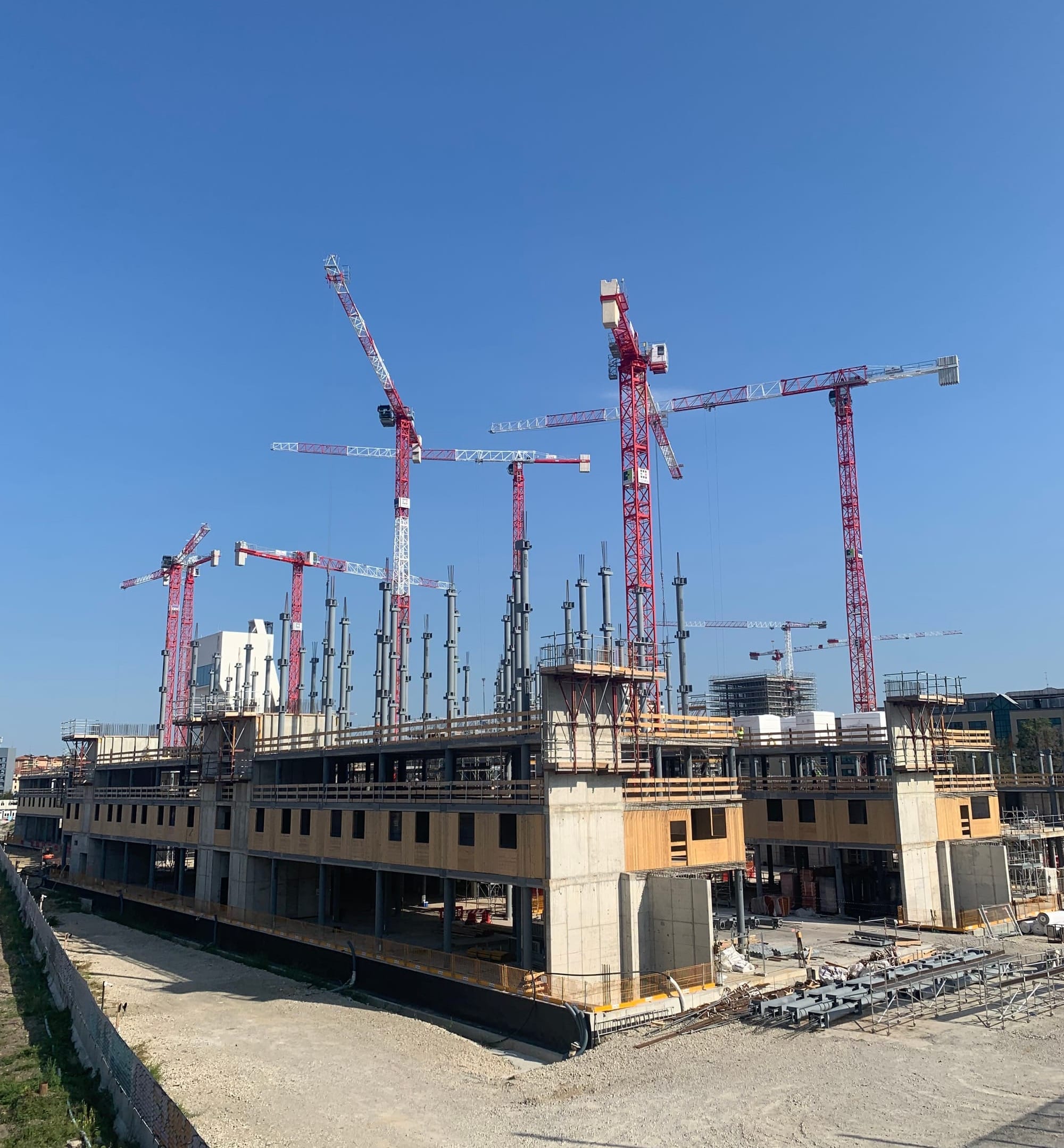
In Milan, the strategy centers on the Olympic Village in the new “Scalo Romana” district. Marketed as a solution to the housing crisis, critics highlight a rigid design prioritising efficiency over livability and raise concerns regarding future student affordability in an area where property prices have already soared.
The mountain venues represent the greatest potential liability, with the Sliding Centre in Cortina as the ultimate symbol of the “Winner’s Curse”. Originally estimated at €50 million, costs have ballooned to over €120 million, accompanied by a projected €1.5 million annual maintenance deficit. While a “Program Agreement” aims to spread these costs among local regions, it remains to be seen if taxpayers will tolerate subsidising a specialised facility with near-zero public use in a warming climate. Cortina’s February temperatures have risen by 3.6ºC since 1956, requiring over 3 million cubic yards of artificial snow for the Games.
Furthermore, of the €3.54 billion managed by the infrastructure body SIMICO, only 13% is earmarked for essential sporting venues; the remaining 87% is funneled into a massive regional transportation overhaul. Crucially, 57% of these projects are not scheduled for completion until long after the Games. This timeline raises significant questions regarding the efficiency and the intentions behind such projects: was the Olympic deadline merely a convenient tool to bypass standard scrutiny for a decades-old regional wish list?
Ultimately, the success of Milano-Cortina 2026 cannot be measured by the medals awarded in February. It will be determined a decade later by the state of a bobsleigh track in Cortina and the rent prices in Milan’s Scalo Romana. If the 87% “legacy” infrastructure serves the local population rather than just a 17-day broadcast window, the “distributed” model will have set a new standard. But if the maintenance deficits and the receding snow line render these assets unusable, 2026 will be remembered not as a “new model”, but as the moment the Winter Games finally hit their ecological and fiscal ceiling. In the cold light of 2036, the “Eventocracy” will have moved on; the taxpayers, as always, will remain.
The author is a guest writer from Università Bocconi's student newspaper, Tra i Leoni. Find out all of the articles from our Winter Olympics feature here.