Hazelab puts on fiery display for the public
Research group demonstrates the science behind the Great Fire of London
On 5 September, the 360th anniversary of the Great Fire of London, St Olave’s church organised a day of free activities exploring fire and faith. First built in 1050 AD, the church survived the Great Fire and was once frequented by the diarist Samuel Pepys, who is now buried in a vault beneath the church and was brought to life by a method actor during the outreach day.
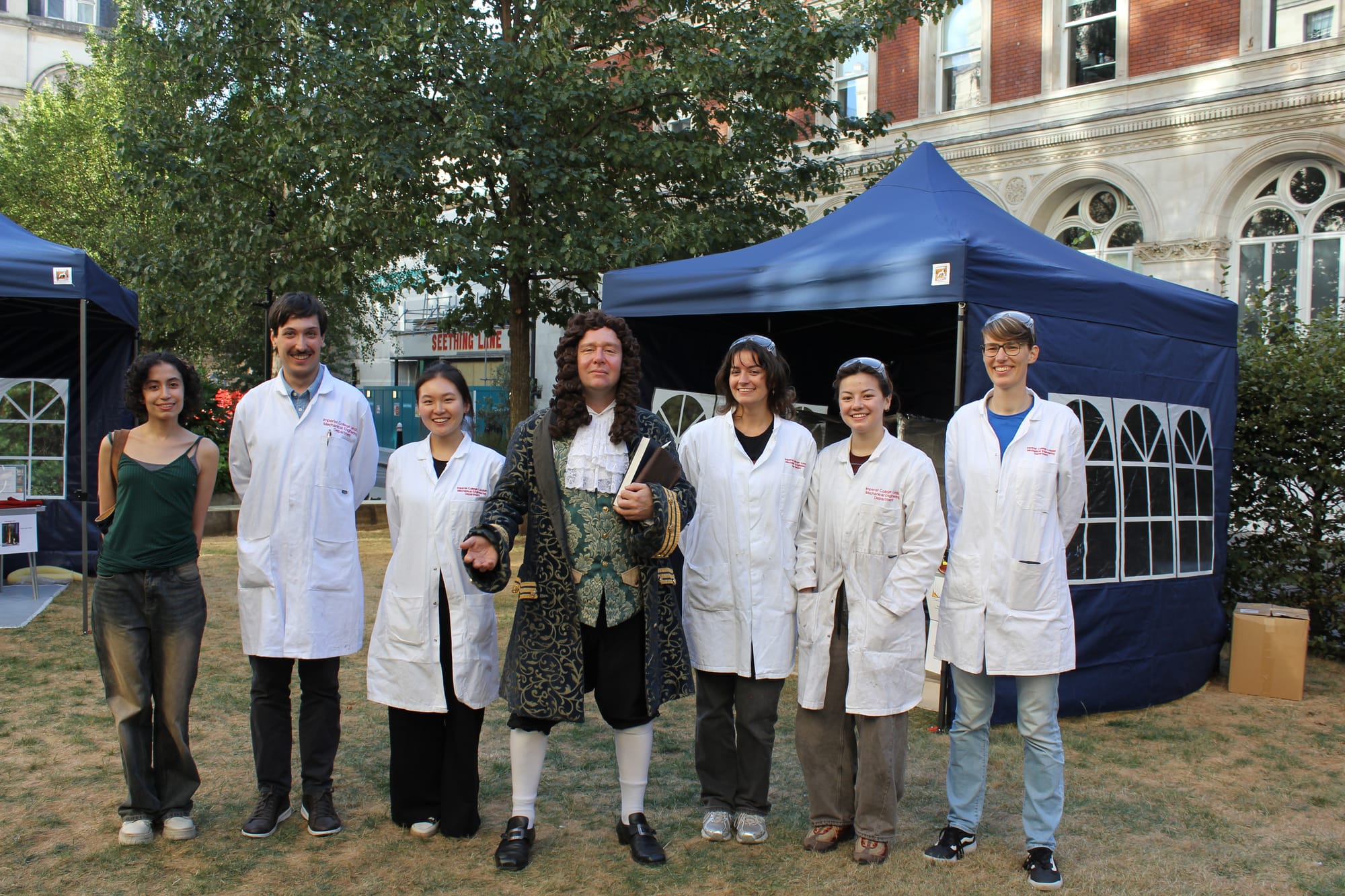
Members of Imperial’s Hazelab, a research group led by Professor Guillermo Rein from the Department of Mechanical Engineering, ran four live fire science demonstrations throughout the day. Each demonstration was designed and built by members of Hazelab to explain an important aspect of fire science, relevant to both the Great Fire and modern-day fire safety challenges.
Sirocco
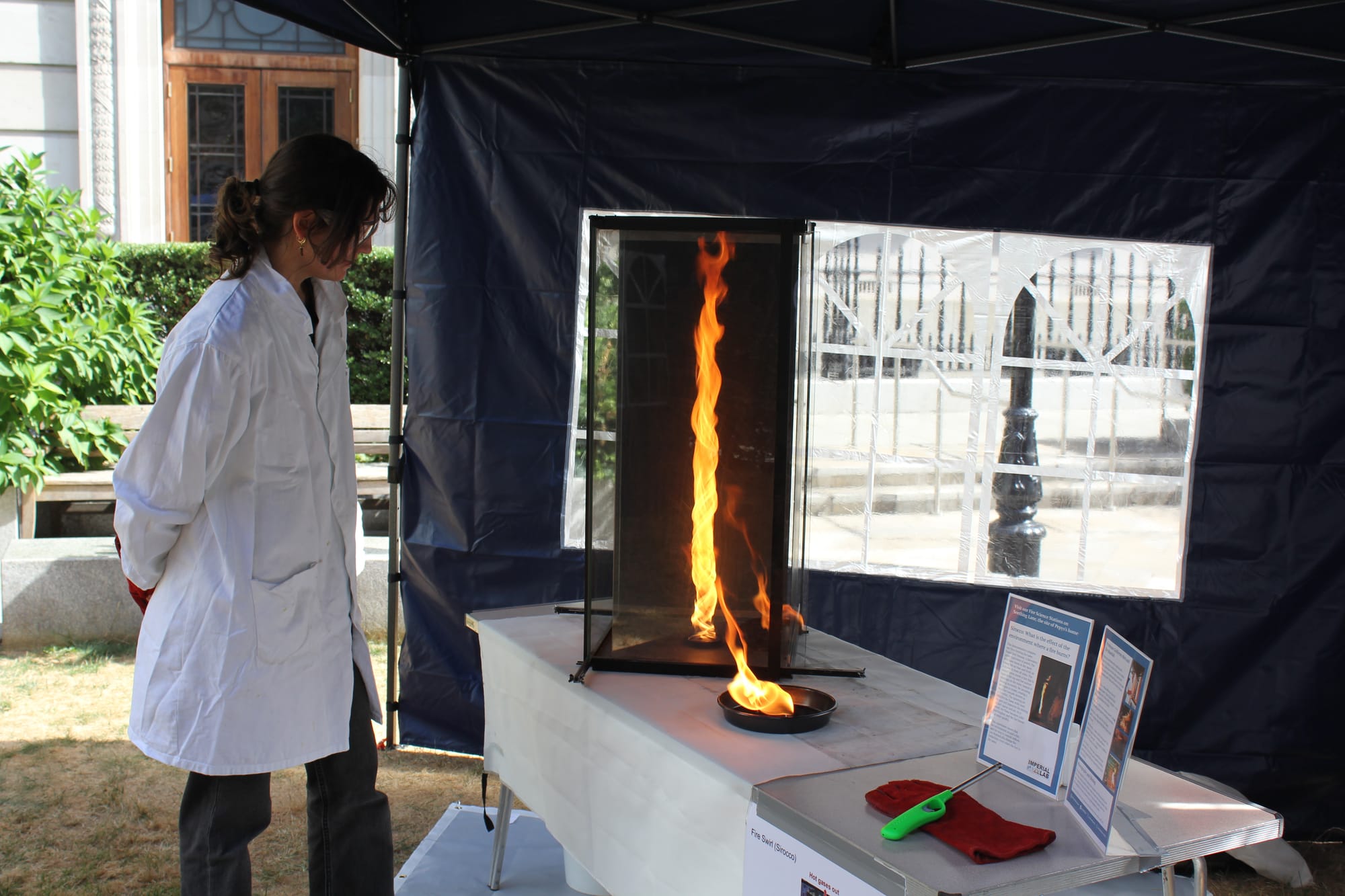
This demonstration showed the effect of the environment where a fire burns. There were two fires, burning the same amount of the same liquid heptane fuel. The first flame burnt in the open where hot air could rise, drawing fresh air in from all sides; the second burnt inside a box with narrow openings on the side, where air can still rise up, but can only enter from the openings. For the second flame, the incoming air flow was uneven and began to rotate, creating a small fire tornado known as a fire whirl. The spinning air supplied the flame with more oxygen which improved the mixing of fuel vapour air, causing the flame to grow taller and brighter. The taller flame consumed energy at a faster rate which resulted in the fuel burning up more quickly compared to the first flame.
Flame spread
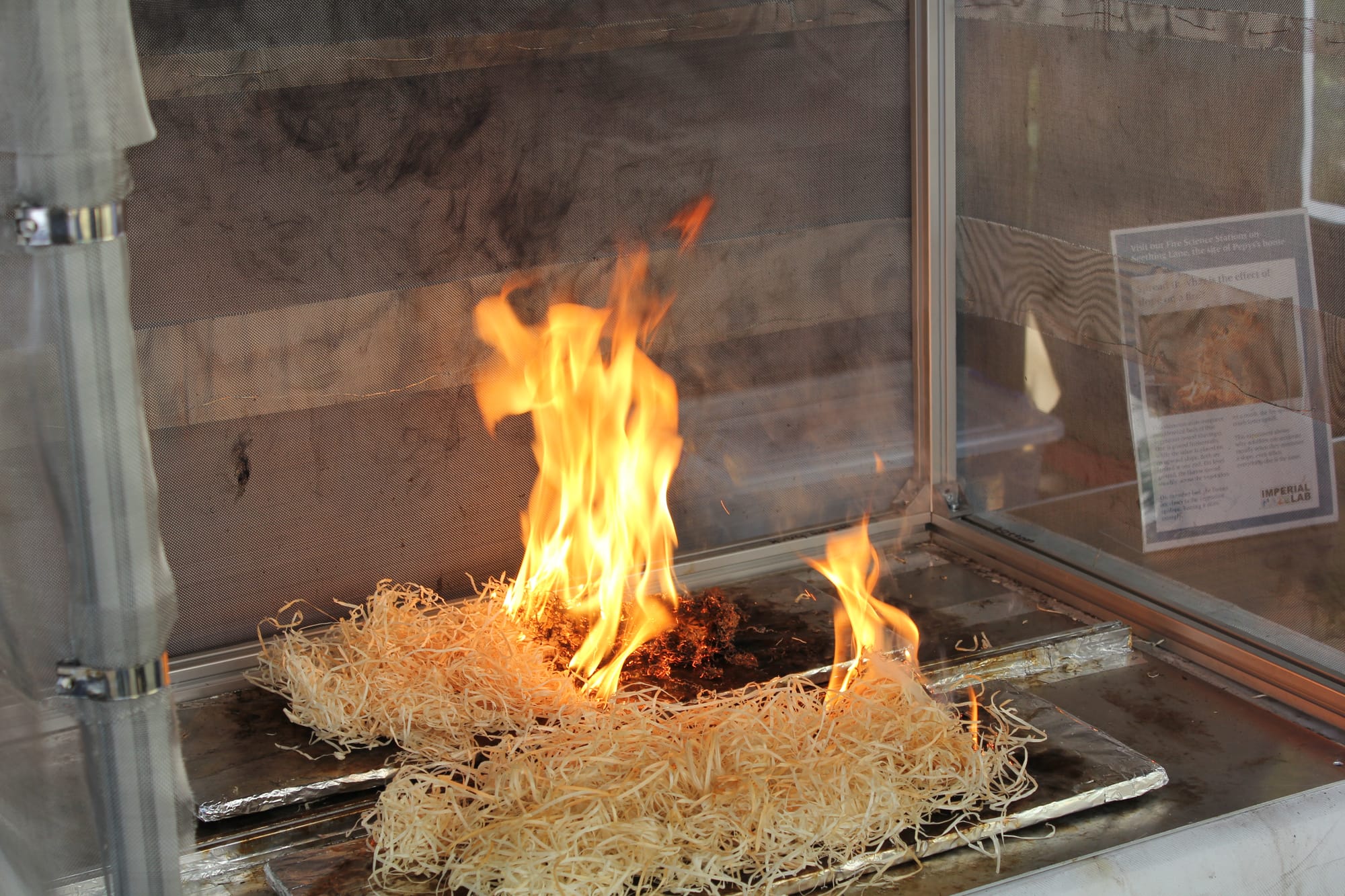
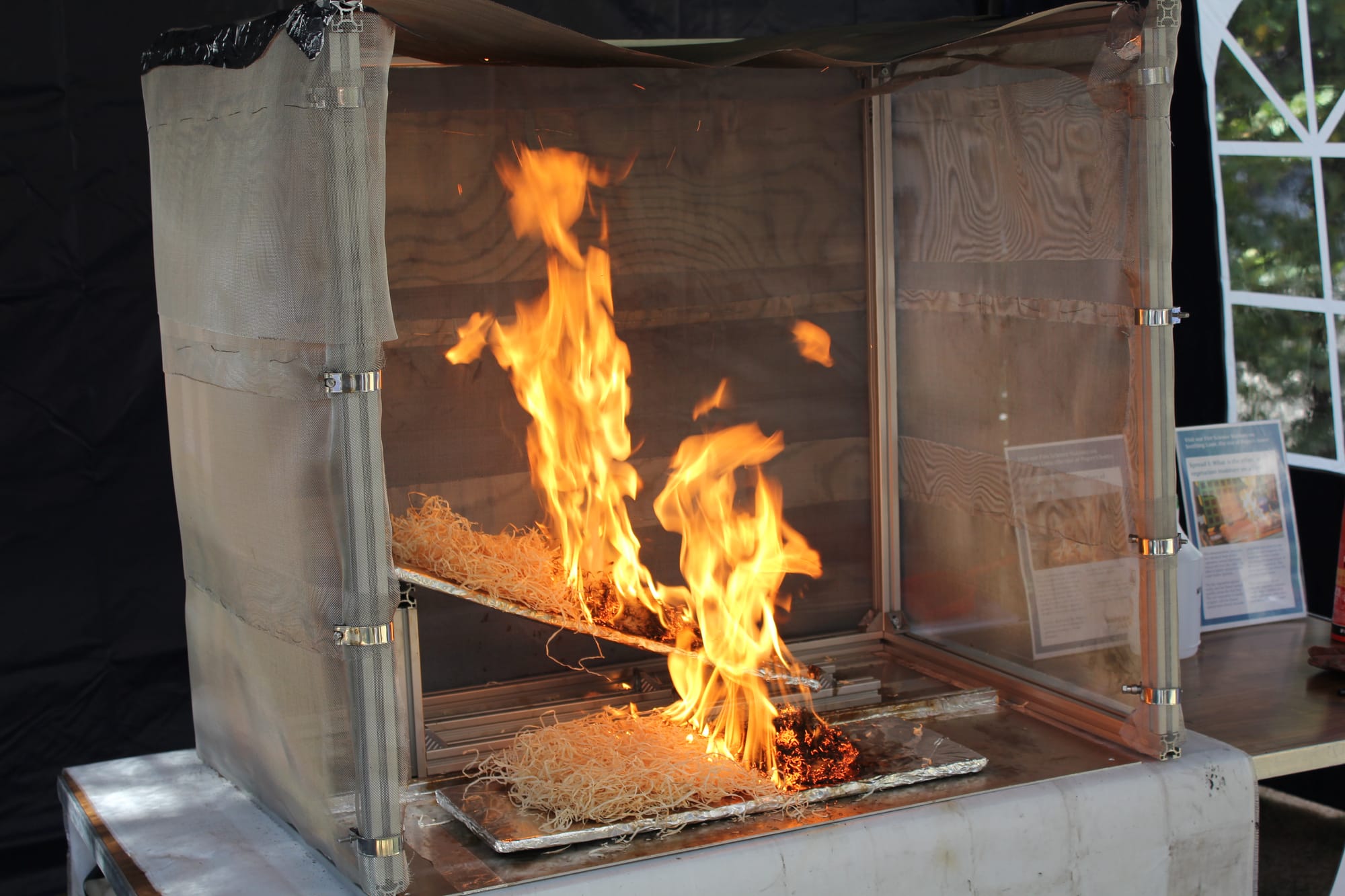
The flame spread demonstration showing the effect of moisture (right) and slope (left) on how fire spreads. David Latimer for Felix
In this demonstration, the effect of two variables, moisture and slope, on flame spread, was investigated.
To examine the effect of moisture, two identical beds of thin vegetation were ignited. However, one had been lightly sprayed with water whilst the other is very dry vegetation and ignites easily, so the flames spread quickly across the fuel bed. On the other hand, wet vegetation was harder to ignite and the flame spread was slower, due to the fact that part of the heat from the fire must be used to evaporate the water before it can increase the temperature of the vegetation. Since ignition requires the vegetation to reach a sufficiently high temperature, this means that the advancement of the flames is delayed. This demonstration showed why dry vegetation sustains much faster wildfires than moist vegetation, even if all other conditions are the same. In addition to this, dry conditions make the ignition of vegetation more likely. Recently, dry weather conditions in Europe and North America contributed to the increase in the severity of wildfires.
To show the effect of slope, the setup was repeated with two dry vegetation beds, but one of the beds is inclined. Once ignited, the flames spread steadily across the flat bed, but on the sloped bed the flames are much closer to the vegetation in front of the flame due to the upward slope, so the fire spread more rapidly uphill. In real life, this effect can be observed when wildfires accelerate when they encounter a slope such as a hill.
Imperial Dragon
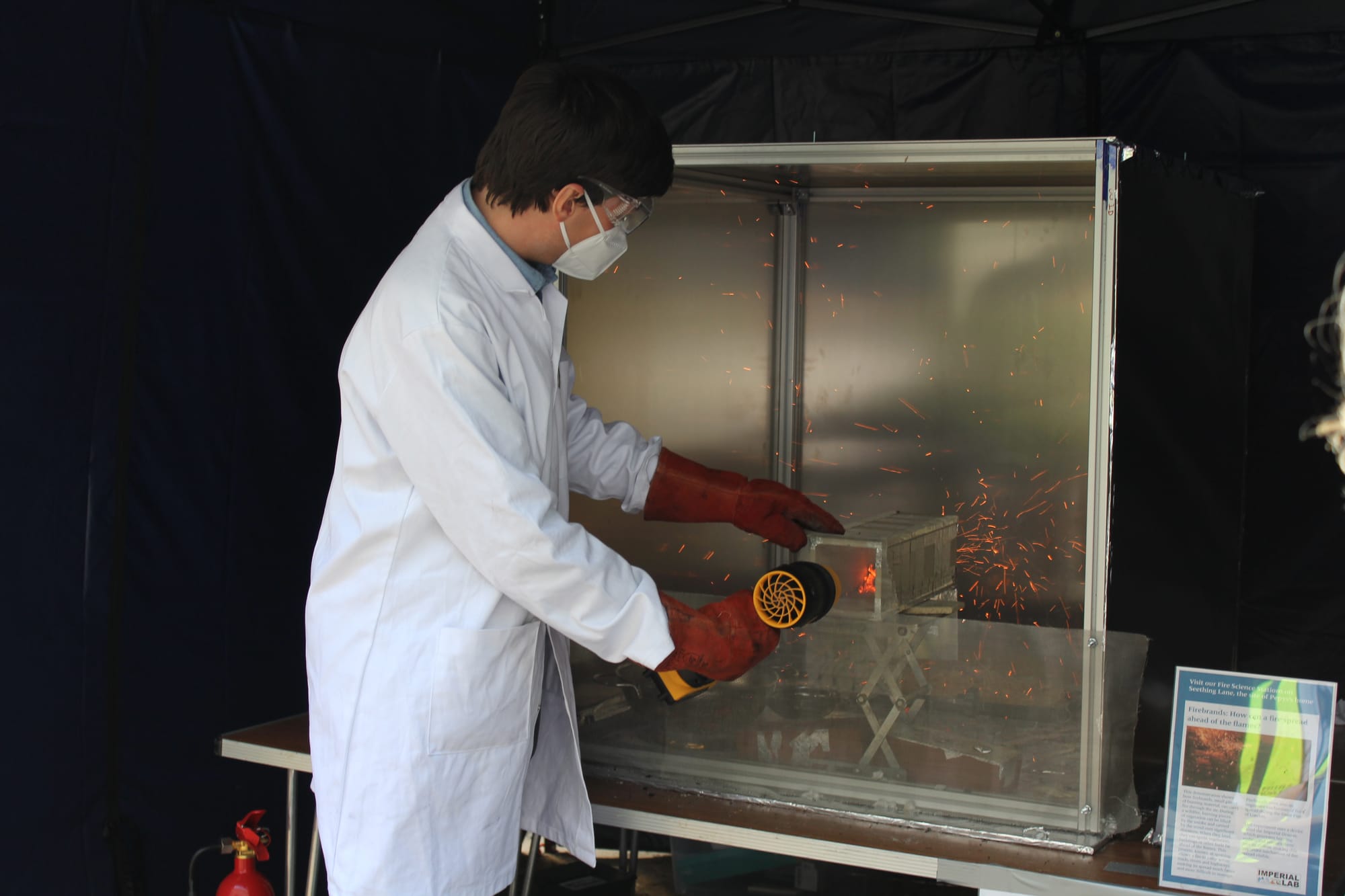
The Imperial Dragon was originally featured in The Great Fire: In Real Time, a documentary series about the Great Fire of London featuring Professor Rein. The experiment is used to show the generation and dangers of firebrands, small pieces of ignited fuel that are light enough to be carried by the wind. As opposed to sparks, firebrands contain fuel that allows them to continue burning wherever they land, which can cause secondary ignitions ahead of the original flame, known as spotting. In the demonstration setup, wind is generated by a leaf blower blown over hot coals within a tube, which generated firebrands and released them into an airfloow where they then landed on a bed of dry vegetation and caused ignition. This mechanism of fire spread was significant during the Great Fire of London and made it nearly impossible to put the fire out until the windy weather conditions had died down. This is still difficult to manage during current day wildfires.
Aluminium composite material (ACM)
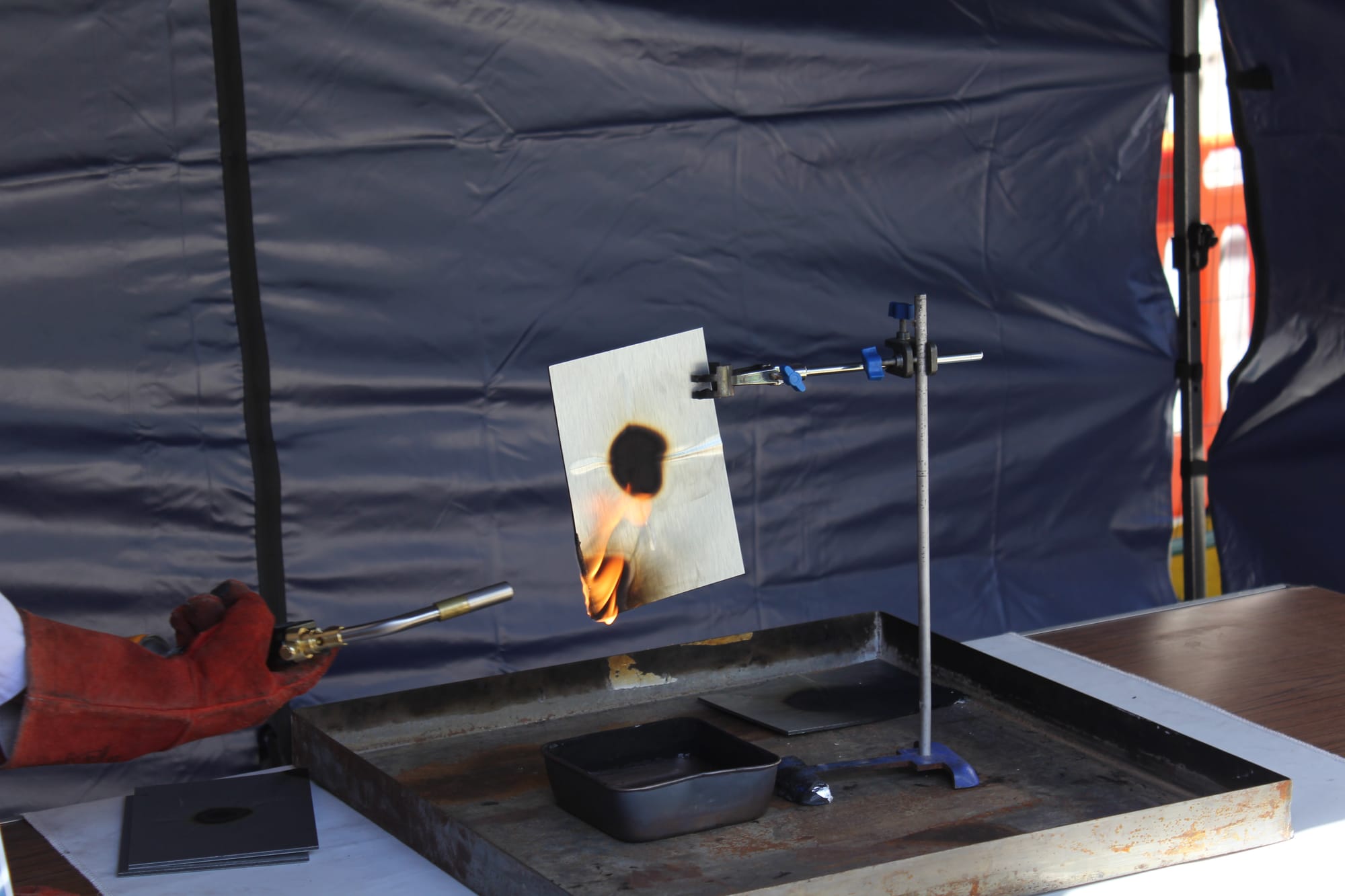
This demonstration shows how the flammability of a material can vary with the direction of a fire. Aluminium composite material (ACM) panels are a modern-day material, widely used in construction. They consist of two thin layers of aluminium surrounding a plastic polyethylene core. When a flame is applied head-on to the aluminium surface, very little happens because the metal protects the plastic inside, as visible on the dark patch in the centre of the panel. However, if a flme is applied to an exposed edge the plastic core can ignite and self-sustain a flame. In addition to this, polyethylene produces flaming droplets as it burns which can spread the fire to materials underneath the panel via dripping. ACM panels were used as cladding in Grenfell Tower it caught fire in 2017, causing the worst residential fire since WWII. Since the Grenfell Tower Fire, ACM panels have been identified as a potential cause of rapid fire spread and tighter regulations on their usage have been introduced.
During the outreach day, people of all ages interacted with the demonstrations, allowing some of the fundamentals of fire science to be taught in an interesting and engaging way. The warmer and drier weather conditions brought about by climate change, means that wildfires are a growing risk across the world. The ban on disposable barbecues this summer is just one example of management strategies that will be needed to mitigate the risk to people and property posed by fires. Public understanding of how fires start and spread is essential to keeping everyone safe.