Problem Solved?
OpenAI publishes a solution to the Navier-Stokes equations.

On the 8th September, OpenAI published a pre-print on their website, claiming to found a solution to the Navier-Stokes existence and smoothness problem. While the validity of their solution is yet be confirmed officially, some experts are hopeful.
What is the Navier-Stokes existence and smoothness problem?
The Navier-Stokes equations are a set of partial differential equations which describe how fluids move. Fluids are substances which take the shape of the container they are in and cannot resist external forces applied to them, unlike solids, which can respond by compressing or springing back. Fluids include air, blood, and water and a lot of modern technology rests on being able to predict how they will behave.
Slight problem, though: the equations we use to do predict fluid’s behaviour are not solved. In fact, they are such a challenge that solving them for certain cases is one of the Millennium Problems. These are a set of foundational, incredibly difficult and complex mathematical problems, set out by the Clay Mathematics Institute, who offer a million-dollar prize to the first person to solve them.
The engineering and mathematical approaches to solving the equations are different, as engineers can continue to build and design products that work without knowing a complete solution. The mathematical approach is to prove whether solutions exist.
The existence and smoothness problem is the question of whether the equations can produce a ‘singularity’ where the fluids speed up infinitely within a finite amount of time. This is obviously physically impossible and therefore is a point at which the equations stop modeling fluids.
How does OpenAI claim to have solved it?
OpenAI claims that their system produced a proof that an initially smooth fluid can develop a singularity, producing a vortex where the center speeds up while narrowing. According to their statement, they created this proof using an internal model trained on mathematics problems. They began work on all the Millennium problems and reoriented to solving the Navier-Stokes problem when a set of agents solved an easier version of the problem where a term had been removed. Then, they formalised it in Lean and verified it using their GPT-6 agent.
Are they correct?
The OpenAI proof has not been peer-reviewed. The Clay Mathematics Institute released a statement declaring they “[share] in the excitement of the global mathematical community as we contemplate the announcement that the Navier-Stokes problem has apparently been settled” and that they are completing a slow, rigorous and careful verification process. The Millenium Prizes are only awarded two years after a proof has been published.
Imperial’s Professor Kevin Buzzard, a mathematician who works on formalizing mathematical theorems in Lean, a program for verifying theorems, says that he is “confident that the argument is correct even though [his] area of specialty is not fluid dynamics and so [he] cannot check the details of the technical argument [himself]”. Further confirmation by experts will take time, as the material is complex.
Controversies
In an update to their original statement, OpenAI claimed to have started working on the Millenium problems on September 1st in part due to a rumour that they were being solved by two mathematicians, Tristan Buckmaster and Levent Alpöge. Buckmaster works at NYU, while Alpöge works for Anthropic.
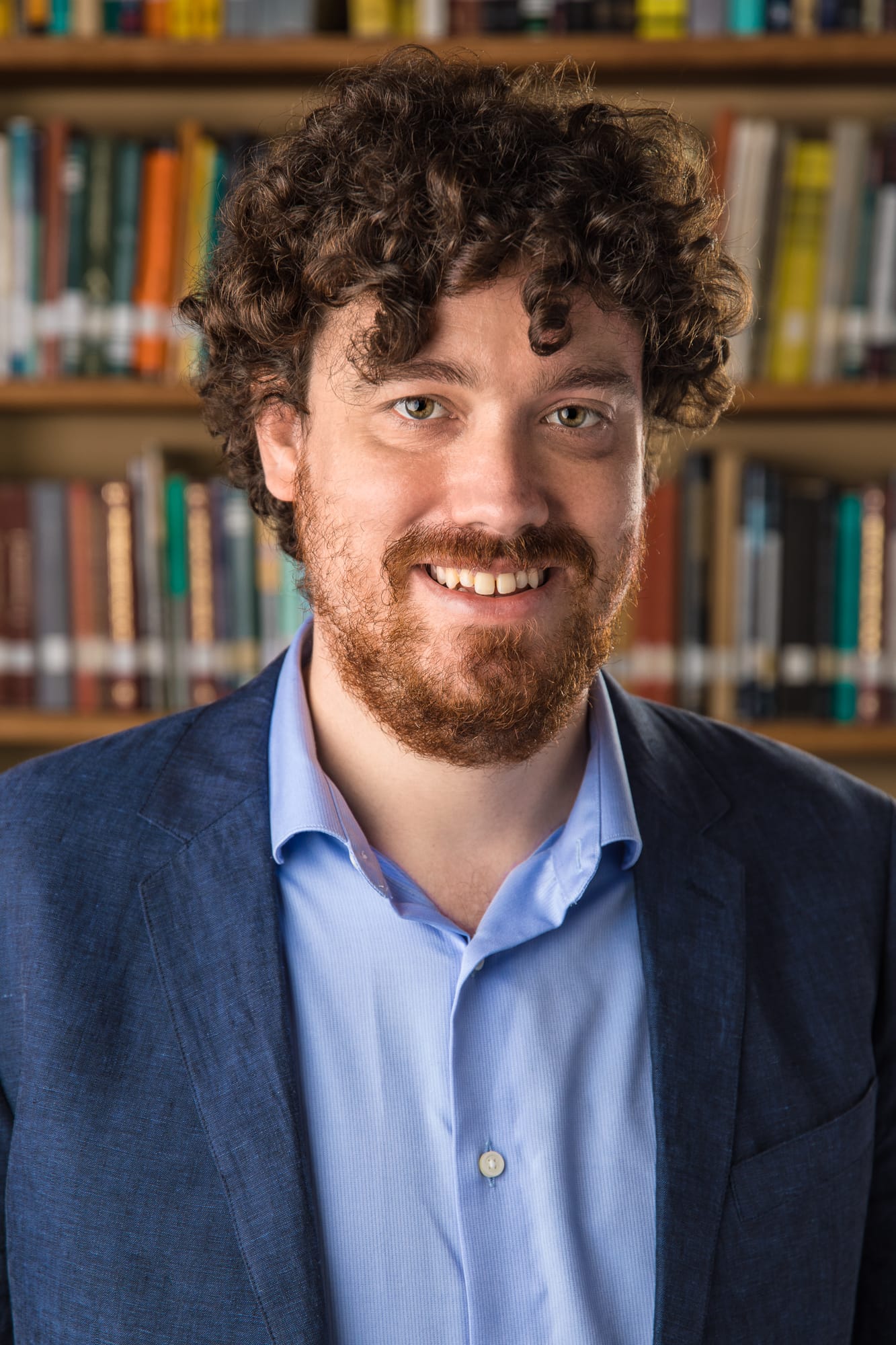
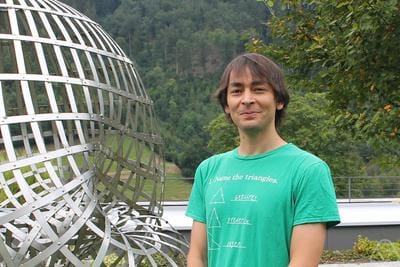
Left: Tristan Buckmaster. CC NYU; Right: Levent Alpöge. CC Wikimedia Marlene Ruff
12 hours before OpenAI published their pre-print, Buckmaster and Alpöge printed their proofs for three related problems, including an alternative version of the simplified problem OpenAI claims their agents first solved. Buckmaster published an accompanying text.
In it, he apologised for the quality of the proofs, claiming they were rushed by undue pressure from OpenAI. Alpöge is an employee of Anthropic, a rival company, but their attempts to solve the problem were a personal project, without any financial backing from Anthropic. Buckmaster alleges that OpenAI presented him with an ultimatum, telling him he could either post his results in advance followed by OpenAI publishing their Navier-Stokes pre-print. Alternatively, he could write a paper explaining the Navier-Stokes solution, crediting an internal OpenAI model and not Alpöge.
Buckmaster alleges that OpenAI prompted their agents after finding out about the work that he and Alpöge were doing. He also states that OpenAI told him that the model did not ‘look up user data’ but did not receive an answer regarding whether the model had access to the sessions he and Alpöge had in Codex, an OpenAI software where they went through most of their work.
He claims that it “’raised red flags’” that OpenAI had prompted their agents to take an unconventional approach which the mathematicians had chosen to focus on.
He points out that credit for progress on the problem should go to Diego Córdoba and Luis Martínez-Zoroa, whose work he and Alpölge had used as a starting point.
OpenAI insists that no user data was used in the training of the internal model.
The future
AI and mathematics have coexisted for a very long time. Especially in the past decade, extensive progress has been made in helping computers parse human-made mathematical proofs. If the OpenAI proof is verified, it would be the first time a program has produced a proof that solves a problem of this magnitude. Undoubtedly, AI possibly solving the Navier-Stokes problem will lead to revolutionary changes in the way mathematics is done.
This has led to discourse among experts and some are upset: 28 Field medalists signed a statement arguing that AI companies use AI simply to produce solutions, without creating an understanding of how those solutions are achieved and failing to publish the exploration of the problem in the field. The statement alleges that by simply spitting out the final product, the AI companies fail to “develop understanding and the ability to formulate new questions and ideas”, which they say is the spirit of mathematics.
The statement is explicitly not against the use of AI in mathematics, stating that AI has the potential to enhance and accelerate interesting study, and that mathematics needs to adapt to the changes it brings.
This is an opinion shared by more AI-supportive voices. Professor Buzzard “[suspects] that several of the reactions we are seeing from the [mathematics] community are people going through the five stages of grief” and that the challenges brought up by critics, including the incomprehensibility of the proof and that it might not develop human understanding, will be addressed by future AI models.
Currently, AI models remain trained by proofs created by human mathematicians. These models would not exist without a clear, shared understanding of mathematical and computational concepts.